
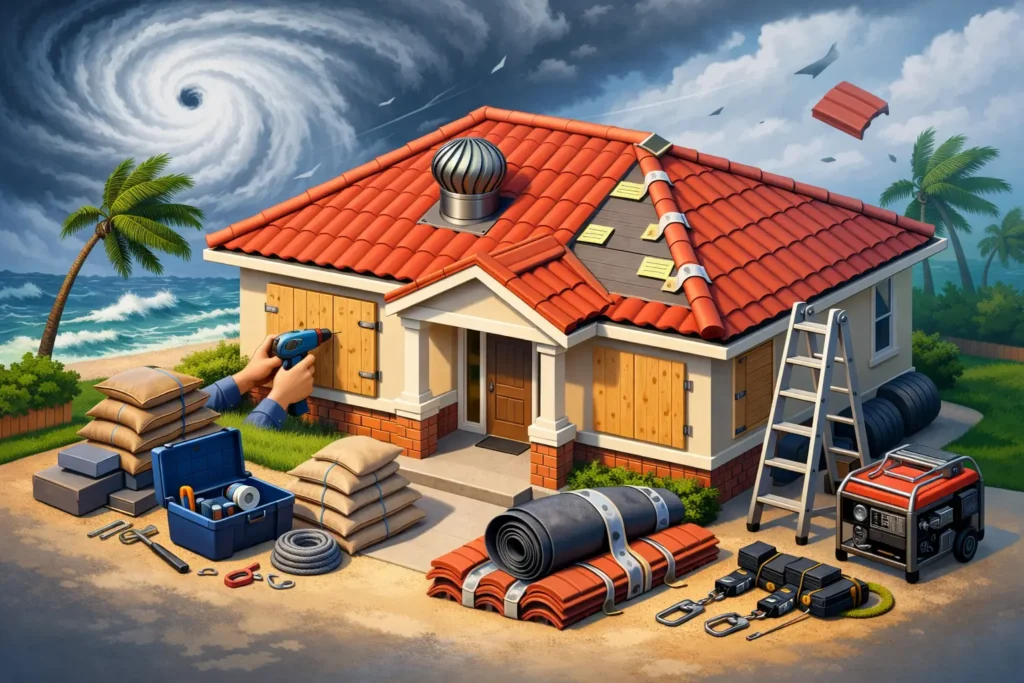
A hurricane watch is not the time to find out that one lifted shingle, a clogged drain, or a loose piece of flashing has been letting water into your roof system. Florida roofs work hard through heat, salt air, driving rain, and high winds long before a named storm appears on the forecast. This hurricane roof preparation guide helps homeowners, property managers, and business owners address the conditions that turn heavy weather into costly damage.
Preparation does not mean a roof can defeat every hurricane. Wind speed, storm direction, debris, age, roof design, and prior damage all matter. What preparation can do is reduce avoidable failure points, protect the building envelope, and give you a clear record of the roof’s condition before the storm.
Start With a Pre-Season Roof Inspection
The best time to prepare is before hurricane season gains momentum. A professional inspection gives you a practical baseline: what is sound, what needs attention, and what can wait. In Palm Bay and across Florida’s East Coast, that baseline is especially valuable because salt exposure and intense sun can shorten the useful life of materials that still look acceptable from the ground.
A qualified roofer should inspect the full system, not just the visible field of shingles or tile. That includes flashing around chimneys, vents, skylights, walls, and valleys; ridge caps; drip edges; penetrations; gutters and drainage points; and the condition of seals around fasteners. On flat and low-slope commercial roofs, seams, scuppers, drains, ponding areas, and edge details deserve close attention.
Age matters, but age alone does not tell the full story. A newer roof with poor flashing or an unsealed penetration can leak in a routine thunderstorm. An older roof may remain serviceable if it has been properly maintained, though its wind resistance and insurance considerations may need closer review. A contractor who knows Florida building codes can explain the difference without pushing a replacement you do not need.
Work Through This Hurricane Roof Preparation Guide Early
Once a storm is approaching, contractor schedules, material availability, and safe work windows change quickly. Address repair needs early enough to allow proper installation and curing. A rushed patch applied in wet conditions is not the same as a planned repair completed under the right conditions.
Secure Loose Materials and Roof Edges
High winds exploit small openings. A loose shingle tab can become a path for wind to get underneath surrounding shingles. A displaced tile, raised metal panel, deteriorated ridge cap, or failing piece of flashing can create the same problem. Once wind gets under roofing materials, uplift forces can spread damage rapidly.
Have loose or missing materials evaluated and secured by a roofing professional. Do not use roof cement as a universal fix, and do not assume a few nails will solve a wind-related issue. The correct repair depends on the roof system, the substrate below it, the fastener pattern, and current code requirements.
Pay particular attention to roof edges. Perimeter areas, eaves, rakes, and corners experience higher wind pressure than the center of the roof. On commercial roofs, coping, edge metal, termination bars, and rooftop equipment curbs are critical details. These components need to be firmly attached and properly sealed, not simply covered over.
Clear Water Paths Before the Rain Arrives
Water that cannot drain has time to find weaknesses. Clear leaves, palm debris, and sediment from gutters, downspouts, roof valleys, scuppers, and drains. Trim branches that overhang the roof when it is safe and permitted to do so. Even a healthy branch can become a battering ram in hurricane-force winds.
For a flat or low-slope roof, standing water after normal rain is a warning sign worth investigating. Ponding can accelerate membrane wear, stress seams, and make a small defect harder to locate. Drainage repairs may be as straightforward as clearing a blockage, or they may call for a more detailed solution involving slope, insulation, drains, or roof coating condition.
Never climb onto a wet roof, especially as a storm approaches. Wet tile, metal, shingles, and membranes can be dangerously slippery. Ground-level checks and professional inspections are the safe choice.
Check Attic and Interior Warning Signs
The roof is only one part of the protection system. Your attic can reveal moisture problems before they become visible on the ceiling. Look for stained decking, damp insulation, mold-like growth, rusted fasteners, daylight at roof penetrations, or a musty smell after rain. These signals do not always mean the whole roof has failed, but they deserve prompt attention.
Inside the home or building, document ceiling stains, peeling paint, warped trim, and moisture around vents or skylights. Take clear, dated photos. If a storm later causes additional damage, pre-storm documentation can help establish what was already present and what changed.
Know When Repairs Are Enough and When Replacement Is Smarter
A targeted repair is often the right decision when damage is isolated and the surrounding roof is in good condition. Replacing damaged flashing, resealing penetrations, correcting a localized leak, or repairing a small area of wind damage can protect the roof and extend its service life.
The calculation changes when damage is widespread, materials are brittle or repeatedly failing, the roof is near the end of its expected life, or repairs are becoming a regular expense. A replacement may provide better wind protection, improved drainage details, current code compliance, and a cleaner path through insurance or financing decisions. It also gives you an opportunity to choose a system suited to your property rather than continuing to patch a system that no longer fits the job.
For Florida homeowners, material selection is not only about appearance. Architectural shingles can offer dependable performance and value. Metal roofing offers long service life and strong wind performance when properly engineered and installed. Tile can provide lasting curb appeal but requires correct attachment and attention to the structure beneath it. Commercial properties may benefit from a well-designed low-slope membrane or roof coating system, depending on drainage, traffic, existing roof condition, and energy goals.
No material is storm-proof on its own. Installation quality, flashing details, fastening, ventilation, and maintenance determine how the entire system performs.
Protect the Property Around the Roof
A roof can be in good shape and still suffer damage from unsecured objects. Bring in patio furniture, grills, umbrellas, planters, toys, and loose yard equipment. Secure trash and recycling containers. Remove or tie down items on balconies and commercial rooftops according to safe site procedures.
For businesses and multi-unit properties, assign responsibility before the weather worsens. Someone should confirm that roof drains are clear, access hatches are secured, rooftop units are checked, and emergency contact information is available. A simple written plan reduces confusion when tenants, staff, and vendors are all responding to the same storm.
Avoid temporary measures that create new risks. Tarping over a roof without proper attachment can tear materials or become airborne. Walking on tile can crack it. Pressure washing a roof before a storm can dislodge aging materials and force water into vulnerable areas. If a condition needs immediate attention, get professional guidance rather than making a fast decision that complicates the repair.
Document Your Roof and Insurance Information
Before a storm threatens, take wide and close photos of every roof slope that can be safely seen from the ground, along with gutters, vents, skylights, soffits, fascia, exterior walls, and interior ceilings. Save inspection reports, invoices, warranty information, permits, and repair records in a digital folder that you can access away from the property.
Review your insurance policy before you need it. Know your hurricane deductible, understand whether your carrier has roof-related requirements, and keep your policy number and claims contact information available. If a storm causes damage, photographs from before and after the event can support a more organized claim conversation.
After the storm, do not assume a roof is fine because there is no immediate drip. Wind-driven rain can enter at a small opening and travel before it appears inside. Check the property from the ground, watch for fresh stains or debris, and arrange a professional inspection if you see missing materials, damaged edges, dented metal, displaced flashing, or signs of water intrusion.
Choose Help That Stays Accountable
Storm season brings out both legitimate contractors and people looking to capitalize on urgency. Be cautious of anyone who pressures you to sign immediately, asks for full payment upfront, cannot provide clear written scope details, or avoids questions about licensing, insurance, warranties, and permits.
A dependable contractor explains what was found, shows you the relevant damage when possible, provides a written estimate, and tells you where repair makes sense versus where replacement should be considered. No surprises. No disappearing act. Bear Roofing brings Florida-specific storm expertise, guided material selection, and end-to-end project management to homeowners and commercial property owners who need a clear plan.
The strongest preparation is not panic buying supplies the day a storm forms. It is knowing the condition of your roof, correcting small weaknesses while work can be done properly, and having a trustworthy professional ready when the weather turns.