
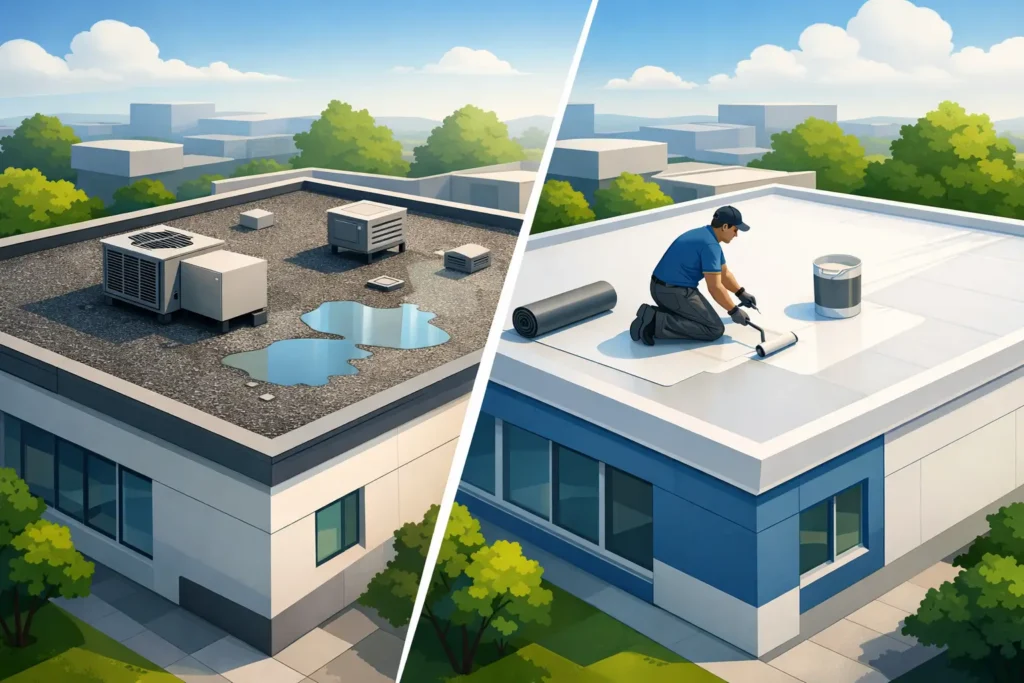
A flat roof vs coating system decision is not really a choice between two identical products. A flat roof is a roof design and waterproofing assembly. A coating system is a fluid-applied protective layer that may restore an existing low-slope roof when the underlying roof is still structurally sound.
That distinction matters in Palm Bay and across Florida’s East Coast. Heat, ponding rain, hurricane-driven wind, UV exposure, and salty coastal air can expose weaknesses quickly. The right answer is not always the least expensive option today. It is the option that protects the building, supports insurance requirements, and avoids paying twice for work that should have been addressed at the start.
Flat Roof vs Coating System: Start With the Roof’s Condition
A roof coating can be a smart restoration tool, but it cannot turn a failing roof into a dependable one. Before choosing either path, a qualified contractor should inspect the membrane, seams, flashing, penetrations, insulation, drainage, and roof deck.
If the roof has widespread wet insulation, deteriorated decking, major membrane shrinkage, recurring leaks in multiple locations, or extensive storm damage, a new flat roofing system is usually the responsible recommendation. Coating over trapped moisture can allow deterioration to continue out of sight. That may lead to larger repairs, interior damage, and an early replacement that could have been planned properly.
On the other hand, an existing roof may be a candidate for a coating system if it has limited damage, a dry and stable substrate, sound seams and flashings after repair, and enough remaining service life to justify restoration. The preparation work is not optional. Cleaning, drying, repairing defects, reinforcing seams, treating penetrations, and applying the coating at the correct thickness determine whether a coating performs as intended.
What a New Flat Roofing System Provides
A flat or low-slope roofing system is built to serve as the primary waterproof barrier. Depending on the building and design needs, it may use materials such as modified bitumen, TPO, PVC, or other approved assemblies. Each system has different strengths related to seam construction, reflectivity, chemical exposure, foot traffic, wind performance, and budget.
Replacement provides the clearest view of what is below the existing roof. That is valuable when leaks have been active for a while or when there is concern about saturated insulation and hidden deck damage. A full replacement also gives the contractor an opportunity to correct details that often cause trouble, including poor flashing, inadequate edge metal, improperly sealed penetrations, and drainage issues.
For Florida property owners, wind resistance deserves special attention. The membrane, fasteners, adhesives, perimeter details, and rooftop equipment flashing must work together as an engineered assembly. A roof is only as dependable as its weakest detail during a major storm.
A new system generally costs more upfront and can involve more disruption than a coating project. But when the existing roof is near the end of its life, replacement offers a new service life, a defined warranty path, and a sound foundation for future maintenance. It is often the better long-term value when the roof has already crossed the line from repairable to unreliable.
Replacement may be the right call when
Replacement is typically favored when leaks are frequent or widespread, moisture has entered the insulation, the deck needs repair, the existing membrane has reached the end of its useful life, or drainage problems require more than surface-level corrections. It also makes sense when a property owner wants to change the roof assembly to better meet current energy, wind, or operational needs.
For commercial buildings, the decision may also come down to risk. A recurring roof leak above inventory, equipment, tenants, or electrical systems can cost far more than a planned replacement. Scheduling work before the next storm season is usually easier than reacting after water enters the building.
When a Coating System Makes Sense
A roof coating system is applied across an existing roof surface to create a continuous protective layer. Depending on the product and roof condition, coatings can help reduce UV degradation, improve reflectivity, seal repaired areas, and extend the useful life of a qualifying roof.
Silicone coatings are often considered where ponding water is a concern because silicone handles standing water better than many alternatives. Acrylic coatings can be highly reflective and cost-effective in the right setting, but they generally require careful consideration where water remains on the roof. Polyurethane products may be selected for areas exposed to heavier foot traffic or specific performance demands. Product selection should follow the existing roof type, drainage conditions, building use, and manufacturer requirements, not a one-size-fits-all sales pitch.
Coatings can be attractive because they typically create less tear-off waste and may allow a faster installation with limited disruption to occupants. Their reflective finish can also help manage roof-surface temperatures, which may support cooling efficiency in Florida’s sun. Energy savings vary based on insulation, HVAC performance, building use, color, and roof design, so they should be treated as a potential benefit rather than a guaranteed number.
The trade-off is that a coating depends on the condition of the roof beneath it. It is maintenance-sensitive and must be kept free of punctures, unaddressed drainage problems, and neglected flashing details. A coating system is restoration, not a shortcut around replacement.
Coating may be the right call when
A coating is worth serious consideration when the existing membrane is dry, attached, and generally in good condition, but its surface is weathered. It can also work well for a property owner who needs to extend service life while planning for a future replacement, provided the roof passes moisture testing and repairs are handled first.
For a commercial property with a sound low-slope roof, a properly specified coating can reduce disruption and preserve a functional roof assembly. For a homeowner with a flat-roof addition, patio cover, or low-slope section, it can be a practical solution if the roof has not suffered hidden water damage.
Drainage Is Often the Deciding Factor
Many “flat” roofs are actually low-slope roofs designed to move water toward drains, scuppers, or gutters. Water should not remain on the roof for long periods after rain. If it does, the issue may involve blocked drains, inadequate slope, settled insulation, structural movement, or poorly designed drainage paths.
A coating may tolerate ponding water better than an aging membrane, especially with the right product, but it does not correct the reason water is collecting. If standing water is persistent, the roof should be evaluated for drainage improvements before restoration or replacement. In some cases, tapered insulation or other corrective work is needed to create positive drainage.
This is where a thorough inspection protects the property owner. The visible leak is not always the source of the problem. Water can travel beneath the membrane or through insulation before it appears inside the building.
Cost, Warranty, and Timing
Upfront cost matters, but the comparison should include expected remaining life, repair history, building risk, and warranty coverage. A coating project often costs less than a full tear-off and replacement. That savings is meaningful only if the roof is a legitimate restoration candidate. Applying a lower-cost coating to a roof that needs replacement can become the most expensive option because it delays, rather than solves, the underlying failure.
Ask clear questions about what is included. Does the scope include moisture detection, seam repairs, flashing work, drain cleaning, substrate preparation, thickness verification, and warranty documentation? Is the coating manufacturer-approved for the existing roof type? If replacement is recommended, does the proposal explain the roof assembly, wind-rated details, insulation needs, and what happens if deck damage is found?
No surprises. No disappearing act. A dependable contractor should explain why one option fits the roof’s current condition and document the work needed to make that option perform.
Make the Decision Before the Next Leak Makes It for You
The best choice is based on evidence from the roof itself, not a blanket promise that coatings are always cheaper or replacement is always necessary. A sound roof with surface wear may deserve a carefully prepared coating system. A roof with moisture, failing details, or recurring leaks deserves a replacement plan that addresses the entire assembly.
For Florida homes and commercial properties, acting while the issue is manageable gives you more control over timing, budget, and material selection. Bear Roofing can help property owners evaluate the roof honestly, explain the trade-offs clearly, and move forward with protection built for the conditions outside your door.