
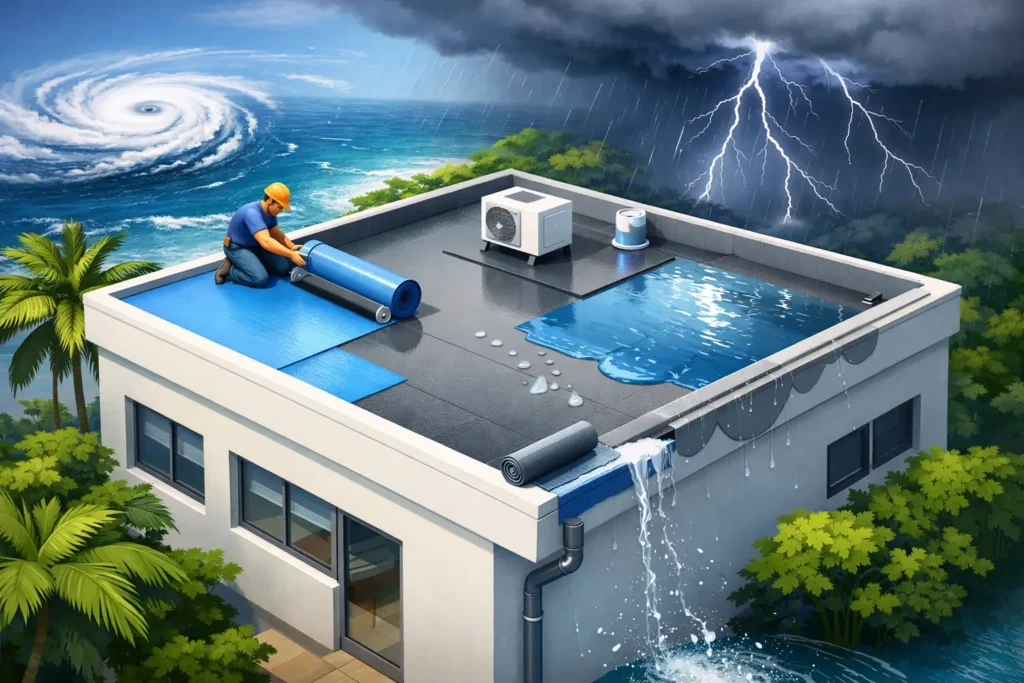
A flat roof can look fine from the ground while water is already working its way through a seam, drain detail, or cracked flashing. On Florida’s East Coast, that risk moves faster. Intense UV exposure, wind-driven rain, salty air, and afternoon downpours put low-slope roofs under constant pressure. Knowing how to waterproof flat roofs starts with understanding one fact: a flat roof is not truly flat. It needs a controlled path for water to leave and a continuous waterproof surface everywhere water may travel.
For a homeowner, property manager, or business owner, the goal is not simply to stop a visible leak. It is to protect the roof deck, insulation, interior finishes, equipment, and the building’s long-term value. The right solution depends on the roof’s material, age, drainage, and condition. No surprises. No temporary patch presented as a permanent fix.
Start With Drainage, Not Coating
Standing water is one of the clearest warning signs on a low-slope roof. While some roofing systems can tolerate shallow ponding for a limited time, water that remains 48 hours after rain deserves attention. It adds weight, accelerates membrane wear, encourages algae growth, and finds weak points at seams and penetrations.
Before applying any waterproofing product, inspect where water is collecting and why. Common causes include blocked drains, clogged scuppers, crushed drain lines, debris around rooftop equipment, and areas where the roof has settled. A coating cannot correct poor drainage by itself. If water has nowhere to go, it will keep testing the roof system.
Clearing drains and gutters is basic maintenance, but it must be done carefully. Do not scrape aggressively across a membrane or push debris into internal drains. On commercial roofs, verify that strainers, overflow drains, and scuppers are open and functioning. Overflow paths matter during Florida cloudbursts, when a primary drain can become overwhelmed quickly.
If ponding is caused by low areas in the roof, a roofing professional may recommend tapered insulation, localized crickets, drain modifications, or a redesigned drainage plan during restoration or replacement. That is a larger repair, but it addresses the cause instead of repeatedly chasing the symptom.
Inspect the Waterproofing System From Edge to Edge
Flat roofing failures rarely happen in the middle of a clean, open field of membrane. More often, they begin at transitions: parapet walls, roof edges, drains, skylights, vents, HVAC curbs, pipes, and seams. These details expand, contract, and take the full force of wind-driven rain.
A practical inspection should look for open seams, splits, blisters, punctures, wrinkles, loose edge metal, cracked sealant, and deteriorated flashing. Pay close attention to any area repaired in the past. A patch may be sound, or it may have reached the end of its useful life.
Inside the building, check ceilings and walls for stains, bubbling paint, musty odors, or soft drywall. Water can travel along the roof deck or insulation before it appears indoors, so the stain is not always directly below the breach. A moisture scan or professional inspection can help locate hidden wet materials before damage spreads.
Safety comes first. Flat roofs still have fall hazards, weak areas, slick surfaces, and electrical equipment. Avoid walking a wet roof, and do not use a ladder without proper footing and protection. For larger buildings or roofs with active leaks, professional assessment is the safer choice.
How to Waterproof Flat Roofs With the Right System
The best waterproofing approach depends on the existing roof. Applying the wrong coating over an incompatible membrane can lead to adhesion failure, trapped moisture, or a voided manufacturer warranty. The system must match the roof, not the other way around.
Repairable membrane roofs
TPO, PVC, modified bitumen, and EPDM are common flat-roof materials. Each has different repair methods. TPO and PVC seams are typically heat-welded. Modified bitumen may use compatible flashing materials and asphalt-based or cold-applied products, depending on the assembly. EPDM requires compatible cleaners, primers, tapes, and patches.
Small, isolated damage may be repaired when the surrounding membrane is still in good condition. The repair area needs thorough cleaning and drying first. Loose material must be removed, damaged sections properly patched, and perimeter details reinforced as needed. Covering a dirty or damp seam with mastic is not a dependable repair strategy in Florida’s heat and rain.
Roof coatings for restoration and protection
A roof coating can be an excellent option for an aging but structurally sound low-slope roof. Coatings create a continuous protective layer, help reduce UV exposure, and can improve reflectivity to lower roof-surface temperatures. Silicone, acrylic, and polyurethane coatings each have strengths and limitations.
Silicone performs well in areas with recurring ponding water and holds up against UV exposure, but it can attract dirt and may be difficult to recoat later without the right preparation. Acrylic coatings are often cost-effective and highly reflective, yet they generally need dry conditions for application and are less suited to persistent ponding. Polyurethane coatings offer strong impact resistance and can work well in high-traffic areas, although they often cost more.
A coating system is only as good as the preparation underneath it. The roof must be cleaned, dried, repaired, and primed where required. Seams, penetrations, and transitions usually receive reinforcing fabric or detail coating before the field coating is installed. Proper thickness matters as well. A thin, uneven coat may look fresh but will not deliver the expected service life.
When replacement is the smarter waterproofing decision
If the membrane is brittle, saturated, extensively patched, lifting at seams, or nearing the end of its service life, restoration may only postpone a larger problem. Wet insulation and damaged decking should be addressed, not buried beneath a coating. A full replacement can provide a clean, code-compliant system with improved insulation, drainage, flashings, and wind-resistance details.
This is especially relevant for Florida properties after major storms. High winds can compromise edge details and seams without creating an obvious opening. A documented inspection helps determine whether repairs are sufficient, whether an insurance claim may be appropriate, or whether replacement provides better long-term value.
Protect Flashings, Penetrations, and Roof Edges
Waterproofing a flat roof means treating every interruption in the roof surface as a priority. Pipes, drains, vents, satellite mounts, skylights, and HVAC curbs need watertight flashing systems that move with the roof and remain secure in high winds.
Do not rely on caulk alone as a permanent answer. Sealant has a role at specific details, but it breaks down under UV exposure and movement. Proper flashing, compatible membrane materials, and mechanically secure termination details do the real work.
Roof edges deserve the same attention. Wind often gets underneath loose edge metal and begins peeling back the system from the perimeter. In coastal Florida, installation must account for local code requirements and wind zones. Secure edge details are not cosmetic. They are part of the waterproofing and wind-resistance system.
Build a Maintenance Plan Around Florida Weather
Waterproofing is not a one-time event. A well-installed roof still needs routine care to deliver its expected life. Schedule inspections at least twice a year, ideally before hurricane season and again after the season ends. Also inspect after major wind events, hail, or prolonged heavy rainfall.
Keep drains, scuppers, and gutters clear. Remove branches and loose debris before they block drainage or puncture the membrane. Watch for new ponding, staining, or changes around rooftop equipment. If contractors service HVAC units, make sure they do not leave loose fasteners, cut insulation, or sharp debris on the roof.
For commercial properties, keep a record of repairs, inspections, photos, and storm-related observations. This creates a clear maintenance history and can be useful for budgeting, warranty questions, and insurance documentation.
Choose Workmanship That Holds Up
A flat roof is a system, not a bucket of coating. The membrane, seams, drainage, insulation, flashings, roof edges, and installation quality must work together. That is why experienced local installation matters, particularly where Florida weather can expose weak details in one hard storm.
Bear Roofing helps property owners evaluate whether a targeted repair, restoration coating, or full low-slope replacement is the right next step. The recommendation should be based on the roof’s actual condition, with clear scope, materials, and expectations from the start.
A dry ceiling after the next rain is good. A roof designed to manage the next several storm seasons is better. Address drainage early, repair details correctly, and choose a waterproofing system that fits the roof you actually have.