
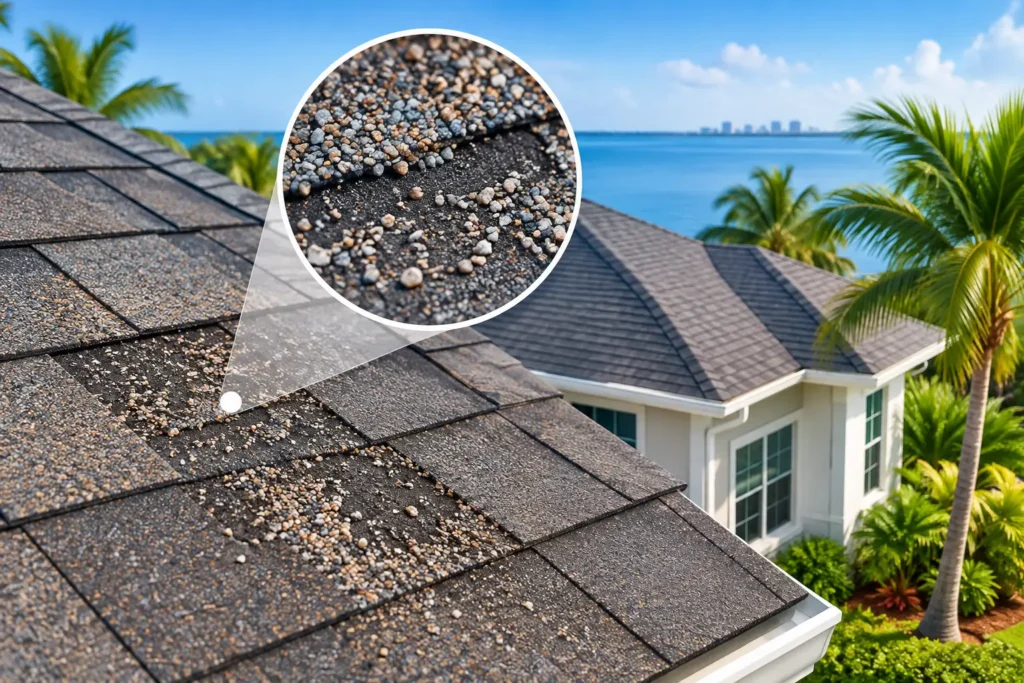
A handful of loose granules in a gutter after a hard Florida storm may not mean your roof is failing. But widespread shingle granule loss, bare spots, or dark material washing into downspouts can be an early warning that your roof’s protective layer is wearing away. On the East Coast of Florida, roofs face intense UV exposure, wind-driven rain, salt air, and hurricane-season weather. Small changes deserve a closer look before they become a leak, a denied insurance claim, or an unexpected replacement.
What Shingle Granules Actually Do
Asphalt shingles are covered with mineral granules. They give the roof its color, but appearance is only part of the job. Granules shield the asphalt beneath from ultraviolet rays, help the shingles handle heat, and provide a degree of fire resistance.
When granules wear away, the asphalt layer is more exposed to Florida sun and weather. That can speed up drying, cracking, curling, and overall shingle deterioration. The roof may still look acceptable from the driveway while its remaining service life is quietly shrinking.
Some granule shedding is expected. A new roof can release a small amount of loose, excess granules after installation, especially after its first heavy rains. An older roof may also shed gradually as it approaches the end of its useful life. The concern is not every loose granule. It is the pattern, volume, and condition of the shingles themselves.
When Shingle Granule Loss Is a Real Concern
A few grains scattered near a downspout are rarely enough to diagnose a roof. Larger accumulations that look like coarse sand, repeated buildup after storms, or visibly exposed black asphalt deserve professional attention.
Look for changes across the roof surface as well. Granule loss often appears as lighter, patchy areas where a shingle’s color has faded unevenly. You may see dark bare spots, bald lines along shingle edges, or areas where the texture looks smoother than surrounding sections. On architectural shingles, the damage can be less obvious from the ground, which is one reason a proper inspection matters.
Age changes the equation. If your asphalt shingle roof is nearing the later portion of its expected lifespan, granule loss is more likely to reflect normal weathering. If the roof is relatively new and has suddenly lost granules after a wind event, installation issue, manufacturing concern, or storm damage may be involved.
Why Florida Roofs Lose Granules Faster
Florida roofing materials work harder than roofs in milder climates. Our heat cycles expand and contract shingles day after day. UV exposure gradually breaks down asphalt binders. Summer storms add wind, driving rain, and airborne debris that can scour or lift shingle edges.
Coastal conditions add another layer of stress. Salt air and moisture can contribute to faster aging of roofing components, while tropical systems can leave damage that is not obvious from ground level. A roof does not need to lose whole shingles to be compromised. Strong winds can loosen granules, crease shingles, and weaken the seal that holds shingle tabs in place.
Foot traffic can also cause localized granule loss. That does not mean homeowners should avoid necessary maintenance, but it does mean roof access should be limited and handled carefully. A technician walking across a hot, aging shingle roof can dislodge material, particularly on steep slopes or brittle shingles.
Common Causes Beyond Normal Aging
Storm exposure is a leading cause, but it is not the only one. Hail can knock granules away and leave small impact marks that are difficult for an untrained eye to identify. Wind can cause creases or lift shingle tabs, creating damage that may later lead to granule loss and water intrusion.
Improper installation is another possibility. Shingles installed over an uneven deck, poorly ventilated attic, or inadequate underlayment system may age prematurely. Poor attic ventilation traps heat beneath the roof deck, baking the shingles from below and shortening their lifespan. This is why a roof evaluation should look beyond the visible surface.
Manufacturing defects can occur, though they are less common than weathering or storm damage. If granules are coming off in unusual quantities on a newer roof, documentation matters. Clear photos, installation records, and an inspection from a qualified contractor can help establish what happened and what options may be available.
What Homeowners Should Check Safely
Start from the ground. Check gutters, splash blocks, and downspout exits for heavy granule buildup. Notice whether the roof color looks uneven or whether certain slopes appear darker, smoother, or worn compared with others.
Then check inside the home. Water stains on ceilings, damp insulation, musty attic odors, or daylight visible through the roof deck require prompt attention. Granule loss does not always mean a leak has started, but the roof’s ability to resist water can decline as shingles deteriorate.
Do not climb onto the roof to investigate. Florida roofs can be slippery, steep, hot, and more fragile than they appear. A ground-level review is useful. A trained roofing inspection is the safer way to assess the shingles, flashing, ridge areas, vents, and underlying system.
Repair or Replacement: It Depends on the Scope
Localized shingle granule loss does not automatically require a full roof replacement. If the roof is otherwise in good condition and damage is limited to a small, identifiable area, a targeted repair may be the sensible choice. Replacing affected shingles and addressing the cause can help protect the rest of the system.
Replacement becomes more practical when granule loss is widespread, shingles are brittle or curling, multiple slopes show aging, or the roof is close to the end of its expected service life. Repeated patching on an aging roof can cost more over time and may leave homeowners with inconsistent protection before the next major storm.
Insurance may be part of the conversation when a covered storm event caused the damage. However, insurance decisions depend on the policy, roof age, documented condition, deductible, and the carrier’s findings. A trustworthy contractor should help you understand the roof condition and provide clear documentation without promising an outcome that only the insurer can determine.
Protecting a Shingle Roof From Further Wear
You cannot stop Florida weather, but routine attention can reduce avoidable damage. Keep gutters clear so water drains properly and granules are easier to spot. Trim branches away from the roof to limit abrasion and falling debris. Address damaged flashing, lifted shingles, and ventilation concerns before they spread.
After a named storm or a period of unusually strong winds, schedule an inspection even if there is no active leak. Early storm damage is often easier to repair than moisture damage found months later. Regular inspections are also valuable before listing a home, renewing certain insurance coverage, or making a major property investment.
Material selection matters when replacement is the right call. Higher-quality architectural shingles, correct underlayment, code-compliant installation, balanced ventilation, and wind-rated components work together. The shingles are only one part of the roofing system. Cutting corners underneath them can shorten the life of the entire roof.
Get Clear Answers Before Damage Spreads
Granules in a gutter are a reason to pay attention, not a reason to panic. What matters is whether the loss is isolated, increasing, storm-related, or paired with worn shingles and other signs of failure. A careful inspection replaces guesswork with a clear plan.
For Palm Bay and East Coast Florida property owners, Bear Roofing evaluates the full roofing system and explains what the findings mean in plain language. No surprises. No disappearing act. Whether the answer is monitoring, repair, or replacement, acting before the next heavy rain gives you more control over the decision.