
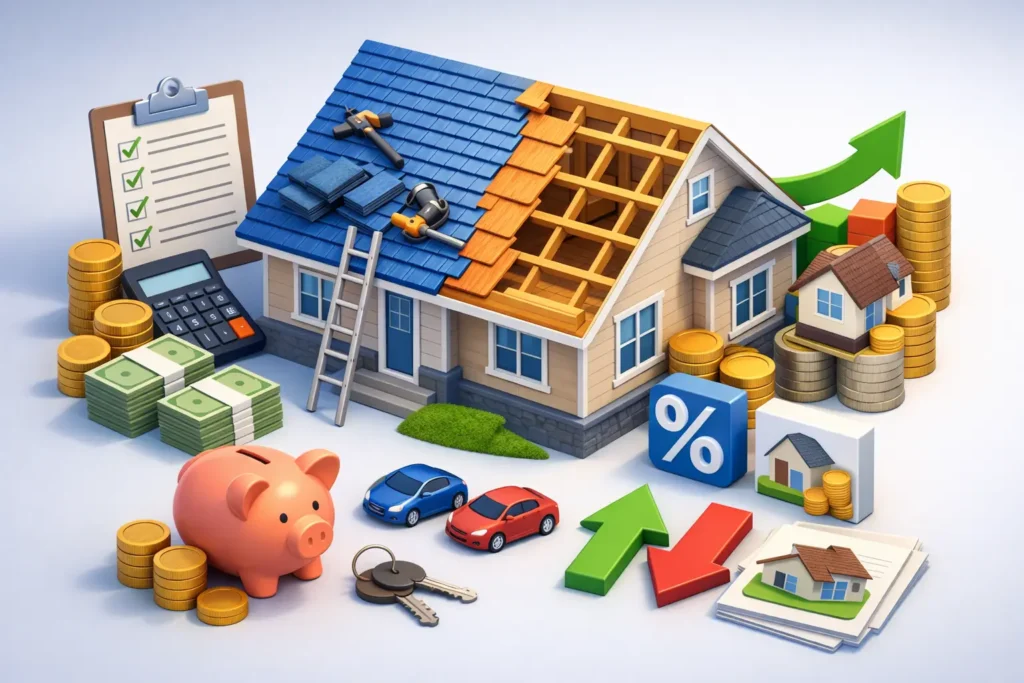
A roof rarely fails at a convenient time. In Florida, it is often a storm, a leak that will not stay patched, or an insurance deadline that forces the decision. That is why understanding roof replacement financing options matters before the damage spreads, the deductible hits, or the next weather system shows up.
For many property owners, the question is not whether the roof needs to be replaced. It is how to pay for it without creating more stress than the project itself. The right financing path depends on your roof condition, your budget, your timeline, and whether insurance is involved. There is no one-size-fits-all answer, but there is a smart way to evaluate the choices.
Why roof financing looks different in Florida
Florida roofs take a beating from heat, wind, salt air, and heavy rain. That changes the financing conversation. A roof replacement here is not just a cosmetic upgrade or a resale project. It is often a protection decision tied directly to insurability, storm readiness, and long-term property value.
That means delaying the project can cost more than the monthly payment you were trying to avoid. A worn roof can lead to interior damage, mold concerns, rising energy bills, and trouble with homeowners insurance. For commercial properties, waiting can also mean tenant complaints, operational disruption, and damage to inventory or equipment.
Financing becomes practical when it helps you solve the problem at the right time instead of patching it over until the next failure.
The most common roof replacement financing options
When people search for roof replacement financing options, they are usually comparing monthly payment plans, personal lending, home equity products, and insurance-related funding gaps. Each has strengths and trade-offs.
Contractor financing
Many roofing companies offer financing through third-party lending partners. This is often the most direct option because it is built around the project itself. You get an estimate, review payment terms, and apply as part of the sales process.
The biggest advantage is speed. If your roof is actively failing or a storm season deadline is approaching, contractor financing can move much faster than arranging funding through a bank on your own. It also keeps the process more centralized. You are not juggling a lender, a contractor, and a separate scope review with everyone speaking a different language.
The trade-off is that rates and terms vary based on credit profile, loan length, and lender program. Some plans offer promotional periods or fixed monthly payments, while others carry higher interest than secured lending options. The monthly payment may be manageable, but you still want to compare the total cost over time.
Personal loans
A personal loan can work well for homeowners who want flexibility and do not want to use home equity. These loans are usually unsecured, so approval is based largely on credit, income, and debt levels.
They can be a good fit for mid-range roof replacements, especially when you want fixed payments and a set payoff window. The funds may also be used for related work such as decking repairs, gutters, or ventilation improvements if those items are not fully wrapped into the roofing contract.
The downside is simple. Because the loan is unsecured, the interest rate may be higher than a home equity product. For some borrowers, that higher rate is acceptable if it means faster approval and less paperwork.
Home equity loans and HELOCs
If you have built equity in your home, a home equity loan or line of credit can offer lower rates than unsecured borrowing. That can make a major difference on a large roofing project, particularly if you are upgrading to metal, tile, or a premium roofing system with a longer service life.
A home equity loan typically gives you a lump sum with fixed payments. A HELOC works more like a line of credit, which can be useful if the final project cost may change due to hidden decking damage or other field conditions discovered after tear-off.
The trade-off is timing and risk. These products usually take longer to set up, and your home serves as collateral. If the roof issue is urgent, waiting for this type of financing may not be practical.
Credit cards
Using a credit card for a roof replacement is usually not the first recommendation for a full project, but it can make sense in limited situations. Some property owners use a card for deductibles, temporary repairs, or smaller balances that can be paid off quickly.
If you have a strong promotional APR offer and a plan to eliminate the balance before the rate resets, it may be useful. If not, carrying a large roofing bill on a high-interest card can turn a necessary repair into a long-term financial burden.
Insurance plus out-of-pocket financing
In Florida, insurance often covers part of the problem, not all of it. You may have a deductible, excluded upgrades, code-related items, or scope differences between what the carrier pays and what the full project actually requires.
This is where financing fills the gap. Instead of thinking of financing as the entire roof budget, many homeowners use it to bridge the amount insurance does not cover. That can be a much more manageable number and may allow you to move forward with a proper replacement instead of settling for a short-term patch.
How to compare financing without getting burned
Low monthly payments can look good on paper, but they are only part of the picture. The better question is what the financing will cost you over the full life of the loan and whether the roof system being installed gives you value that matches that cost.
Start with the APR, not just the payment amount. Then look at the loan term, fees, prepayment penalties, and whether the rate is fixed or variable. A seven-year loan with a slightly higher payment may cost far less than a long term with lower monthly payments but much more interest.
You also want to compare financing in the context of the roofing system itself. A cheaper roof with shorter life expectancy can be more expensive in the long run than a better system financed responsibly. In Florida, that is especially true when wind ratings, underlayment, ventilation, and installation quality affect how the roof performs in real conditions.
Financing for homeowners versus commercial properties
Homeowners and commercial property owners often approach financing very differently. A homeowner may focus on monthly affordability, insurance requirements, and protecting resale value. A commercial owner is more likely to weigh cash flow, depreciation, tenant impact, and long-term maintenance planning.
For commercial properties, financing may also be tied to coatings, phased replacement, or low-slope systems that reduce disruption while extending service life. The best option is often the one that keeps the building operational while preserving capital for the rest of the business.
For residential projects, emotional factors matter too. A leaking roof over your family is not just a line item. It is a pressure point. Good financing should reduce that pressure, not add confusion to it.
What to ask before you sign
Before choosing any roof replacement financing option, ask a few direct questions. Is there a same-as-cash period, and what happens if the balance is not paid in time? Are there origination fees? Can you pay the loan off early without penalty? Does the payment start immediately, or after the work is complete?
Just as important, ask roofing questions alongside the financing questions. What exactly is included in the scope? How are change orders handled if damaged decking is found? What warranties are included on both materials and workmanship? Financing a bad roof is still a bad deal.
A dependable contractor should be able to explain the project and the payment path clearly. No surprises. No disappearing act.
The best financing option is the one that fits the real problem
If your roof is near the end of its life but still stable, you may have time to compare lenders and pursue the lowest-cost structure. If active leaks, storm damage, or insurance pressure are in play, speed and simplicity may matter more. That does not mean rushing blindly. It means matching the financing tool to the urgency of the job.
For Florida property owners, that usually comes down to three priorities: getting the roof done before more damage occurs, keeping payments realistic, and making sure the installed system is built for local conditions. Companies like Bear Roofing often help customers think through that full picture, not just the shingle color or the invoice total.
A roof replacement is a major investment, but waiting too long can be the more expensive decision. The right financing should give you room to protect your property now and breathe easier once the work is done.