
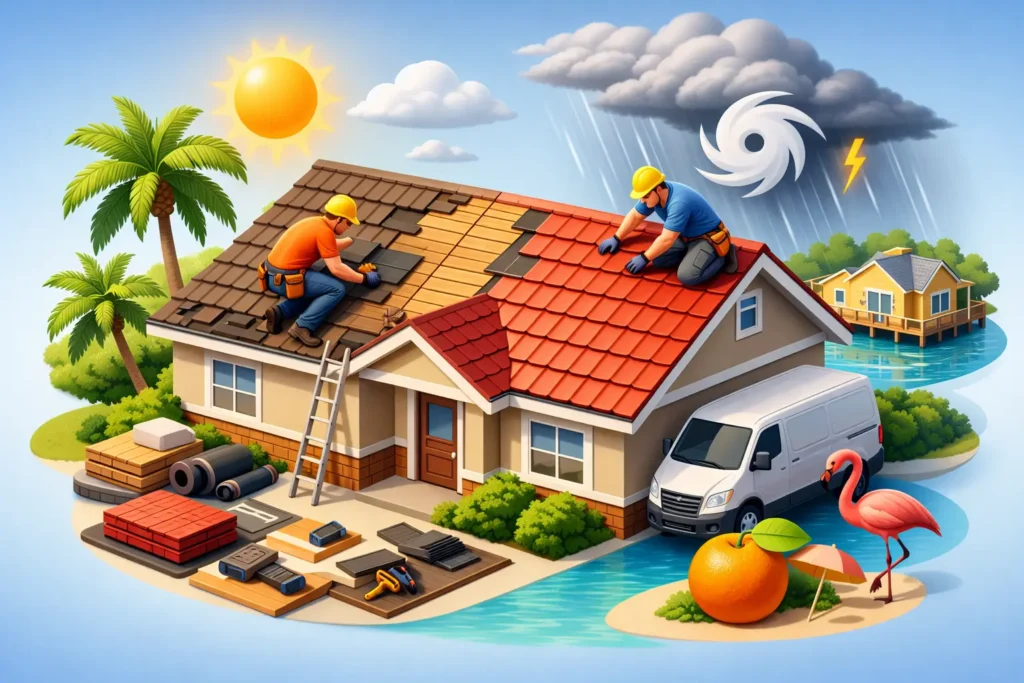
A roof in Florida does not fail quietly. One season of hard sun, salt air, wind-driven rain, and storm activity can turn a small weakness into interior damage, rising energy bills, or an insurance problem. That is why a florida roof replacement guide matters so much here – not as a nice-to-have, but as a practical way to protect your home, business, and budget before the next storm tests everything overhead.
Roof replacement in this state is different from roof replacement in most of the country. Florida building codes are stricter for a reason. Wind uplift matters. Underlayment matters. Attachment methods matter. The material that looks great on a brochure may not be the right fit for a coastal property in Palm Bay or another East Coast community exposed to heat, humidity, and severe weather.
Florida roof replacement guide: what makes Florida different
The biggest mistake property owners make is assuming all roofs are judged by the same standards. In Florida, the roof is part of your storm defense system. It has to handle intense UV exposure, heavy rain, fast-changing weather, and in many areas, hurricane-force wind demands. A replacement is not just about shingles or tile. It is about the full assembly, from decking condition to ventilation to waterproofing details.
Insurance also changes the conversation. A roof that is older but still functioning may still raise concerns during underwriting or renewal. On the other hand, a new roof installed to current code can improve insurability and reduce future claim headaches. That does not mean every old roof needs immediate replacement, but it does mean timing matters.
Then there is the permit and inspection side. A legitimate Florida roof replacement should involve code-compliant work, proper permitting, and final inspections. If a contractor tries to shortcut that process, the low price can become expensive later when you sell, file a claim, or discover the installation was never done to standard.
When repair is no longer enough
Many owners call for a repair hoping to buy another few years. Sometimes that is the right call. A localized issue around flashing, a limited leak, or a few missing shingles may not require a full replacement. But there is a point where repeated repairs stop saving money.
If leaks keep returning, if the roof has widespread wear, if storm damage affects large sections, or if the system is near the end of its service life, replacement usually makes more financial sense. The same is true when the deck or underlayment shows moisture-related deterioration. A patch can fix the symptom while leaving the broader failure in place.
For commercial properties, this becomes even more important. Ongoing water intrusion can damage inventory, disrupt tenants, and create interior maintenance costs that far exceed the roof work itself. The right decision is not always the cheapest decision today. It is the one that reduces risk over time.
Choosing the right roofing material in Florida
Material selection should be based on building type, slope, budget, appearance goals, and local exposure conditions. There is no single best roof for every property.
Asphalt shingles remain popular because they are cost-effective, widely available, and available in styles that work for many homes. They can be a smart choice when installed correctly with the right underlayment and wind-rated system. The trade-off is lifespan. In Florida heat and storm conditions, shingles may not last as long as they would in milder climates.
Tile roofs are common across Florida because they perform well in the climate and deliver strong curb appeal. Concrete and clay tile can offer longevity and excellent aesthetics, but they are heavier systems. That means the structure has to be appropriate, and repairs can be more specialized.
Metal roofing continues to gain ground for both residential and commercial use. It is durable, energy-efficient, and well-suited for wind resistance when properly engineered and installed. Upfront cost is usually higher than shingles, but many owners see value in lifespan and performance.
For flat and low-slope commercial roofs, system choice often comes down to drainage design, traffic levels, waterproofing priorities, and long-term maintenance strategy. Coatings may extend life in some cases, but not every aging roof is a good coating candidate. If moisture is trapped or the substrate is compromised, replacement may be the smarter move.
What a roof replacement should include
A proper roof replacement is more than tearing off old materials and putting new ones on top. That approach leaves too much to chance. The process should start with a full inspection of the existing roof, including surface materials, flashing, penetrations, underlayment, ventilation, and where needed, decking condition.
From there, the scope should be clearly explained. You should know what is being removed, what is being replaced, what code upgrades are required, and what accessories are included. Drip edge, flashing, valleys, ridge components, sealants, ventilation details, and cleanup should not be vague line items.
This is also where workmanship matters. Two roofs can use similar materials and perform very differently based on installation quality. Fastener placement, flashing work, waterproof transitions, and storm-focused detailing are what separate a roof that looks good on day one from one that holds up when weather gets serious.
Costs, estimates, and why cheap bids are risky
Roof replacement pricing in Florida depends on size, pitch, material, complexity, tear-off requirements, code upgrades, and whether damage is discovered beneath the old roof. Coastal exposure and specialty materials can add cost, and so can difficult access or a complex roof design.
That is why square-foot pricing alone can be misleading. A lower quote may leave out key items like rotten wood replacement, upgraded underlayment, permit costs, disposal, or required flashing details. It may also reflect rushed labor or weak supervision.
A strong estimate should be transparent. You should understand what you are paying for and why. No surprises. No disappearing act. If financing is part of the plan, that should be discussed early so the project stays aligned with your real budget rather than a number that looks good until the change orders start.
Insurance claims and storm damage
In Florida, many roof replacements start after wind or storm damage. That process can be stressful, especially when you are trying to protect the property while also documenting what happened. A contractor familiar with Florida insurance-related roofing work can help identify storm-created damage, explain what is repairable versus what requires replacement, and provide the documentation needed for the claim process.
It is important to stay realistic here. Insurance does not automatically pay for every old roof, and not every damaged roof will qualify for full replacement. The facts of the loss, policy terms, age, and condition all matter. But a contractor who knows how to inspect thoroughly and communicate clearly can keep you from missing legitimate damage or getting lost in the process.
Timeline, disruption, and how to prepare
Most owners want to know one thing after price: how long will this take? The answer depends on the roof size, material, weather, permit timing, and whether hidden deck repairs are found after tear-off. A straightforward residential replacement can move quickly. A larger tile, metal, or commercial job may take longer and require more coordination.
Preparation helps. Move vehicles away from the work area. Protect fragile items inside, since vibration from roofing work can travel through the structure. For commercial properties, talk through access, staging, and business continuity before the crew arrives.
Good project management makes a major difference. You want a contractor who communicates start dates, explains the sequence, keeps the site controlled, and handles cleanup seriously. That is part of the job, not an extra.
Florida roof replacement guide: how to choose the right contractor
The contractor you hire matters as much as the material you choose. Look for a company that knows Florida code requirements, understands coastal conditions, provides clear written scopes, and stands behind the work with a real workmanship warranty. Veteran-owned companies with disciplined project management often bring the kind of accountability owners appreciate during a high-stakes project.
Ask direct questions. Who pulls the permit? Who supervises the project? What happens if damaged decking is found? What warranty applies to labor? How are insurance-related jobs documented? A dependable roofing partner should answer these without hesitation.
For East Coast Florida property owners, local experience is not marketing fluff. It affects material recommendations, installation details, scheduling around weather, and how well the finished roof performs over time. Bear Roofing has built its reputation around that kind of end-to-end guidance, especially for owners who do not want to manage the complexity on their own.
A roof replacement is a major purchase, but it is also a decision about protection, accountability, and peace of mind. If you approach it with the right information, ask the hard questions early, and choose a contractor who treats the project like a responsibility instead of a transaction, you put yourself in a much stronger position before the next Florida storm rolls in.