
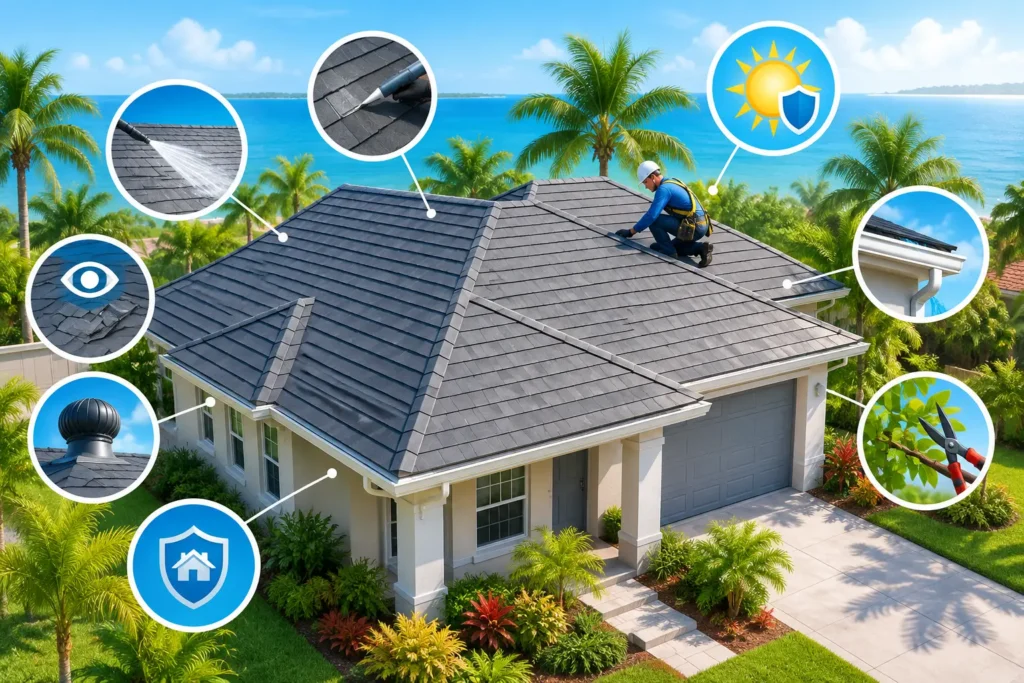
A Florida roof does not get the luxury of a quiet life. It faces intense UV exposure, wind-driven rain, humidity, salt air near the coast, and hurricane-season debris year after year. The best ways to extend roof life are not complicated, but they do require consistent attention before a small weakness becomes a leak, an insurance claim, or an unexpected replacement.
For Palm Bay and East Coast Florida property owners, roof longevity comes down to controlling water, addressing storm damage quickly, and using the right maintenance approach for the roofing system you have. A roof can only protect your property as well as its most vulnerable detail: a lifted shingle, cracked tile, open flashing seam, clogged drain, or failing roof penetration.
1. Schedule Inspections Before and After Storm Season
A professional roof inspection is the starting point for a longer-lasting roof. Most homeowners should schedule one annually, while commercial properties and homes surrounded by large trees may benefit from inspections twice a year. In Florida, it also makes sense to inspect after a named storm, major wind event, or hail report in your area.
Wind damage is not always obvious from the ground. Shingles may lose their seal, tiles can shift or crack, and metal fasteners can loosen without causing an immediate ceiling stain. Left alone, these small openings let water work beneath the roof covering and into underlayment, decking, insulation, and interior finishes.
An inspection should look beyond the field of the roof. Flashing around chimneys, skylights, vents, walls, and plumbing penetrations deserves close attention. These transition points handle a large share of roof leaks, even on roofs that otherwise appear to be in good shape.
2. Keep Gutters, Drains, and Valleys Clear
Water needs a reliable path off the roof. When gutters, downspouts, scuppers, drains, or roof valleys become clogged with leaves, pine needles, seed pods, or roofing granules, water can back up under the roofing materials. That standing water adds unnecessary stress to shingles, tile systems, low-slope membranes, fascia, and roof decking.
For residential roofs, clean gutters at least twice a year and more often if trees overhang the home. Make sure downspouts discharge away from the foundation and do not dump water onto a lower roof section.
For commercial flat roofs, drainage is even more critical. Ponding water can accelerate membrane deterioration and expose weak seams. A roof coating can help protect a compatible low-slope system, but it is not a substitute for correcting drainage problems first. The roof must shed water as designed.
3. Repair Small Problems While They Are Still Small
The most expensive roof repair is often the one that was delayed. A missing shingle, cracked tile, loose ridge cap, or deteriorated pipe boot may seem minor, but Florida rain can find its way through surprisingly small openings.
Quick repairs protect more than the outer roof surface. They help preserve the underlayment and decking beneath it, which can reduce the scope and cost of future work. They also provide a clear record of responsible maintenance if you ever need to document storm-related damage for an insurance claim.
Do not rely on caulk as a permanent answer to an active roofing problem. Sealants have a place, but they age in heat and UV exposure. A lasting repair should address the actual failure, whether that means replacing damaged materials, reinstalling flashing, securing loose components, or repairing a membrane seam.
4. Trim Trees Without Damaging the Roof
Tree shade can lower roof temperatures, but branches hanging directly over a roof create real risk. During a storm, limbs can scrape shingles, crack tile, puncture membranes, or drop heavy debris into gutters and valleys. Leaves also hold moisture against the roof surface and encourage organic growth.
Keep branches trimmed back so they do not rub the roof during normal wind conditions. If a tree needs major pruning near power lines or a steep roof, hire a qualified tree professional rather than attempting the work from a ladder.
Be cautious with pressure washing after removing debris. High pressure can strip protective granules from asphalt shingles, break tile edges, force water beneath roofing materials, and damage low-slope membranes. A roofing professional can recommend a roof-safe cleaning method based on the specific material and its condition.
5. Control Algae, Moss, and Surface Buildup Carefully
Florida humidity creates ideal conditions for algae, mildew, and dark roof staining. Besides affecting curb appeal, organic buildup can hold moisture and make it harder to spot developing damage. Tile roofs are especially prone to visible growth, particularly in shaded areas.
The right cleaning method depends on the roof type. Asphalt shingles, tile, metal, and flat roofing membranes all respond differently to cleaning solutions and foot traffic. Walking improperly on a tile roof, for example, can crack tiles that were not damaged before the cleaning began.
Avoid treating every dark stain as a cosmetic issue. If the roof is aging, has widespread granule loss, cracked tiles, or deteriorated flashing, cleaning alone will not restore its service life. An inspection can help determine whether cleaning is appropriate or whether repairs should come first.
6. Protect Attic Ventilation and Insulation
A roof works with the attic beneath it. Poor ventilation can trap heat and moisture, which may shorten the life of roofing materials, increase cooling costs, and contribute to moisture problems in the structure. In Florida’s heat, attic performance matters.
Check for blocked soffit vents, damaged ridge vents, disconnected bath exhaust ducts, and signs of condensation or staining in the attic. Bathroom and kitchen exhaust should vent outside, not into the attic where warm, moist air can affect the roof deck.
Ventilation is not one-size-fits-all. The correct approach depends on the roof design, attic layout, insulation level, and existing ventilation system. Adding more vents without a plan can create imbalances or openings that perform poorly in high winds. A qualified roofer can assess the full system rather than guessing at a single fix.
7. Use Coatings Strategically on Eligible Roofs
For the right commercial or low-slope roof, a protective coating may extend service life, improve reflectivity, and reduce surface wear from sun and weather. Coatings can be a smart option when the existing membrane is structurally sound and the roof has been properly cleaned, repaired, and prepared.
The trade-off is that coatings are not a cure for saturated insulation, widespread leaks, failing substrate, or a roof already at the end of its useful life. Applying a coating over unresolved issues can hide problems temporarily while allowing moisture damage to continue underneath.
A proper evaluation should identify the roof’s condition, drainage performance, seam integrity, flashing details, and prior repairs. The goal is to choose the solution that protects the asset, not simply the lowest-cost option for the moment.
8. Do Not Ignore Flashing and Roof Penetrations
Roof penetrations are necessary, but each one creates a potential water entry point. Plumbing vents, attic vents, exhaust caps, skylights, satellite mounts, solar equipment, and HVAC curbs all need properly integrated flashing.
This is particularly relevant when adding solar panels or replacing mechanical equipment. The work should be coordinated so the roofing system remains watertight and warranty requirements are protected. A new roof can be compromised quickly if another trade drills through it or alters flashing without understanding the roof assembly.
When you notice cracked rubber boots, rusted flashing, loose vents, or sealant that has pulled away from a penetration, schedule an evaluation. These repairs are usually far more manageable before water reaches the interior.
9. Choose Repairs and Replacements for Florida Conditions
Material selection affects roof life from day one. A system that performs well in a mild climate may not be the best fit for coastal wind exposure, heavy rain, salt air, or intense heat. The right choice depends on roof slope, property design, neighborhood requirements, budget, maintenance expectations, and local building code requirements.
Shingle roofing can be a practical choice when installed with wind-rated components and proper ventilation. Tile offers durability and distinctive curb appeal but requires an experienced installer who understands underlayment, attachment methods, and safe access. Metal roofing offers excellent longevity and wind performance when detailed correctly. Flat and low-slope roofs need a membrane or coating strategy built around drainage and traffic needs.
The best time to discuss long-term performance is before installation, not after a problem appears. Ask how the system handles wind, water, heat, flashing details, and future repairs. Quality materials matter, but workmanship and installation details determine whether those materials can perform as intended.
10. Keep Records and Act Fast After Damage
Maintain a simple roof file with inspection reports, invoices, photos, warranty documents, permits, and records of storm-related repairs. This information helps you track recurring issues, plan maintenance, and respond more confidently if your insurer requests documentation.
After a storm, look for missing materials, fallen branches, displaced gutters, granules in downspouts, water stains, and active leaks. Do not climb onto a wet or damaged roof. Photograph what you can safely see from the ground, take reasonable steps to prevent additional interior damage, and arrange a professional inspection.
A roof lasts longer when it is treated as a protective system rather than a background feature of the property. Consistent maintenance gives you more control over costs, fewer surprises during storm season, and a better chance of getting every possible year from your investment. When a concern arises, Bear Roofing can help you understand what needs attention now, what can be monitored, and what will protect your property for the long haul.