
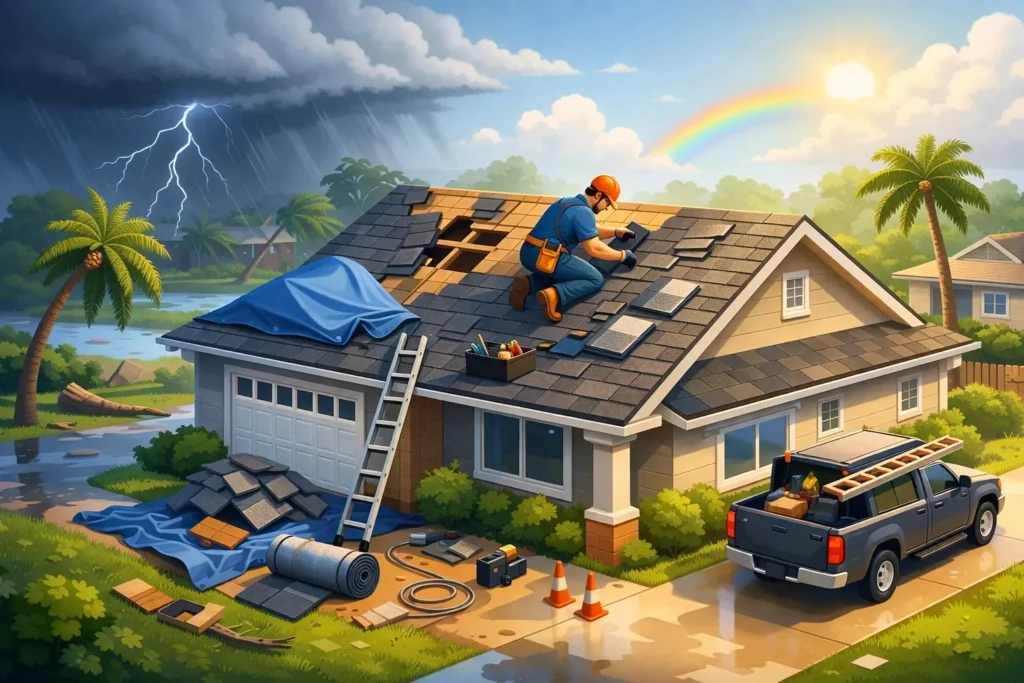
A Florida storm does not need to tear half the roof off your house to cause real trouble. A few lifted shingles, cracked tile, loose flashing, or hidden punctures can be enough to let water in. That is why roof repair after storm damage should never wait until a ceiling stain shows up or insulation gets soaked.
On the East Coast of Florida, roofs take a beating from wind, driving rain, salt air, and long stretches of heat. Storm damage is not always dramatic, and that is what makes it expensive. What looks minor from the ground can turn into rot, mold, damaged underlayment, and insurance headaches if it is left alone.
What storm damage really looks like
After a storm, many property owners look for the obvious signs first – missing shingles, tree impact, gutters on the ground. Those matter, but they are only part of the picture. Wind can break the seal on shingles without fully removing them. Tile roofs can crack in ways that are hard to spot from below. Metal roofs may survive high winds well, but fasteners, flashing details, and panel seams can still be compromised.
Flat and low-slope commercial roofs have their own problems. Ponding water, membrane punctures, edge metal separation, and flashing failure around penetrations often show up after heavy rain and wind events. In Florida, one weak point is enough to let water travel far from the original opening, which can make the source harder to find.
This is why a proper inspection matters. Storm damage is not just about what blew off. It is about what loosened, shifted, cracked, or opened up under pressure.
Roof repair after storm damage starts with speed
The first goal is simple – stop the roof from taking on more water. The second goal is to document the condition before temporary fixes or more weather change the picture. If a storm hits your property, time matters, but rushing without a plan can create problems too.
A sound response usually starts with a visual check from a safe position, then a professional inspection. Homeowners should avoid climbing onto a wet or unstable roof. Property managers should keep interior maintenance notes as well, especially if leaks appear around vents, ceiling tiles, equipment curbs, or parapet walls.
Good documentation helps with repair planning and insurance coordination. Clear photos of exterior damage, interior staining, wet insulation, debris impact, and dates of loss all support the next step. If emergency tarping is needed, that should be done quickly and correctly to limit further damage.
When repair makes sense and when it does not
Not every storm-damaged roof needs full replacement. That is the truth, and a trustworthy contractor should say so. If damage is limited to a defined area and the rest of the system is in sound condition, repair can be the practical choice. That is especially true when the roof still has useful life left and matching materials are available.
But there are trade-offs. A repair may solve the immediate leak while leaving an aging system that is more vulnerable in the next storm. On older roofs, brittle shingles, discontinued tile profiles, widespread fastener issues, or deteriorated underlayment can make spot repair a short-term answer rather than a durable one.
For commercial buildings, repair is often the right first move if the membrane is generally intact and damage is isolated. Still, if repeated leaks are showing up across multiple sections, a coating system, section replacement, or larger restoration plan may offer better value than patching the same roof every storm season.
The parts of the roof that fail first
Storm damage often shows up at transition points before it shows up in the field of the roof. Flashing around chimneys, walls, skylights, vents, valleys, and roof-to-wall intersections takes a lot of stress during wind-driven rain. These are common failure areas because water does not need a large opening to get inside.
Shingle roofs may lose tabs, crease under wind pressure, or suffer broken seals that are not visible until later. Tile roofs can shift, crack, or break at attachment points. Metal roofs may remain structurally strong but still leak at exposed fasteners, trim details, or seam penetrations. Flat roofs can split at seams, pull at perimeter edges, or leak where rooftop equipment interrupts the membrane.
A complete storm repair scope should look beyond the main roofing material. Underlayment, decking, vents, fascia, soffit, and drainage components can all be part of the problem.
Florida repairs are different for a reason
Roofing in Florida is not the same as roofing in inland markets with milder weather. Wind uplift requirements, code compliance, moisture management, and material performance all matter more here. The roof has to stand up not just to one storm, but to repeated exposure over time.
That affects repair choices. A quick patch with the wrong materials or the wrong fastening pattern can fail early. A repair that ignores ventilation or flashing details may stop a leak for now but invite bigger issues later. Coastal conditions also add another layer, especially where salt air accelerates wear on metal components and fasteners.
This is where local experience counts. A contractor who understands Florida code requirements, storm patterns, and insurance documentation can usually spot the difference between cosmetic wear and functional storm damage much faster.
What to expect during the repair process
A disciplined roof repair process should feel clear from the start. No surprises. No disappearing act. After the inspection, you should get a direct explanation of what was damaged, what can be repaired, and whether there are signs that point toward replacement instead.
For residential properties, repairs may include replacing damaged shingles or tiles, securing lifted sections, rebuilding flashing details, sealing exposed penetrations, replacing wet decking, and restoring underlayment where water intrusion occurred. For commercial roofs, the scope may involve membrane patching, seam repair, flashing replacement, edge securement, drainage corrections, or coating-compatible restoration work.
Temporary protection sometimes comes first, especially after major weather events when the priority is preventing more interior damage. Permanent repair should follow with materials that match the roof system and meet local requirements. Cleanup also matters. Roofing debris, nails, and torn materials should not be left behind as part of a rushed storm response.
Insurance claims and repair decisions
Many property owners feel overwhelmed by the insurance side of storm damage, and that is understandable. The process can move quickly or drag out, depending on the claim, policy language, and severity of the loss. What helps most is having accurate documentation and a contractor who can clearly explain the repair scope.
It is smart to report damage promptly and keep records of all inspections, emergency work, photos, and communication. At the same time, do not assume every storm issue will justify full replacement under a policy. Sometimes the approved path is repair. Sometimes the documented damage supports a broader claim. It depends on the roof condition, the extent of the storm impact, and the policy itself.
A contractor with experience in roof repair after storm damage can help you understand what is repairable, what needs immediate attention, and where the claim may require more support.
Choosing a contractor when the pressure is on
Storm season brings out good roofers and bad ones. The difference usually shows up in the details. A dependable contractor will inspect thoroughly, explain options plainly, and put the scope in writing. They will not push a one-size-fits-all answer or use fear to force a decision.
For Florida property owners, it makes sense to look for a company that knows local code, handles both residential and commercial roofing, and stands behind the work after the storm crews are gone. That includes understanding different systems – shingle, tile, metal, flat roofing, and protective coatings – because repair methods are not interchangeable.
Bear Roofing serves East Coast Florida with that kind of storm-focused approach, guiding property owners from inspection through repair and cleanup with long-term protection in mind.
The cost of waiting too long
A damaged roof rarely gets cheaper with time. Water spreads. Decking weakens. Interior finishes stain. Insulation loses performance. In commercial spaces, delayed repairs can also affect tenants, equipment, inventory, and operating hours.
There is also the question of repairability. What starts as a localized fix can become a larger project if repeated rain gets under the system. By the time the leak is obvious indoors, the moisture path may have already traveled well beyond the original point of entry.
The smartest move after a storm is not panic. It is action with discipline. Get the roof checked, get the damage documented, and get the right repair in place before a small opening turns into a major problem.
Your roof does not need guesswork after a storm. It needs a clear plan, sound workmanship, and repairs built for Florida weather.