
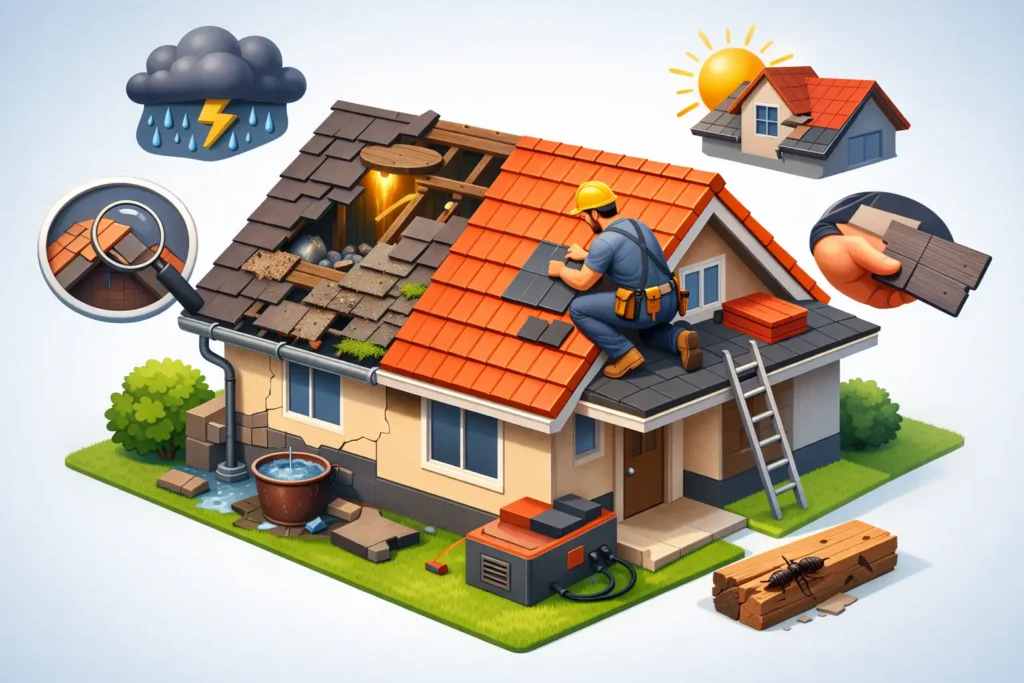
A roof usually does not fail all at once. In Florida, it wears down under heat, wind, driving rain, salt air, and storm seasons that test every seam and fastener. That is why knowing the signs you need roof replacement matters. Waiting too long can turn a manageable project into interior damage, insurance headaches, and higher costs.
For many property owners, the hard part is not seeing that something is wrong. It is knowing whether the roof needs a repair or whether it has reached the point where replacement is the smarter move. The answer depends on age, material type, storm exposure, and how widespread the damage really is.
When repairs stop being enough
A repair makes sense when the issue is isolated. Maybe a few shingles lifted in one section, a flashing detail failed around a vent, or a small flat-roof area needs patching. Replacement becomes the better investment when problems are spread across the system, the roof is nearing the end of its service life, or hidden moisture has started affecting the deck beneath the surface.
In coastal Florida communities, roofs often age faster than owners expect. UV exposure dries out materials. Wind loosens edges and ridge components. Heavy rain finds weak points. Even a roof that looks acceptable from the ground can have enough wear to justify a full replacement after a professional inspection.
9 signs you need roof replacement
1. Your roof is near or past its expected lifespan
Age alone does not automatically mean replacement, but it is one of the strongest indicators. Asphalt shingle roofs often last around 15 to 25 years in Florida conditions, sometimes less if ventilation is poor or storm exposure is frequent. Tile and metal can last longer, but they still need evaluation as they age because fasteners, underlayment, and flashing can fail before the visible surface does.
If your roof is approaching the end of its expected life and new problems are showing up, replacement is usually more cost-effective than repeated repairs.
2. You have recurring leaks in different areas
One leak does not always mean the whole roof is done. Multiple leaks, especially in separate parts of the home or building, tell a different story. That pattern often points to broad system failure rather than one isolated defect.
Water stains on ceilings, damp insulation in the attic, peeling paint, or musty odors can all signal moisture intrusion. In Florida, leak paths are not always obvious. Water can travel before it shows up indoors, which is why the visible stain may be far from the actual failure point.
3. Shingles are curling, cracking, or going missing
Shingle damage is one of the clearest visible warnings. Curling edges, cracked tabs, bald spots where granules have worn away, and missing shingles all reduce the roof’s ability to shed water and resist wind.
After a storm, homeowners sometimes focus only on dramatic damage. But smaller signs matter too. If shingles are brittle, loose, or uneven across large sections, patchwork repairs may only buy limited time. Once the surrounding field has weakened, repaired spots can stand out as stronger than the roof around them.
4. You see sagging or soft spots
A sagging roofline is not a cosmetic issue. It can point to trapped moisture, rotted decking, or structural stress beneath the roofing material. Soft spots underfoot are another major concern and should be addressed quickly.
This is one of the most serious signs you need roof replacement because it may involve more than the outer surface. A proper replacement can uncover what is happening below and correct the problem before it worsens.
5. Granules are collecting in gutters or downspouts
If you have an asphalt shingle roof, check the gutters after heavy rain. Granule loss is normal over time, but a noticeable buildup often means the shingles are wearing out. Those granules protect against UV damage, and once they are gone, the shingles break down faster.
This issue is especially common on older roofs that have taken years of direct sun. In Florida, that wear can accelerate quickly.
6. Flashing and penetrations keep failing
Roof systems are only as strong as their weakest details. Areas around chimneys, skylights, vents, valleys, and wall intersections are common trouble spots. If flashing has been repaired more than once or sealants keep failing, the roof may be reaching the point where piecemeal work is no longer dependable.
This matters on both residential and commercial roofs. On low-slope systems, repeated failures around penetrations often signal aging membrane conditions or drainage issues that need a larger fix.
7. Storm damage is widespread
Florida roofs take a beating during storm season. High winds can break seals, lift edges, displace tiles, crease shingles, and allow water intrusion that is not fully visible from the ground. Hail, flying debris, and wind-driven rain add another layer of damage.
If a storm affected multiple elevations or roofing components, a full replacement may make more sense than chasing scattered repairs. It can also put the property back into better condition for code compliance, resale, and future insurability. This is one reason many owners schedule an inspection right after a major weather event, even if the roof seems fine at first glance.
8. Your energy bills are rising without another clear cause
A failing roof can contribute to heat gain and poor indoor comfort. Damaged materials, underlayment issues, and poor attic ventilation can force your HVAC system to work harder. While higher power bills do not prove you need a new roof on their own, they can be part of the picture when combined with age or visible wear.
For Florida homes and buildings, the right replacement system can do more than stop leaks. It can improve ventilation, reflect more heat, and support better long-term efficiency.
9. Repairs are starting to cost more than the long-term fix
This is often the tipping point. If you have paid for several repairs over the past few years and new issues keep appearing, replacement may be the more responsible decision. Not because it is cheaper upfront, but because it stops the cycle.
A new roof gives you a reset. It also gives you the chance to choose materials better suited to your property, budget, and storm exposure. No surprises. No disappearing act. Just a clear plan and a roof system built to protect the property for the long haul.
Signs you need roof replacement in Florida are not always obvious
Florida roofing decisions are rarely based on one symptom alone. A roof might still look decent from the street while underlayment is compromised or wind damage has shortened its remaining life. Tile roofs may have isolated broken pieces but widespread underlayment failure beneath them. Flat roofs may show only light surface wear while hidden moisture affects insulation and substrate below.
That is why inspection matters. The right contractor looks at the entire system, not just the most visible damage. That includes the roof covering, flashing, fasteners, drainage, penetrations, ventilation, decking condition, and signs of storm impact.
Repair or replacement depends on the full picture
There is no honest one-size-fits-all answer. A newer roof with one damaged section can often be repaired successfully. An older roof with repeated leaks, widespread wear, or storm-related damage usually points toward replacement.
Insurance can also affect timing. In some cases, storm damage may support a claim, but documentation and proper inspection are critical. Florida property owners need a contractor who understands local code requirements, product options, and how to explain the scope clearly from start to finish.
For homeowners, replacement is also a chance to improve curb appeal and resale value. For commercial properties, it is about limiting disruption, protecting operations, and choosing a system that performs under Florida weather conditions.
What to do if you notice these warning signs
Start with a professional roof inspection. Do not rely only on what you can see from the driveway, and do not climb onto the roof yourself after a storm. A qualified contractor can tell you whether the issue is isolated, whether moisture has spread farther than expected, and whether repair dollars would simply be delaying the inevitable.
If replacement is the right move, the process should be straightforward. You should get a clear scope of work, honest guidance on material choices, realistic timing, and a clean explanation of warranty coverage. That kind of communication matters just as much as the shingles, tile, metal panels, or membrane being installed.
A roof is not just another exterior feature. It is the first line of defense for everything underneath it. If you are seeing these signs you need roof replacement, acting sooner gives you more control over cost, scheduling, and the level of protection you put back on your home or building. Companies like Bear Roofing build their reputation on making that next step clear, steady, and fully managed from inspection to cleanup.
The best time to replace a failing roof is before the next storm decides for you.