
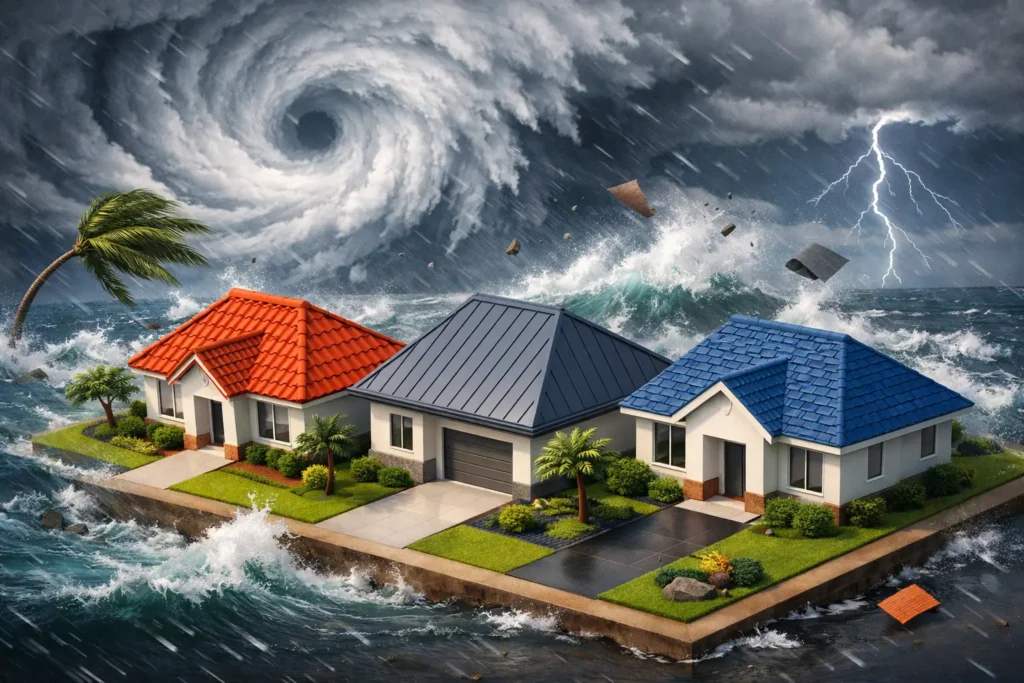
The question usually comes up right after a storm warning or right after a neighbor loses shingles: what roof is best for Florida hurricanes? In Palm Bay and across Florida’s East Coast, that is not a style question. It is a protection question. The right roof can improve wind resistance, reduce water intrusion risk, hold up better in salt air, and make the insurance conversation easier. The wrong one can look fine for years, then fail when your home needs it most.
What roof is best for Florida hurricanes? The short answer
If your priority is the best all-around hurricane performance, a properly engineered metal roof is often the strongest choice for many Florida homes. It is lightweight, highly wind-resistant, and less likely to shed material in a major storm. But that does not mean metal is automatically the best fit for every property.
Concrete tile can also perform very well in Florida hurricanes when the structure is designed to carry the weight and the system is installed to current code. Architectural shingles remain a practical option for many homeowners because of lower upfront cost, good appearance, and easier repairs, but they usually do not offer the same level of long-term hurricane performance as a high-quality metal system.
The real answer depends on five factors: wind rating, attachment method, roof shape, building structure, and installation quality. Material matters. Installation matters just as much.
Why the best hurricane roof is not just about material
Florida storms do not test one part of a roof. They test the whole system. Wind gets under edges. Rain pushes sideways. Debris creates impact points. Salt and heat wear materials down over time. That is why the best roof for hurricane country is the one that performs as a complete assembly, from decking and underlayment to flashing, fasteners, ventilation, and edge metal.
A premium material installed poorly can become a problem fast. A good material installed to code, with the right underlayment and attachment pattern, usually performs much better than homeowners expect. No surprises. No disappearing act. That is the standard your roofing contractor should bring to the job.
Wind resistance starts with attachment
When roofs fail in hurricanes, the issue is often how the system was attached, not just what it was made from. Nails placed incorrectly, weak decking connections, poor edge securement, and outdated underlayment can all turn a decent roof into storm damage.
This is especially true on older homes. A roof replacement is often the best time to upgrade the full system so it meets modern Florida code expectations, not just replace the visible surface.
Metal roofing for Florida hurricanes
For many homes, metal is the top contender.
Standing seam and screw-down metal roofing systems are known for strong wind performance when they are properly designed and installed. Because metal panels are large, interlocked, and securely fastened, they are less likely than shingles to peel away piece by piece in extreme wind. Metal also sheds water quickly, which helps during heavy rain events that come with tropical systems.
Another major advantage in coastal Florida is durability. Salt air, UV exposure, and heat are hard on roofing materials. Metal roofs with the right coatings hold up well in those conditions and can offer excellent service life.
That said, metal is not a one-size-fits-all answer. Upfront cost is higher than shingles. The system has to be installed by a crew that understands panel layout, flashing details, clip placement, and Florida wind requirements. If those details are mishandled, the performance advantage can shrink fast.
Best fit for metal
Metal is often the best fit for homeowners who plan to stay in the home long term, want top-tier wind resistance, and are willing to invest more upfront for durability and lower maintenance over time.
Tile roofing in hurricane zones
Tile roofs are common in Florida for a reason. They look right in many neighborhoods, handle heat well, and can last a long time. Concrete tile, in particular, can perform well in hurricane-prone areas when installed as part of a modern, code-compliant roofing system.
The trade-off is weight. Tile is much heavier than metal or shingles, so the home’s structure has to be able to support it. In hurricane conditions, individual tiles can also crack from impact or become dislodged if attachment details are not right. Even when the underlayment continues protecting the home, broken tiles can still create repair needs after a storm.
Tile can absolutely be a strong option, but it demands proper engineering and careful installation. It is not just about choosing a profile and color. It is about making sure the house and the roof system are working together.
Best fit for tile
Tile is a smart choice for Florida homeowners who want long life, strong curb appeal, and solid storm performance, provided the structure supports the load and the installer follows current code and manufacturer specs closely.
Are shingles good enough for Florida hurricanes?
Architectural shingles are still one of the most common roofing materials in Florida, mostly because they cost less upfront and offer a familiar look. A quality architectural shingle system with high wind ratings can perform respectably in many storms, especially on homes with good roof geometry and updated installation methods.
But if you are asking purely from a hurricane-resistance standpoint, shingles usually rank behind metal and often behind well-installed tile. They have more individual pieces exposed to uplift, and when shingles start to fail, wind can tear away sections quickly.
That does not make shingles a bad choice. It means they are the budget-conscious choice with limits. For many homeowners, that balance still makes sense, especially if the existing home design, neighborhood standards, and replacement budget point in that direction.
Best fit for shingles
Shingles are often the right fit for homeowners who need a dependable roof at a lower initial price and want a clean, practical replacement that still meets Florida code and offers strong everyday protection.
The roof shape matters more than most people realize
Even the best roofing material can be compromised by a roof design that catches wind. Hip roofs generally perform better in hurricanes than gable roofs because they have slopes on all sides and tend to distribute wind loads more effectively. Gable ends can be more vulnerable to pressure and uplift.
This does not mean you need to redesign your home to get a safer roof. It means your contractor should look at the full picture. On some properties, improving fastening, edge details, underlayment, and secondary water barriers can make a meaningful difference even if the roof shape stays the same.
What Florida homeowners should ask before choosing a roof
If you are comparing roofing options, do not stop at the material sample. Ask what wind rating the full system is designed for. Ask how the underlayment protects the home if the outer material is damaged. Ask whether the decking needs repair or renailing. Ask how the roof will hold up in salt air if you are near the coast. Ask how the choice may affect insurance and future maintenance.
This is where experienced Florida guidance matters. A roof is not just a product you buy. It is a system your contractor builds.
So, what roof is best for Florida hurricanes on most homes?
For many Florida homeowners, metal comes out on top because it offers the best blend of wind resistance, longevity, and coastal durability. For some homes, tile is an excellent choice if the structure can handle the load and the owner wants premium appearance with strong performance. Shingles remain a solid option for tighter budgets, but they are usually more about value than maximum storm resilience.
At Bear Roofing, that conversation starts with the property itself – not a sales script. The right recommendation depends on your home’s design, your location, your budget, and how long you want this next roof to last.
A hurricane-ready roof should give you more than a good look from the street. It should give you confidence when the forecast turns serious, because the best roof is the one that is built for Florida before Florida puts it to the test.