
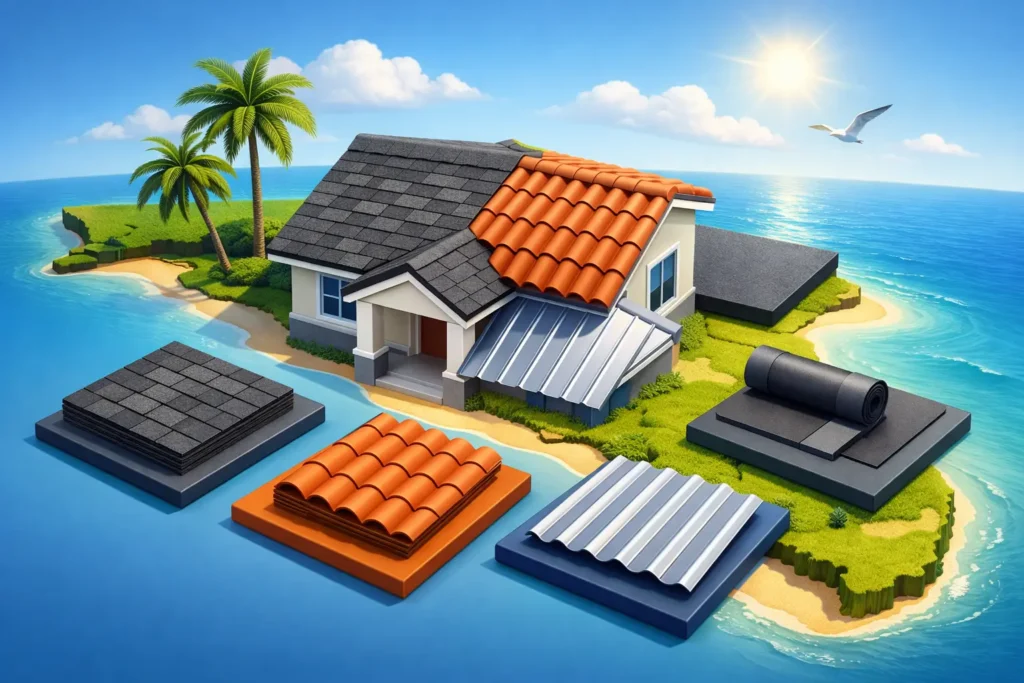
A roof that performs well in Ohio can fail early in Palm Bay. Florida roofs take a different kind of beating – high heat, heavy rain, hurricane-force wind, salt air near the coast, and long stretches of sun that wear materials down faster than many homeowners expect. If you are wondering how to choose roofing material in Florida, the right answer starts with local conditions, not just color, price, or what looks good on a neighbor’s house.
The best roofing material for your property depends on where you are, how your building is designed, what your insurance carrier expects, and how long you plan to stay in the home or hold the property. There is no one-size-fits-all answer. There is a right fit for your roof.
How to choose roofing material in Florida without guessing
Start with performance first. Florida is not a market where roofing should be treated like a cosmetic purchase. Curb appeal matters, but your material has to stand up to uplift, moisture, UV exposure, and code requirements before anything else.
A good selection process usually begins with five questions. How much wind exposure does the property get? Is it close to the coast where salt can shorten the life of certain systems? Does the roof have steep slopes, low slopes, or flat sections? What is the realistic budget, not just for installation but for maintenance and lifespan? And finally, what matters more for this project – lowest upfront cost, longest service life, best energy performance, or a specific look?
If you answer those honestly, the field gets narrower fast.
Florida climate changes the conversation
In many states, homeowners compare roofing materials mostly by price and appearance. In Florida, climate pressure can make a cheaper choice more expensive over time.
Heat is the first factor. Darker or less reflective roofing can hold more heat, which may affect attic temperatures and cooling costs. Then there is rain. Florida storms do not just test whether a roof can shed water. They test flashing details, underlayment quality, and whether the system was installed correctly the first time.
Wind is where mistakes get expensive. A material may be rated well on paper, but if it is not matched to the structure and installed to Florida code, it can become a weak point during storm season. Near the coast, salt exposure adds another layer. Some metals and fasteners hold up well. Others can corrode faster than owners expect.
That is why choosing roofing material in Florida is really about choosing a complete system, not just a product.
Asphalt shingles: affordable, common, and not always equal
Asphalt shingles remain one of the most common residential roofing choices in Florida because they are cost-effective and available in a wide range of colors and styles. For many homeowners, they offer a practical balance between price and performance.
But not all shingles are the same. The difference between a builder-grade shingle and a higher-wind-rated architectural shingle matters in Florida. So does the underlayment beneath it. A lower upfront price may look appealing until strong wind or driving rain exposes the weak points.
Shingles are often a good fit for homeowners who want a familiar look, manageable initial cost, and solid protection when installed properly. The trade-off is lifespan. In Florida’s climate, shingles may age faster than they would in milder regions. That does not make them a bad choice. It means expectations need to be realistic.
Metal roofing: strong performance with a higher upfront cost
Metal roofing has become increasingly popular across Florida for good reason. It handles wind well, can reflect heat effectively, and usually offers a longer service life than shingles. For coastal and storm-prone areas, that combination gets attention.
Metal is not just one category, though. Panel profile, gauge, coating, fastening method, and even the type of metal all affect performance. In coastal areas especially, corrosion resistance matters. Choosing the wrong metal system or the wrong finish can shorten the roof’s lifespan.
The main hesitation for many property owners is upfront cost. Metal typically costs more than shingles. But for owners planning to stay long term, or for those who want stronger durability and lower maintenance over time, it can make financial sense. It is also a smart option for many commercial buildings, depending on design and use.
Tile roofing: long-lasting and attractive, but heavier
Tile roofing fits many Florida homes visually and structurally, especially in communities where Mediterranean and coastal architecture are common. Tile can offer excellent longevity and strong weather resistance when installed correctly.
Its biggest strength is long-term value. Its biggest limitation is weight. Tile systems are heavier than shingles or many metal systems, so the structure beneath the roof has to be able to support it. That is not something to guess about.
Tile can also be more expensive to install and repair. Individual tiles may crack from impact or foot traffic, even when the overall system remains durable. Homeowners who choose tile usually do so because they want a premium look and longer service life and are prepared for the higher initial investment.
Flat and low-slope roofing for commercial properties
For commercial buildings and some residential additions, the conversation shifts. Flat and low-slope roofs need materials designed for drainage, waterproofing, and service access. Standard steep-slope materials are not the answer.
Single-ply membranes, modified bitumen, and protective roof coatings each have a place, depending on the building, traffic level, drainage conditions, and budget. Energy efficiency may also play a bigger role here, especially for property owners looking to reduce heat absorption and operating costs.
The wrong choice on a low-slope roof often shows up as ponding water, leaks at penetrations, or shortened service life. The right choice accounts for how the building actually performs, not just what costs less on bid day.
Insurance, code, and wind ratings matter more than people think
One of the most overlooked parts of how to choose roofing material in Florida is how that choice affects insurance and code compliance. Florida building requirements are strict for a reason. Roofing systems must meet standards tied to wind uplift, attachment methods, underlayment, and product approvals.
Insurance carriers may also view materials differently based on age, resilience, and storm resistance. In some cases, the material itself matters less than documented installation quality and code compliance. In others, the roof’s age or system type can affect premiums or coverage decisions.
This is one reason experienced local guidance matters. The goal is not just to install a roof that looks good on day one. The goal is to install one that stands up to inspection, weather, and the realities of owning property in Florida.
Budget should include lifespan, not just installation price
A lower quote is not always a lower cost roof. This is where many owners get trapped. They compare bids based only on installation price without considering service life, repair frequency, maintenance, warranty terms, and potential energy savings.
For example, a shingle roof may cost less now, while a metal roof may cost more upfront but last longer and perform better in heat and wind. Tile may cost more still, but for the right home and owner, it may support long-term value. Commercial owners face the same decision with flat roof systems – lower initial cost versus long-term waterproofing and lifecycle performance.
The right question is not, “What is the cheapest roof I can buy?” It is, “What roof makes the most sense for this property over time?”
Work with a Florida contractor who explains trade-offs clearly
Material selection should not feel like a sales pitch. It should feel like a clear conversation about your building, your priorities, and the realities of Florida weather.
A dependable contractor should be able to explain why one system fits better than another, what the trade-offs are, how the material performs near the coast, and what kind of maintenance you should expect. They should also walk you through code requirements, warranty coverage, and whether the structure itself limits your options.
That kind of guidance removes costly guesswork. At Bear Roofing, that is part of the job. No surprises. No disappearing act.
If you are choosing a roof in Florida, slow down just enough to make a decision you will still feel good about after the next storm season. The best roofing material is not the one with the loudest marketing. It is the one that fits your property, your risk level, and your long-term plan.