
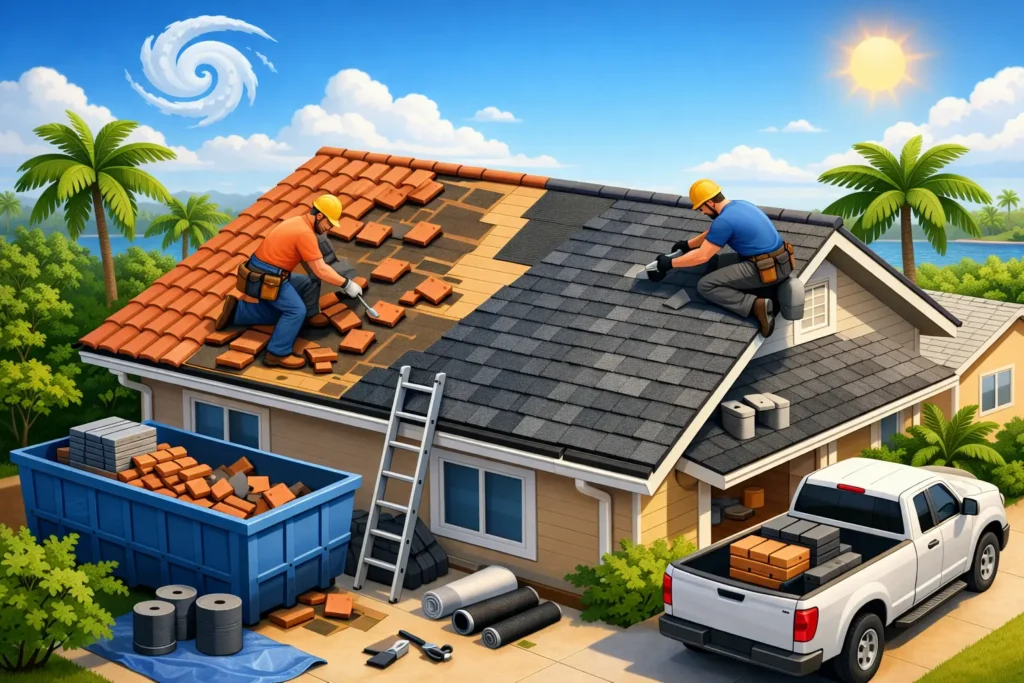
A roof usually does not fail all at once. In Florida, it wears down in layers – wind loosens edges, sun dries out materials, salt speeds corrosion near the coast, and heavy rain finds every weak point. By the time stains show up inside or shingles start lifting after a storm, roof replacement is often no longer a future project. It is the next one.
For homeowners and property managers on Florida’s East Coast, that decision carries real weight. You are not just buying new materials. You are protecting property value, insurance eligibility, daily comfort, and the structure underneath everything you own. A good roof replacement should solve problems for the long term, not create new ones through shortcuts, vague pricing, or poor installation.
When roof replacement makes more sense than repair
Not every damaged roof needs to be torn off. A targeted repair can be the right move when damage is isolated, the system still has useful life left, and the underlying structure is sound. But there is a point where patching becomes more expensive than progress.
If leaks keep showing up in different areas, if shingles are brittle or missing across multiple slopes, or if a flat roof has widespread ponding and membrane failure, replacement becomes the smarter investment. The same is true when storm damage affects more than just surface materials. Once underlayment, decking, flashing, or ventilation are compromised, piecemeal fixes can leave hidden weaknesses in place.
Age matters too, but not in a one-size-fits-all way. A roof’s lifespan depends on the material, how well it was installed, how much storm exposure it has seen, and whether routine maintenance was done. In Florida, harsh UV, heat, driving rain, and hurricane-season wind can shorten the life of systems that might last longer in milder climates.
What drives the cost of roof replacement
Most property owners start with one question: how much is this going to cost? That is reasonable, but the real answer depends on more than square footage.
The roofing material is one of the biggest factors. Architectural shingles generally offer the most budget-friendly path for many homes, while tile and metal carry a higher upfront price but can deliver longer service life and stronger performance in specific conditions. Flat and low-slope commercial systems have their own pricing structure based on membrane type, insulation, drainage details, and access to the roof.
Then there is the tear-off itself. Removing old roofing can uncover rotten decking, outdated flashing, poor ventilation, or prior repairs that were never done correctly. These are not upsells. They are the hidden conditions that determine whether the new roof will actually perform the way it should.
Permitting, code compliance, roof complexity, and cleanup also affect cost. A simple gable roof is one thing. A cut-up roof with valleys, dormers, steep pitches, skylights, and tie-ins is another. The cheapest quote often leaves out details that matter later.
Florida roof replacement is different
Florida is not a market where basic roofing knowledge is enough. Local code requirements, wind uplift standards, underlayment choices, and fastening methods all matter more here because the environment is harsher and the consequences of getting it wrong are higher.
Along the East Coast, roofs have to stand up to strong wind events, wind-driven rain, intense heat, and salt-heavy air. That affects both material selection and installation methods. A roof that looks fine on paper can fail early if it is not matched to the local conditions.
Insurance adds another layer. After storm damage, documentation matters. So does understanding what the carrier is asking for, what is covered, and what falls outside the claim. For many owners, roof replacement is stressful not because they do not understand the need, but because they are trying to manage weather risk, budget, and insurance at the same time. Clear guidance matters here.
Choosing the right material for your property
There is no single best roofing system for every Florida home or commercial building. The right choice depends on the property, the budget, the visual style, and the performance priorities.
Shingle roofing remains popular because it is cost-effective, widely available, and attractive on many residential homes. It can be a strong option when installed correctly with quality underlayment and proper ventilation. For homeowners balancing appearance and budget, it often makes sense.
Tile roofing offers a distinct look that fits many Florida neighborhoods and can provide excellent longevity. It is heavier, more expensive, and more specialized to install, so the structure and installation details matter. The benefit is a premium appearance and strong long-term value when done right.
Metal roofing continues to gain attention across coastal Florida because of its durability, energy performance, and clean appearance. It can resist harsh weather well and often appeals to owners who want a long-term system with less maintenance. The upfront cost is higher, but the life cycle value can be strong.
For commercial buildings and residential flat sections, membrane systems and protective coatings may be the better fit. These systems need careful attention to seams, drainage, penetrations, and waterproofing details. On low-slope roofs, small installation mistakes can become large leak problems quickly.
What the roof replacement process should look like
A professional process should feel organized from the first inspection to the final cleanup. No surprises. No disappearing act.
It starts with a thorough evaluation, not a rushed glance from the driveway. The contractor should assess the condition of the roofing material, flashing, underlayment, decking, drainage, penetrations, and attic ventilation where applicable. If storm damage is involved, photo documentation should be part of that conversation.
Next comes a clear proposal. That means the scope of work, material specifications, warranty details, expected timeline, and payment terms should be spelled out in plain language. If options are presented, the difference between them should be explained in terms of performance, lifespan, and cost, not sales pressure.
Once the job is scheduled, permitting and material coordination should happen before tear-off day. During installation, site protection matters. Landscaping, driveways, exterior finishes, and access points should be respected. Daily cleanup should be standard, not treated like a favor.
The final phase should include a post-installation walkthrough, documentation of completed work, and warranty information. A roof replacement is a major project. Owners should not be left guessing what was done.
Questions to ask before signing a contract
A good contractor will not dodge direct questions. In fact, clear questions help both sides.
Ask who will supervise the project, whether the crew is experienced with your specific roof system, and how hidden deck damage is handled if it is discovered during tear-off. Ask what underlayment and ventilation approach are being used and why. Ask what is covered under workmanship versus manufacturer warranties. Ask how cleanup is managed and what the communication process looks like if weather delays the job.
These are not small details. They are often the difference between a roof that performs for decades and one that starts creating problems long before it should.
Residential and commercial needs are not the same
A homeowner replacing a shingle roof and a property manager replacing a flat commercial system may both need roof replacement, but their priorities are different.
Residential owners often focus on curb appeal, insurance, monthly financing, and long-term protection for the home. They want to know the roof will look right, hold up in storms, and come with workmanship accountability.
Commercial decision-makers usually need tighter scheduling, minimal business disruption, dependable waterproofing, and documentation that supports facility management. They may also be balancing tenant needs, long-term maintenance planning, and capital budgeting. The roofing partner has to understand that larger operational picture, not just the installation itself.
That is why one-size-fits-all roofing advice falls short. The right solution should fit the property, the risk level, and the owner’s priorities.
Why workmanship matters as much as material
Many roofing products are only as good as the crew installing them. Premium materials cannot overcome poor flashing, rushed fastening, weak seam work, or bad ventilation design.
That is where experience and accountability carry weight. A contractor who understands Florida code, coastal exposure, storm restoration, and system-specific installation details will spot issues that less experienced crews miss. That protects more than the roof covering. It protects the structure below it.
For that reason, many owners look beyond price alone and focus on process, warranty backing, and local reputation. Bear Roofing has built its name around that kind of accountability – guiding customers from inspection through completion with clear communication and a lifetime workmanship warranty that reflects long-term responsibility.
A new roof should bring relief, not uncertainty. If the project is handled properly, you end up with more than a finished installation. You gain a stronger property, clearer expectations, and one less thing to worry about when the next Florida storm starts moving in.