
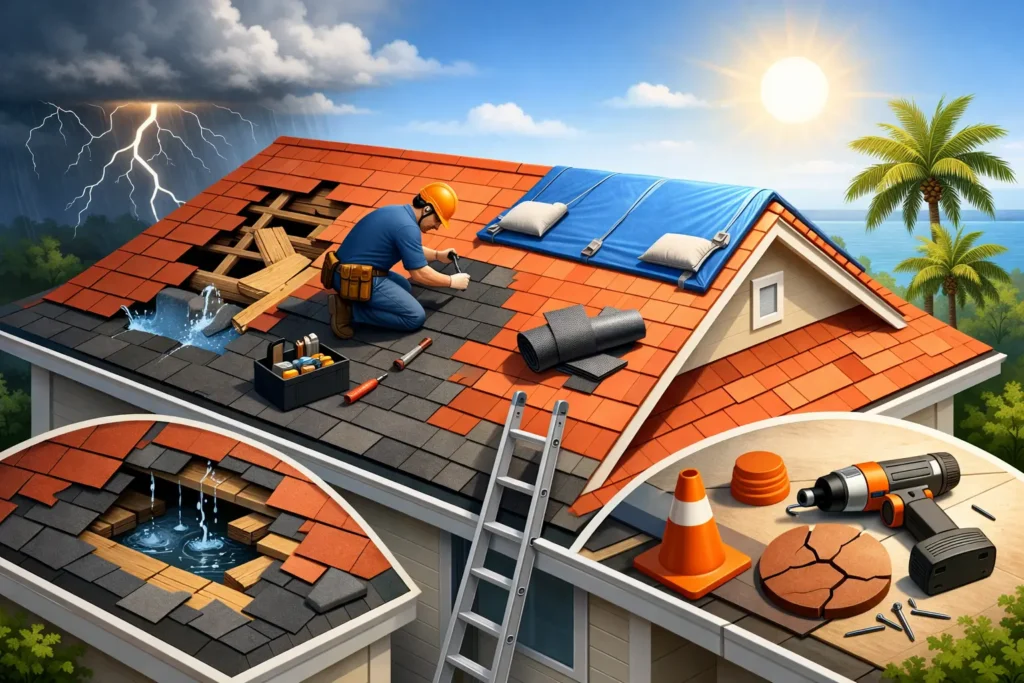
A roof leak in Florida rarely stays small for long. One loose flashing detail or a lifted shingle can turn into stained ceilings, wet insulation, mold risk, and insurance headaches after the next hard rain. That is why roof repair is not just about patching a problem. It is about stopping damage early, protecting the structure underneath, and making sure the fix can stand up to wind, heat, salt air, and storm season.
Why roof repair matters more in Florida
Florida roofs take a beating that roofs in other states simply do not. Intense UV exposure dries out materials over time. Heavy rain tests every seam, valley, and penetration. Coastal air speeds up corrosion on metal components. High winds can loosen shingles, crack tile attachments, and expose vulnerable areas that were not obvious from the ground.
For homeowners, that often means a repair decision comes with real urgency. A minor issue can quickly affect drywall, flooring, cabinets, and personal property inside the home. For commercial properties, the stakes are just as high. Even a small failure on a flat or low-slope roof can interrupt operations, damage inventory, and create safety concerns for tenants, staff, or customers.
This is also where experience matters. Good roof repair in Florida is not guesswork. It requires knowing how different roofing systems fail, how local codes apply, and when a repair is the right investment versus when it is only delaying a larger issue.
Common signs you need roof repair
Some roof problems announce themselves clearly. Others stay hidden until the damage spreads. Water stains on ceilings are one of the most obvious warning signs, but they are not the only one. Missing shingles, cracked tile, granules collecting in gutters, soft spots on a flat roof, rusted flashing, and damp attic insulation can all point to active roof trouble.
Sometimes the first clue is outside. You may notice shingles lifted after a storm, debris impact from tree limbs, or sealant around vents and pipe boots starting to fail. On tile roofs, a single cracked tile may not seem serious, but if underlayment is already aging, that visible crack may be only part of the story.
For commercial buildings, signs often show up differently. Ponding water, bubbling on membrane surfaces, open seams, and recurring leaks around rooftop equipment are common red flags. If leaks seem to come and go, that does not mean the roof is fine. It usually means water is traveling before it shows itself inside.
What can be repaired and what usually cannot
Not every damaged roof needs to be replaced. In many cases, a focused repair is the smartest move, especially when the roof system still has solid life left and the problem is isolated. Replacing a section of damaged shingles, repairing flashing around a chimney, resealing penetrations, correcting a leak around a skylight, or addressing a limited flat roof membrane failure can all be worthwhile repairs.
But there is a line. If storm damage is widespread, if underlayment has deteriorated across large sections, or if repeated leaks point to systemic failure, repairs may become temporary and expensive. An older roof with multiple active problem areas can cost more in recurring service calls than a replacement would have cost upfront.
That is where honest guidance matters. A dependable contractor should be willing to say when a repair makes sense and when it does not. No surprises. No disappearing act. Just a clear explanation of what failed, what it will take to fix it, and how long that fix is likely to hold.
Roof repair by roofing type
Shingle roof repair
Shingle roofs are common across Florida, but they are vulnerable to wind uplift, nail pops, flashing failure, and aging from sun exposure. A proper repair goes beyond swapping out a few visible shingles. The surrounding area needs to be checked for underlayment damage, deck issues, and signs that wind lifted more shingles than the homeowner can see from the yard.
Color match can also be a factor. On newer roofs, replacement shingles may blend reasonably well. On older roofs, weathering and discontinued product lines can make a perfect match difficult. That does not always rule out a repair, but it is worth discussing before the work begins.
Tile roof repair
Tile roofs are durable, but repair work takes care and system knowledge. Broken tiles are only part of the concern. Fasteners, battens, mortar details, and especially underlayment condition all matter. A tile roof can look solid from the street while the waterproofing layer underneath is close to failure.
In some cases, replacing broken tiles and repairing localized underlayment damage is enough. In others, especially on aging systems, visible tile damage is just the symptom and the real issue is beneath it.
Metal roof repair
Metal roofing performs well in Florida when installed correctly, but fasteners, seams, flashing transitions, and corrosion points need close attention. A leak in a metal roof is not always directly above the water stain inside. Water can travel along panels or structural components before appearing below.
Repairs may involve replacing fasteners, resealing seams, correcting flashing, treating corrosion, or replacing isolated damaged panels. The goal is to preserve the system without creating weak points that fail in the next storm.
Flat roof repair
Flat and low-slope roofs require a different repair approach. Membrane punctures, open laps, drainage issues, ponding water, and failing coatings are common. The right repair depends on the roof system itself, whether it is modified bitumen, TPO, or another membrane.
This is one area where shortcuts usually show up fast. Surface patching without addressing trapped moisture or drainage problems can lead to repeated leaks. A proper inspection should identify both the leak source and the conditions that allowed it to happen.
The roof repair process should be straightforward
A good repair process starts with a real inspection, not a quick glance from the driveway. The contractor should document visible damage, identify the likely source, and explain whether the issue appears isolated or part of a larger pattern. For storm-related concerns, photos and condition notes also help support insurance conversations when applicable.
From there, the scope of work should be clear. What materials are being replaced, what waterproofing details are included, and what nearby components need to be removed or reset should all be spelled out. Vague repair estimates are where frustration begins.
Once work starts, cleanup matters too. Roofing is a construction service, but it does not have to feel chaotic. Homeowners and property managers should know what to expect, how long the repair should take, and whether weather could affect timing.
Timing matters after storm damage
After a major Florida storm, many property owners wait too long because the roof looks mostly intact from the ground. That is risky. Wind damage often starts at edges, ridges, flashing, and penetrations where movement is hard to see without getting on the roof. Water may not enter immediately, but once the next rain arrives, exposed areas can fail.
The best move after severe weather is to have the roof inspected promptly, even if the interior still looks dry. Quick action can reduce secondary damage and improve the chances of a simpler repair. It also creates a documented record of condition closer to the storm event, which can matter if an insurance claim becomes part of the process.
Choosing a roof repair contractor in Florida
Roof repair is one of those services where the lowest price can become the highest cost. Florida property owners need a contractor who understands local code requirements, wind-rated systems, and the difference between a cosmetic patch and a lasting repair. That includes knowing how to work across shingle, tile, metal, and flat roofing systems without forcing every problem into the same solution.
It also helps to work with a company that can guide the full process, from inspection to repair to cleanup, and explain financing or insurance coordination when needed. Bear Roofing serves Palm Bay and surrounding East Coast Florida communities with that kind of hands-on, accountable approach. The goal is simple: fix what needs fixing, explain what comes next, and stand behind the work.
If your roof is showing signs of wear, storm damage, or active leaking, waiting rarely improves the outcome. A timely inspection gives you options. And when a repair is the right call, getting it done properly gives you something every Florida property owner wants – confidence when the next storm rolls in.