
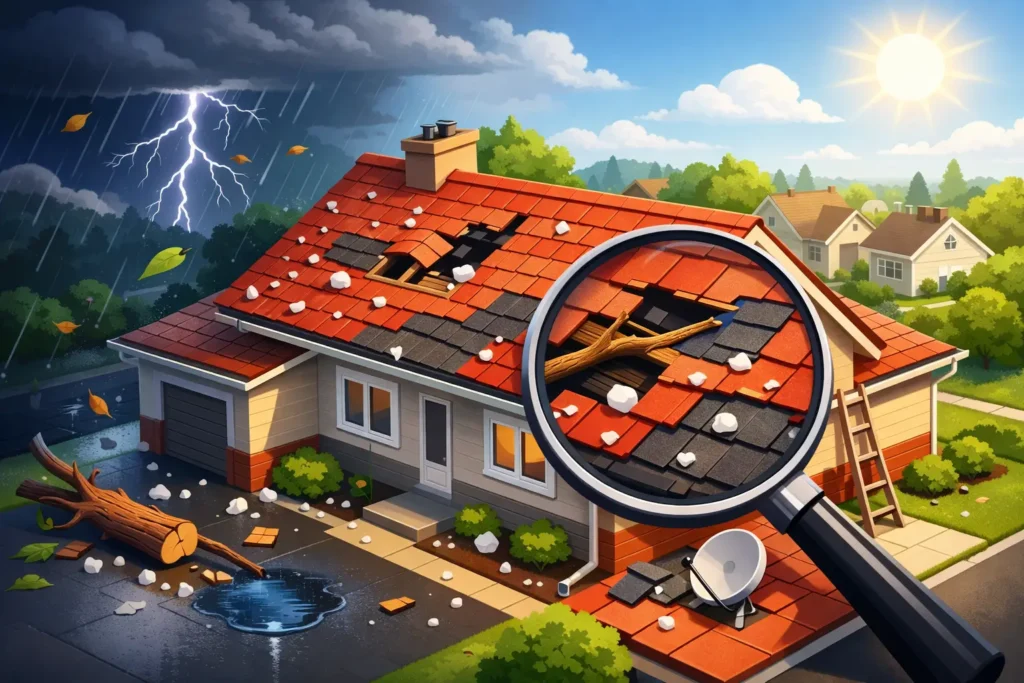
A Florida storm can be over in an hour and still leave your roof with damage that does not show up until the next hard rain. That is why knowing how to spot roof storm damage matters. A quick look at the right areas can help you catch problems early, protect your home, and avoid letting a small repair turn into interior water damage, mold, or a denied insurance claim.
On the East Coast of Florida, roofs take a beating from wind, driving rain, hail, flying debris, salt air, and intense heat. Sometimes the damage is obvious, like shingles in the yard. More often, it is subtle. A lifted shingle, a cracked tile, a bent flashing edge, or water staining in the attic may be the first sign that your roof system was compromised.
How to spot roof storm damage from the ground
Start outside, but stay off the roof unless you have the proper safety equipment and experience. After a storm, walk the perimeter of your home or building and look up from several angles. The goal is not to diagnose every issue yourself. The goal is to notice changes that suggest the roof needs a closer inspection.
Shingle roofs often show damage through missing tabs, creased edges, curled corners, or patches that look darker or uneven compared to the surrounding area. Wind can break the seal that keeps shingles flat, and once that bond is gone, the next storm can do much more damage.
Tile roofs can be trickier. A tile may crack without falling off, especially after impact from debris. From the ground, look for tiles that appear shifted, chipped, or out of line. Any section that looks irregular deserves attention because even one broken tile can expose the underlayment below.
Metal roofs usually hold up well in Florida weather, but they are not immune. Check for lifted panels, loose fasteners, bent trim, denting, or separation at seams. On flat and low-slope systems, look for displaced edge metal, punctures from debris, and areas where water may be ponding longer than usual.
Your yard can also tell a story. If you find roofing granules near downspouts, pieces of shingle, tile fragments, metal trim, or tree limbs on the ground, there is a reason to investigate further.
The most common signs inside the home
Storm damage does not always announce itself on the exterior first. Many Florida property owners realize something is wrong only after they notice a ceiling stain or a musty smell indoors.
Start with the attic if you can access it safely. Look for damp insulation, dark spots on the underside of the decking, active drips, or daylight coming through areas that should be sealed. If a storm passed recently, even a small water trail matters. Roof leaks rarely stay small for long.
Inside the living space, pay attention to yellow or brown water stains on ceilings and walls, bubbling paint, warped trim, or peeling drywall tape. These are often signs that water is moving along framing or through insulation before showing itself. The visible stain is not always directly below the roof damage, which is why professional inspection matters.
If your home suddenly smells damp after a storm, take that seriously. Moisture trapped in the attic or behind walls can lead to mold growth well before a leak becomes obvious.
Storm damage looks different by roofing material
One reason homeowners miss early warning signs is that roof damage is not one-size-fits-all. What you look for depends on the system protecting your property.
On asphalt shingles, wind damage often shows up as lifted, torn, or creased shingles. Hail can knock off granules, leaving exposed asphalt that ages faster under Florida sun. If sections look bald or inconsistent, the roof may have taken an impact.
On tile roofs, the danger is often hidden. A tile can look mostly intact from the yard while a hairline crack is letting water reach the underlayment. Storm debris also tends to break ridge and hip tiles first. Those areas deserve a closer look.
On metal roofs, strong wind can stress seams, flashing, and screw locations. Dents from hail or debris are sometimes cosmetic, but not always. It depends on whether the impact compromised the panel coating, seam integrity, or fastening system.
On flat roofs, especially commercial systems, storm damage may show as membrane punctures, open seams, lifted flashing, clogged drains, or standing water that remains well after the storm. Ponding water is not just a nuisance. It adds weight, speeds deterioration, and increases leak risk.
What Florida storms do that homeowners often miss
Florida weather creates a few special concerns. Wind-driven rain can force water upward and sideways, pushing it under flashing, beneath tiles, and into vulnerable roof penetrations. A roof may look mostly fine after the storm but still be leaking around vents, chimneys, skylights, valleys, or wall transitions.
Salt air is another factor along the coast. After a storm, metal components such as flashing, fasteners, and edge details may deteriorate faster if protective coatings were scratched or loosened. Heat then compounds the problem by expanding materials day after day, making small points of failure worse over time.
That is why timing matters. If your roof was hit by a tropical storm, severe thunderstorm, or hurricane, it is smart to have it checked even if you do not see dramatic damage. Waiting for a visible leak can cost you more than addressing the issue early.
How to spot roof storm damage without making it worse
There is a right way to inspect after a storm and a wrong way. The wrong way is climbing onto a wet, steep, or damaged roof with no safety plan. That puts you at risk and can also crack tiles, loosen shingles, or worsen hidden damage.
The safer approach is to inspect from the ground, use binoculars if needed, take photos of anything unusual, and document the date of the storm. If you can safely check the attic, do that as well. Keep notes on interior signs such as stains, drips, or musty odors.
If a branch fell on the roof or you suspect structural damage, do not get close until a professional evaluates it. The same goes for sagging areas or active leaks near electrical fixtures.
When a professional inspection is the better call
There is a point where DIY observation stops being useful. If you see missing roofing material, cracked tiles, dented metal, lifted flashing, ceiling stains, attic moisture, or debris impact, bring in a licensed roofer. The issue is not just spotting the damage. It is understanding how far it extends and what it will take to restore the roof system properly.
A qualified roofing contractor can identify storm-created weaknesses that are easy to miss, including compromised underlayment, loosened fasteners, damaged sealant lines, and subtle flashing failures. That matters in Florida, where one unrepaired weak point can become a serious leak in the next storm cycle.
Professional documentation also helps if you plan to file an insurance claim. Clear inspection findings, photos, and repair scope can make the process smoother and reduce guesswork. No surprises. No disappearing act.
What to do right after you find damage
If the roof is actively leaking, protect the interior first. Move valuables, place buckets where needed, and limit contact with wet electrical areas. Temporary tarping may be appropriate, but only if done safely and by someone who knows how to secure it without causing more harm.
Then schedule a roof inspection as soon as possible. Quick action gives you the best chance of limiting water intrusion, preserving insurability, and avoiding secondary damage like rotten decking or mold. For Florida property owners, storm response is not just about repair. It is about protecting the structure before the next weather event arrives.
Bear Roofing works with homeowners and commercial property owners across Florida’s East Coast who need clear answers after a storm. The biggest relief for most customers is not just finding the damage. It is having a plan to fix it correctly, document it properly, and move forward without confusion.
If you are ever unsure whether your roof took a hit, trust the change you noticed. A small stain, a few granules, or one cracked tile can be the early warning that saves you from a much larger problem later.