
One bad storm season can expose every weak point in a roof. Along Florida’s East Coast, that is not a theory. It is what homeowners and property managers deal with when wind speeds climb, rain starts driving sideways, and older roofing systems begin to fail at the edges, fasteners, seams, and underlayment. If you are comparing the best roofing materials for hurricanes, the right answer is not just about what looks strongest. It is about which system is designed, installed, and rated to hold up under Florida conditions.
A hurricane-resistant roof is never just the top layer. Material matters, but so do attachment methods, roof shape, decking condition, underlayment, flashing, and code compliance. That is why two roofs made from the same product can perform very differently in the same storm.
What matters most in hurricane roofing
In Florida, wind uplift is one of the biggest threats. Hurricanes do not simply push down on a roof. They pull at it, especially along edges, corners, ridges, and overhangs. Once the roof covering starts to separate, water intrusion usually follows.
That is why the best roofing materials for hurricanes are materials that can be installed with high wind ratings, strong attachment systems, and reliable secondary water protection. Impact resistance can help too, especially when debris becomes part of the storm. On the coast, salt exposure and heat also matter. A roof that resists wind but corrodes early is not a long-term solution.
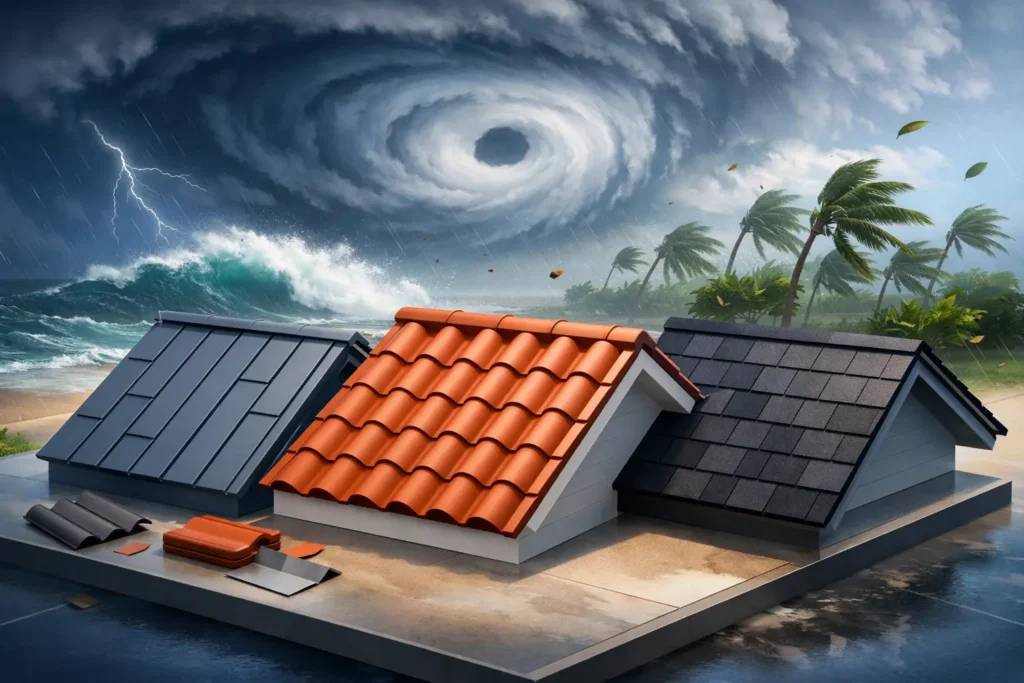
For most Florida properties, the conversation usually comes down to metal, concrete or clay tile, and asphalt shingles. On commercial and low-slope buildings, modified bitumen, TPO, and protective roof coatings can also play a major role.
Metal roofing is often the strongest all-around option
For many homes in hurricane-prone areas, metal is one of the best roofing materials for hurricanes because it combines high wind performance, long service life, and low maintenance. Properly installed metal roofing systems can be engineered to handle very high wind speeds, and they do not carry the same blow-off risk as lighter materials that rely heavily on adhesive seals.
Standing seam metal is often the premium choice. Its concealed fastener design helps reduce exposed points where wind and water can work their way in. Aluminum and galvalume steel are both common options, though the best choice depends on budget, coastal exposure, and the specific product rating.
The trade-off is cost. Metal roofing usually costs more upfront than shingles, and not every installer has the experience to get the details right. In hurricane country, details are everything. Panel width, clip spacing, fastening pattern, edge metal, and underlayment all affect performance.
Metal also earns points for durability after the storm. It resists rot, sheds water quickly, and can reflect heat well, which matters in Florida. For homeowners planning to stay put and wanting a long-term system, metal is hard to ignore.
Tile roofs can perform well, but only when the system is right
Tile roofing is common across Florida for a reason. It looks great, lasts a long time, and handles sun exposure well. Concrete and clay tile can be strong roofing materials in hurricane zones, but they come with more conditions than some people expect.
The biggest misconception is that heavy means safer. Weight alone does not make a roof hurricane-resistant. What matters is how each tile is attached, what underlayment sits beneath it, and whether the whole assembly meets current wind standards. In older roofs, tiles may survive for decades under normal weather but fail during a major storm because attachment methods are outdated.
There is also a practical issue with impact. Tiles can crack from debris or foot traffic, and repairs can be more specialized than with shingles. Even when the tile itself stays in place, underlayment can become the weak point over time.
That said, modern tile systems installed to current code can be an excellent option for Florida homes. They offer longevity, strong curb appeal, and good heat performance. They just need to be approached as a full system, not a decorative surface.
Asphalt shingles can work, but product selection matters
Asphalt shingles remain the most common residential roofing material because they are affordable and widely available. For many property owners, they are still a practical option. But when hurricane resistance is the priority, not all shingles belong in the same conversation.
Basic three-tab shingles are generally the weakest choice for high-wind regions. Architectural shingles are stronger and more durable, and many premium products carry higher wind ratings when installed with the required fastening pattern and compatible accessories. That is the key point. A high-rated shingle installed incorrectly is not a high-performing roof.
Shingles are often the best fit when budget is tight or when a homeowner needs a solid replacement without jumping to the cost of metal or tile. They can also look sharp and perform well if the roof deck is in good shape and the installation follows manufacturer requirements exactly.
The trade-off is lifespan and storm margin. Even quality shingles usually do not match metal for longevity or tile for premium appearance. In severe hurricanes, they are often more vulnerable to edge lifting and tab damage. For inland homes they may make more sense. For exposed coastal properties, owners often look for something tougher.
Best commercial roofing materials for hurricanes
Commercial buildings bring a different set of priorities. Low-slope and flat roofing systems need strong seam integrity, dependable drainage, and minimal interruption to business operations. In these settings, the best roofing materials for hurricanes are usually membrane-based systems designed for wind uplift resistance and waterproofing.
TPO is a common choice because it is energy efficient, relatively lightweight, and well suited to many commercial buildings. When mechanically attached or adhered properly, with the right insulation and fastening pattern, it can perform well in severe weather.
Modified bitumen remains a strong option too, especially when durability and puncture resistance matter. It has a long track record and can be a smart fit for buildings that need a tough, redundant waterproofing approach.
Roof coatings can also add value, but they should not be treated like a shortcut. A coating can extend life, improve weather resistance, and help with energy performance, but only if the underlying roof is still a good candidate. If the roof system is already compromised, coating over problems does not solve them.
The installation matters as much as the material
This is where many hurricane roofing decisions go wrong. People compare products and skip the bigger question: who is installing the roof, and how will they build the full assembly?
A hurricane-ready roof depends on upgraded underlayment, proper flashing, sealed penetrations, edge securement, and code-compliant fastening. Roof-to-wall connections matter. So does attic ventilation. Even the best material can underperform if the installer cuts corners around valleys, ridges, or perimeter metal.
Florida code exists for a reason, and storm-zone roofing is not the place for guesswork. For homeowners and commercial owners in places like Palm Bay and along the coast, local experience matters. Bear Roofing works with the realities Florida owners face every year – wind, rain, salt exposure, insurance pressure, and the need for a roof system that is built to last, not just pass inspection on paper.
How to choose the right material for your property
The right choice usually comes down to budget, exposure, building type, and how long you plan to keep the property. If you want the strongest long-term residential option and are willing to invest more upfront, metal is often the leader. If curb appeal and longevity matter most and the structure can support it, tile may be a strong fit. If cost control is the priority and the product is upgraded properly, architectural shingles can still make sense.
For commercial buildings, the answer depends on roof design, drainage, insulation goals, and maintenance plans. A low-slope property near the coast has different demands than a small inland office or warehouse.
The smartest move is not chasing the single toughest-looking product. It is choosing a roofing system that fits the building, meets wind requirements, and is installed by a contractor who understands Florida storm performance from inspection through cleanup.
A roof should give you more than coverage. It should give you confidence when the forecast turns serious, and that starts with picking a system built for the storms you actually live with.