
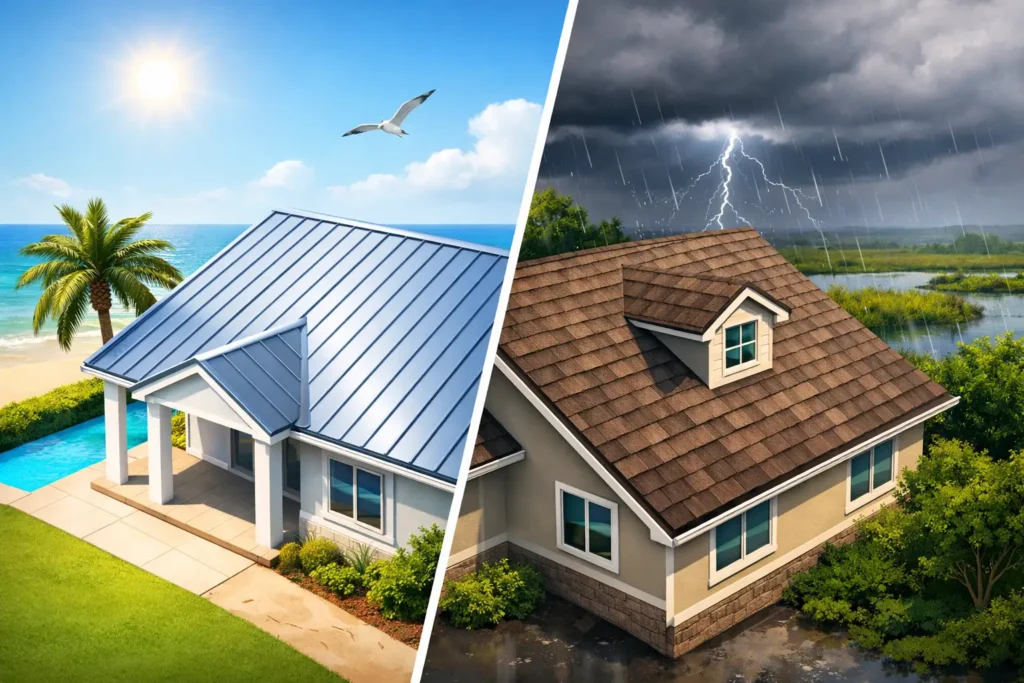
A roof in Florida does not get an easy life. It takes direct sun, heavy rain, salt air, humidity, and the kind of wind that turns small weaknesses into expensive problems. When homeowners compare a metal roof vs shingle roof, the right answer usually comes down to how long you plan to stay, how much storm protection you want, and what level of upfront investment makes sense.
Both systems can perform well when they are installed correctly and matched to the home. Both can also disappoint if the material, fastening pattern, ventilation, or flashing details are wrong. That is why this decision should be based on Florida conditions, not just national averages or what looked good on another house.
Metal roof vs shingle roof: what changes in Florida?
In many parts of the country, this comparison is mostly about price and appearance. On Florida’s East Coast, it is also about wind uplift, salt exposure, attic heat, insurance concerns, and how the roof system handles years of extreme weather.
Shingle roofs are common because they are familiar, cost less upfront, and offer a wide range of colors and styles. They can be an excellent fit for many homes, especially when the homeowner wants a dependable replacement without the higher initial cost of metal.
Metal roofs have gained ground because they offer longer service life, strong wind performance, and better energy efficiency in hot climates. They also appeal to owners who are thinking long term and want a roofing system built for harsh coastal conditions.
The best choice is rarely one-size-fits-all. A smaller home you may sell in seven years deserves a different conversation than a forever home on the coast.
Upfront cost and long-term value
For most homeowners, price is where the conversation starts.
A shingle roof almost always wins on initial cost. If your current roof has to be replaced now and budget is tight, shingles can be the practical answer. They provide solid protection, attractive curb appeal, and a faster path to getting the project done without stretching finances further than necessary.
A metal roof costs more at the start, sometimes significantly more depending on the panel profile, underlayment, trim complexity, and geometry of the roof. That higher price can still make sense if you plan to stay in the home for many years. The reason is simple: metal usually lasts longer, often needs fewer major interventions over time, and may help reduce cooling costs in a hot climate.
This is where homeowners need a clear-eyed view of value. The lower price of shingles is real. So is the longer-term return of metal. The smarter option depends on whether you need the lower upfront number or the longer performance window.
Lifespan and how each roof ages
A shingle roof can give you many years of reliable service, but it is more vulnerable to Florida’s constant UV exposure, heat cycling, algae streaking, and storm wear. Even a well-installed shingle system will generally have a shorter life expectancy than metal under the same conditions.
Metal roofing tends to hold up longer because the material itself is less affected by the same level of heat and sun exposure. It does not absorb moisture the way some other roofing components can, and it resists many of the aging patterns that gradually wear shingles down.
That said, metal is not maintenance-free. Fasteners, sealants, flashing transitions, and finish coatings all matter. Near the coast, salt exposure can be especially hard on lower-quality systems or poor installation details. The material may be strong, but the workmanship still carries the outcome.
Wind resistance and storm performance
This is one of the biggest reasons Florida homeowners look hard at metal.
When engineered and installed properly, metal roofing can offer excellent wind resistance. That matters in hurricane-prone areas where uplift ratings and attachment methods are more than just technical details. They are part of your home’s first line of defense.
Shingle roofs can also be built to meet Florida code requirements and perform well in storms, especially with upgraded products and proper installation. But shingles are made of smaller individual pieces, and that means more opportunities for wind to find an edge, lift a tab, or exploit a weak fastening pattern.
The key phrase here is installed properly. No material overcomes poor workmanship. The strongest panel system or highest-rated shingle will still fail if the decking, underlayment, flashing, or fastening is wrong. That is why local code knowledge and storm-focused installation standards matter so much.
Energy efficiency in the Florida heat
Florida homeowners feel their roof choice every afternoon.
Metal roofs often reflect more solar heat than traditional shingle systems, especially when the finish is designed for energy performance. That can reduce heat gain in the attic and ease some of the load on your HVAC system. Over time, that benefit can be meaningful, especially in long cooling seasons.
Shingles are improving, and many modern products are available in lighter, more reflective colors. Still, in a direct metal roof vs shingle roof comparison, metal often has the edge in energy efficiency.
That does not mean a shingle roof is automatically inefficient. Ventilation, insulation, roof color, and attic conditions all affect performance. A well-designed roofing system can make a noticeable difference no matter which material you choose.
Appearance, neighborhood fit, and resale
Some homeowners want the clean, sharp look of standing seam metal. Others prefer the traditional appearance of architectural shingles because it fits the neighborhood and feels familiar.
Shingle roofs offer broad design flexibility and work well on many home styles. They can complement everything from modest residential properties to higher-end homes without drawing too much attention to the roof itself.
Metal roofs make a stronger visual statement. On the right home, that can increase curb appeal and create a premium look. On the wrong home, or in a neighborhood with a more conventional style, it may feel out of place.
Resale value depends on the buyer, the area, and the age of the roof at the time of sale. A newer metal roof may be a strong selling point because buyers understand the durability and long life. A new shingle roof still carries value because buyers want a home that does not need immediate major work. The real advantage is not just the material. It is being able to show that the roof was installed well and still has years of dependable service ahead.
Maintenance and repair realities
Shingle roofs are generally straightforward to inspect and repair. If one section is damaged, targeted repairs may be possible depending on the age and condition of the roof. That can be helpful after isolated storm damage.
Metal roofs can be very durable, but repairs may require more specialized matching, panel handling, and trim knowledge. If damage occurs in a specific area, the repair process is not always as simple as replacing a handful of shingles.
This is another place where homeowners should think beyond the brochure. Ask not only how the roof performs when everything goes right, but also what service looks like if a storm causes damage or a detail needs attention later.
Which roof makes more sense for your home?
If you want the lower upfront investment, traditional curb appeal, and a reliable system that fits many Florida homes, shingles may be the better choice. They are practical, proven, and often the right answer for homeowners balancing performance with budget.
If you want longer service life, strong wind performance, and better heat reflection, metal may be worth the added cost. It is especially attractive for homeowners planning to stay put, owners near the coast, and anyone looking for a premium upgrade built for Florida weather.
For many property owners, the deciding factors are not just material features. They are timing, insurance considerations, long-term plans, and confidence in the installer. That is where a contractor with Florida experience matters. A company like Bear Roofing understands that a roof replacement is not just a product purchase. It is a protection decision, and it needs to be handled from inspection through cleanup with no surprises and no disappearing act.
The right roof is the one that fits your house, your budget, and the weather it faces every year. If you are weighing metal against shingles, start with the real conditions on your property and choose the system you can trust long after the estimate is signed.