
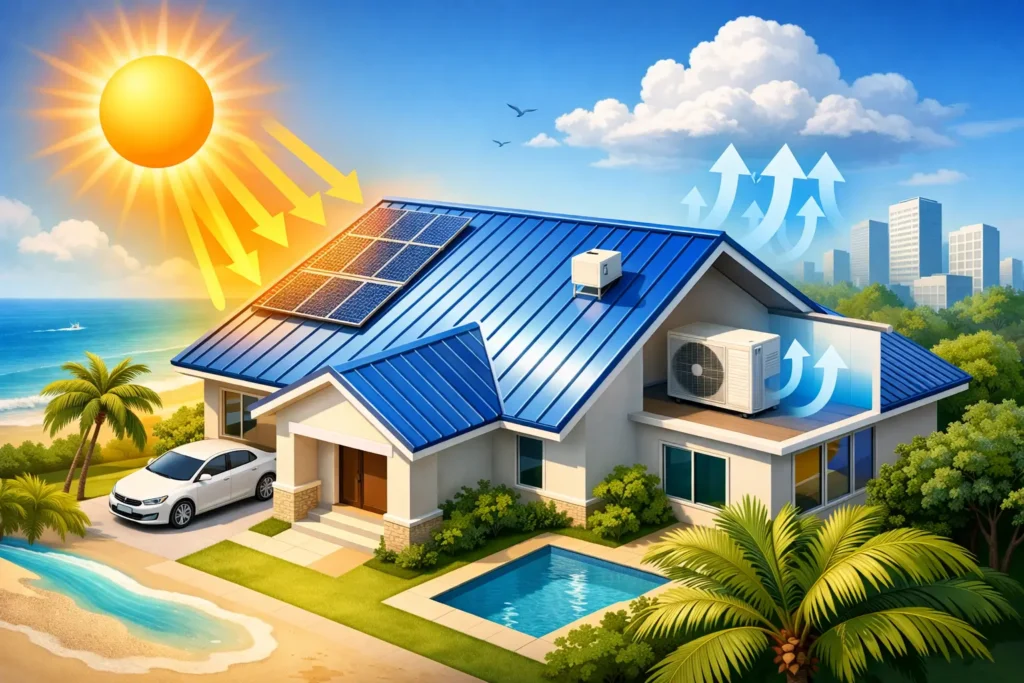
A Florida attic in August tells the truth fast. If the upstairs stays hot long after sunset and the AC seems to run without a break, your roof is part of the problem. That is why metal roof energy savings Florida property owners ask about are not just marketing talk. In the right system, a metal roof can reduce heat gain, lower cooling demand, and make indoor temperatures more manageable during the hottest months.
That said, not every metal roof performs the same way. The material helps, but the real savings come from the full assembly – color, coating, underlayment, ventilation, insulation, roof design, and installation quality. If you are comparing roofing options in Palm Bay or along Florida’s East Coast, it helps to know where the savings are real, where they are overstated, and what matters most before you invest.
How metal roof energy savings in Florida actually work
Florida homes take a beating from direct sun, high humidity, and long cooling seasons. Traditional dark roofs absorb a large amount of solar heat and transfer that heat into the attic space. Once attic temperatures spike, the HVAC system has to work harder to maintain indoor comfort.
Metal roofing changes that equation in two main ways. First, many metal systems reflect more of the sun’s radiant energy than asphalt shingles, especially when they use high-performance reflective paint finishes. Second, metal roofs can re-radiate absorbed heat more efficiently, which helps reduce the amount of heat that moves into the structure below.
This is why homeowners often notice lower attic temperatures and better comfort consistency after a properly installed metal roof replacement. The effect can be more noticeable in homes with older roofs, limited attic ventilation, or dark roofing materials that held heat all day.
Still, energy savings are not automatic. A poorly chosen panel color or a roof installed over weak ventilation can limit the benefit. The roof material matters, but the system matters more.
What affects metal roof energy savings Florida homes see most
The biggest factor is solar reflectance. Lighter colors usually outperform darker ones because they reflect more sunlight. In Florida, white, light bronze, light gray, and other reflective finishes tend to deliver stronger cooling performance than black or deep brown panels.
Coatings also make a difference. Modern cool-roof finishes are designed to reflect more solar radiation and reduce heat absorption. Two roofs can both be metal, but the one with the better coating system may perform much better in summer.
Insulation and ventilation come next. If attic insulation is thin or uneven, some of the roof’s energy benefit gets lost. If intake and exhaust ventilation are out of balance, heat can still collect under the roof deck. That is one reason experienced Florida roofers look beyond the panel itself when discussing efficiency. A roof upgrade should not ignore the attic.
Roof geometry matters too. A steep roof may shed heat differently than a low-slope system, and homes with large unshaded roof areas usually feel the impact of reflectivity more than properties protected by mature trees. Coastal exposure can also affect long-term performance, which is why material selection needs to account for salt air as well as sun.
How metal compares with shingles in a Florida climate
For many Florida property owners, the practical comparison is metal versus asphalt shingles. Shingles usually cost less upfront, and they remain a common option for good reason. But from an energy standpoint, metal often has an edge, especially with reflective finishes.
Asphalt shingles can absorb and retain more heat, particularly in darker colors. Some shingle lines are rated for better solar reflectance, so this is not a simple metal-good, shingle-bad conversation. But in general, a reflective metal roof gives you a better shot at lowering heat gain during long Florida summers.
The trade-off is upfront investment. Metal roofing usually costs more to install than shingles. The payback comes through a combination of energy performance, longer service life, lower maintenance in many cases, and strong weather durability when the system is specified and installed correctly. If you plan to stay in the home for years, that math can make sense. If you expect to move soon, the value may come more through resale appeal and reduced maintenance risk than utility savings alone.
Residential comfort matters as much as the power bill
Energy savings get most of the attention, but comfort is often the first thing homeowners notice. Rooms that used to heat up in the afternoon may stay more stable. Second-story spaces can feel less punishing. The AC may cycle more normally instead of running hard into the evening.
That improvement matters in Florida because cooling is not a short seasonal issue. It is a long-term operating cost. Even modest reductions in heat transfer can add up month after month.
There is also less strain on HVAC equipment when the home envelope performs better. A roof will not replace the need for an efficient air-conditioning system, but it can stop the roof from working against it. For many households, that is the bigger win.
Commercial buildings can benefit too
On commercial properties, the conversation often shifts from comfort to operational cost. Warehouses, offices, retail buildings, and multifamily properties all feel the effect of roof-driven heat gain. Large roof surfaces under direct sun can drive up cooling demand fast.
Metal systems and coated roofing assemblies can improve energy performance, but the right answer depends on the building use and roof design. A steep-slope metal roof may make sense on one structure, while a flat roof coating or membrane solution may be the better path on another. The principle stays the same – less absorbed heat generally means less cooling demand.
For owners and managers, the key is lifecycle thinking. Upfront cost matters, but so do maintenance schedules, weather performance, tenant comfort, insurance considerations, and how often the roof may need replacement over time.
When energy savings claims get overstated
This is where some roofing conversations go sideways. A metal roof can help lower cooling costs, but it is not a miracle product. If a home has poor duct sealing, old insulation, leaky windows, or an aging HVAC system, the roof alone will not solve every efficiency problem.
Savings also vary by house. A single-story home with a large exposed roof may see stronger results than a shaded property with newer insulation and decent ventilation already in place. The age of the existing roof matters too. Replacing an old dark roof with a reflective metal system usually creates a bigger jump than replacing a newer reflective shingle roof.
Honest contractors should be clear about that. Real performance depends on conditions at the property, not a one-size-fits-all number.
Choosing a metal roof for Florida performance
If energy efficiency is one of your priorities, ask about panel color, reflective coatings, underlayment, attic ventilation, fastening systems, and how the roof assembly will be tailored to local code and exposure conditions. In Florida, wind resistance and water management cannot be separated from energy performance. A roof that saves a little on cooling but fails early in storm conditions is not a smart investment.
This is where working with a contractor who understands Florida roofing systems matters. Material recommendations should fit your home, your budget, your location, and your goals. No surprises. No disappearing act. Just a clear explanation of what you are getting and what kind of performance you can reasonably expect.
Bear Roofing works with homeowners and property owners across Florida’s East Coast with that mindset – practical guidance, strong installation standards, and roofing systems built for the climate we actually live in.
Is a metal roof worth it for energy savings alone?
Sometimes yes, sometimes no. If your current roof absorbs heat, your attic runs hot, and your cooling bills climb every summer, metal can be a strong upgrade. If you are already replacing the roof anyway, the efficiency benefit becomes part of a bigger value equation that includes lifespan, storm durability, and appearance.
But if you are looking only at utility bill reduction, you should be realistic. The best case is usually a combination of roof reflectivity, proper ventilation, sound insulation, and quality installation. That is what moves the needle.
In Florida, your roof is not just the top layer of the house. It is part of how the whole building handles heat, wind, rain, and long-term wear. When you choose a metal roof for the right reasons and install it the right way, the energy savings can be meaningful. More than that, the home tends to feel better day to day, which is something you notice long before the next electric bill arrives.