
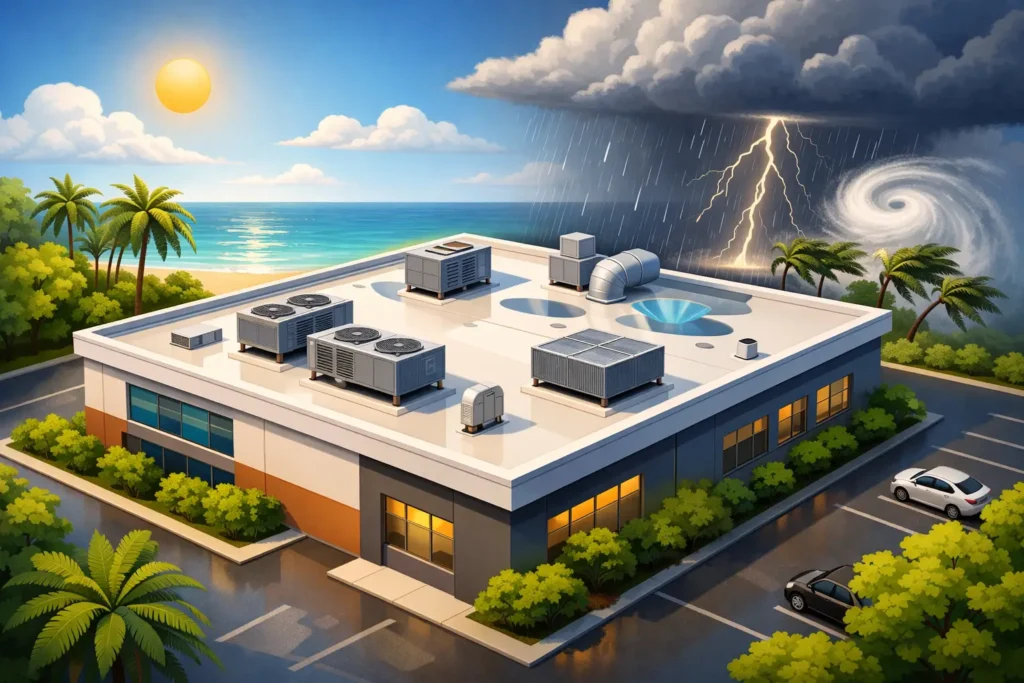
A roof leak over a retail floor, office suite, or warehouse is never just a roof problem. It can interrupt operations, damage inventory, create safety concerns, and put tenants or customers in a difficult position. In Florida, commercial roofing has to stand up to intense UV exposure, wind-driven rain, salt air near the coast, heavy humidity, and hurricane-season pressure. A quick patch may stop water for the moment, but it rarely answers the bigger question: what is happening across the rest of the roof?
For business owners and property managers along Florida’s East Coast, the right roofing decision protects a valuable asset while reducing disruption to the people who use the building every day. That means choosing a system based on the building’s design, drainage, traffic, budget, and expected service life – not simply choosing the lowest number on a proposal.
What Florida Commercial Roofs Are Up Against
Low-slope and flat roofs are common on commercial buildings because they make efficient use of space and accommodate HVAC equipment, solar equipment, and other mechanical systems. They also manage water differently than steep-slope residential roofs. Water must move steadily toward drains, scuppers, or gutters. When drainage is poor, even a small area of standing water can accelerate wear and expose weak seams, flashing, or penetrations.
Florida weather adds another layer of risk. Summer heat can cause roofing materials to expand and contract day after day. Sudden downpours test every drain and seam. Coastal properties may deal with salt-laden air that affects metal components. When tropical storms arrive, uplift resistance, secure edge details, and code-compliant installation become critical.
These conditions are why a commercial roof should be evaluated as a complete system. The membrane or surface matters, but so do insulation, deck condition, drainage, flashing, curbs around equipment, coping, and the attachment method. One overlooked detail can become the source of recurring leaks.
Choosing a Commercial Roofing System
There is no single best commercial roof for every Florida property. A small medical office, a multi-tenant shopping center, and a warehouse each have different needs. The best choice depends on roof slope, building use, foot traffic, drainage, exposure, local code requirements, and the owner’s long-term plans for the property.
TPO roofing
TPO is a single-ply membrane often selected for low-slope commercial roofs. Its light color can reflect a significant amount of sunlight, which may help reduce heat absorption. Properly welded seams create a continuous waterproof surface, and TPO can be a practical fit for many offices, retail buildings, and larger facilities.
The trade-off is that installation quality matters greatly. Seams, penetrations, perimeter details, and transitions must be handled correctly. A membrane can be a good product on paper and still underperform when the roof is poorly prepared or installed without attention to detail.
Modified bitumen and built-up systems
Modified bitumen systems use asphalt-based layers and are known for durability. They can be a strong option where a roof receives regular maintenance traffic or where a layered system makes sense for the building. These roofs can be installed in different ways, depending on the system and site conditions.
They are not automatically the right answer for every property. Material weight, installation method, existing roof conditions, and maintenance requirements all deserve review before a decision is made.
Metal roofing
For commercial buildings with a steeper roof design, metal can offer long service life, clean appearance, and strong wind performance when engineered and installed correctly. It is often a compelling option for churches, professional buildings, mixed-use properties, and facilities where appearance matters as much as protection.
Metal roofing requires precise flashing and fastening. In coastal Florida, material selection and attention to corrosion resistance are especially important. The upfront investment may be higher, but the long-term value can be strong when the building and budget support it.
Roof coatings
A roof coating can restore and protect certain existing low-slope roofs without a full tear-off. Coatings may improve reflectivity, seal small surface imperfections, and extend the useful life of a roof that is still structurally sound.
A coating is not a cure for saturated insulation, widespread membrane failure, major ponding water, or neglected drainage. Before recommending one, a contractor should inspect the roof closely and explain whether restoration is genuinely appropriate. No surprises. No selling a coating when replacement is the safer investment.
Repair, Restoration, or Replacement?
Commercial roof decisions are often time-sensitive, but urgency should not replace diagnosis. If a leak is isolated and the roof still has useful life remaining, a targeted repair may be the responsible choice. Damaged flashing, an open seam, punctures from service work, or a failed pipe boot can often be corrected without replacing the entire system.
Restoration may make sense when the roof surface is aging but the underlying assembly remains dry and stable. Replacement becomes more likely when leaks are recurring in multiple locations, insulation is wet, drainage failures are persistent, or the existing roof has reached the end of its service life.
A thorough inspection should identify more than the visible leak. Moisture may travel beneath the surface and appear far from the original entry point. An experienced commercial roofing contractor looks at the whole roof assembly, photographs conditions, checks drains and penetrations, and provides a clear scope of work. Property owners deserve to know what is being repaired, why it failed, and what the proposed solution is designed to prevent.
Why Drainage and Details Matter So Much
The field of the roof gets attention because it is the largest visible area. Yet many commercial roof leaks begin at the details: around HVAC curbs, roof drains, skylights, parapet walls, pipe penetrations, and perimeter edges. These areas experience movement, water concentration, and frequent service traffic.
Drainage deserves equal attention. Clogged drains and scuppers can allow water to back up during heavy rain. Areas that hold water after storms may indicate drainage design issues, settled insulation, or an aging roof surface. Cleaning drains is basic maintenance, but it is also a chance to spot early warning signs before a small issue becomes interior damage.
For Florida properties, wind resistance is another detail-driven issue. Secure edge metal, correctly installed termination points, and code-appropriate attachment help the roof perform when wind pressure rises. This is not the place to cut corners or accept vague answers from a contractor.
A Better Process for Commercial Roofing Projects
A well-managed project starts with an honest assessment and a plan for keeping your business running. For occupied buildings, scheduling, access control, noise, debris management, and protection of entryways all matter. The roofing crew should understand that a project site is still a working business.
The process should include a documented inspection, material options that fit the building, a clear written proposal, permit and code coordination where required, and consistent communication from start to finish. If insurance damage is involved, documentation can help support the claim process, although coverage decisions always remain with the insurer.
Before work begins, ask how the contractor will protect landscaping, parking areas, customers, tenants, and equipment. Ask who will manage daily cleanup, how change conditions will be communicated, and what workmanship coverage applies after installation. These are not minor administrative questions. They reveal whether a contractor has a process or simply plans to show up with a crew.
Bear Roofing approaches commercial projects with that level of accountability, from inspection through cleanup, with Florida-specific guidance and workmanship protection designed for the long haul.
Maintenance Protects the Investment
Even a new roof needs attention. Regular inspections, especially after major storms, can catch loose flashing, blocked drains, punctures, and failing sealant before they create expensive interior damage. Maintenance is particularly valuable on roofs with HVAC units or other equipment that requires frequent technician access.
Property managers should also keep records of repairs, inspections, leaks, and storm events. A simple history makes it easier to identify patterns, budget for future work, and communicate clearly with contractors or insurers. It also helps distinguish a one-time issue from a roof that is beginning to fail across multiple areas.
The right commercial roof is not merely a line item on a capital budget. It is protection for your operations, your people, and the property you have worked hard to maintain. Start with a careful inspection, insist on a clear explanation, and choose a roofing partner prepared to stand behind the work when Florida weather puts it to the test.