
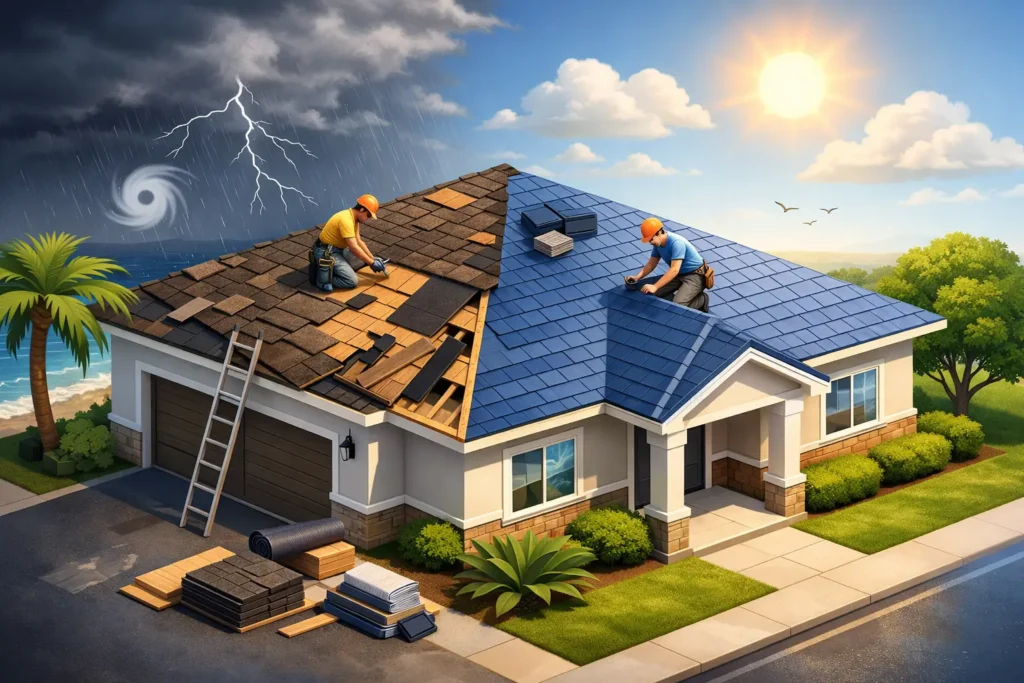
A roof can look acceptable from the driveway and still be one hard Florida storm away from a costly failure. If you are asking, “when should you replace roof?” the answer is rarely based on age alone. In Palm Bay and across Florida’s East Coast, heat, wind, salt air, driving rain, and hurricane-season debris can shorten the life of even a well-installed roof.
The right time to replace is when repairs no longer provide dependable protection, when damage reaches beyond a small isolated area, or when the roof is nearing the end of its expected service life. Waiting for water to drip through the ceiling is not a plan. By then, the roof deck, insulation, drywall, and even electrical components may already be affected.
When Should You Replace a Roof Instead of Repairing It?
A repair makes sense when the issue is limited and the surrounding roof is in good condition. A few damaged shingles after a storm, a failed pipe boot, or a small flashing issue can often be corrected without replacing the entire system.
Replacement becomes the stronger investment when the problem is widespread, recurring, or tied to an aging roofing system. Patching one leak after another may feel less expensive in the moment, but repeated repairs add up while the underlying roof continues to weaken. A replacement gives the structure a fresh, code-compliant system built to handle Florida weather.
For commercial buildings, the same principle applies. A localized puncture on a low-slope roof may be repairable. But recurring ponding water, deteriorated seams, saturated insulation, or widespread membrane failure usually calls for a more complete solution. The goal is not just to stop today’s leak. It is to reduce disruption and protect the building as an asset.
The Warning Signs Florida Property Owners Should Not Ignore
Some signs are visible from the ground. Others require a professional inspection. Either way, they deserve attention before the next heavy rain or named storm exposes the problem.
Your roof is near the end of its expected life
Roofing materials do not all age at the same rate. Asphalt shingles commonly last around 15 to 25 years in Florida, depending on material quality, ventilation, installation, storm exposure, and maintenance. Tile and metal can last significantly longer, but their underlayment, fasteners, flashing, and penetrations still age and require evaluation.
If you do not know the roof’s age, check closing documents, prior permits, insurance paperwork, or markings on the shingles. Age does not automatically mean replacement, but an older roof deserves closer attention, especially before hurricane season.
Shingles are curling, cracking, missing, or losing granules
Asphalt shingles should lie flat and form a consistent protective surface. Curling edges, cracks, bare spots, and widespread granule loss are signs that the material is losing its ability to shed water and resist wind.
Granules often collect in gutters or at downspout exits. A small amount is normal, particularly on newer shingles, but heavy accumulation on an older roof is a warning that the shingles are wearing out. Missing shingles are more urgent because they leave the roof system exposed to wind-driven rain.
You see leaks, stains, or moisture inside
A ceiling stain is not always directly below the leak. Water can travel along framing before it appears indoors, which makes the visible stain only part of the story. Musty odors, peeling paint, damp insulation, bubbling drywall, and discolored ceilings all warrant a roof inspection.
Do not assume that a leak is a minor roof repair because the interior damage appears small. In Florida, repeated rain can turn a small opening into concealed wood rot or mold growth quickly. The sooner the source is identified, the more options you may have.
The roof deck feels soft or looks uneven
A roofline should appear straight and stable. Sagging areas, dips, or soft spots can indicate deteriorated decking, trapped moisture, or structural concerns. This is not a cosmetic issue and should be evaluated promptly.
From inside the attic, look for daylight through the roof deck, dark water marks, damp wood, rusted nails, or insulation that feels wet. Do not walk on a roof to investigate. Damaged areas can be unsafe, and foot traffic can make existing problems worse.
Storm damage keeps returning
Florida roofs take a beating. Wind can lift shingles without fully tearing them off. Flying debris can crack tile, puncture flat roofing membranes, and damage vents or flashing. Salt air can also accelerate corrosion on metal components near the coast.
After a major storm, some damage is obvious. Other damage is subtle but still affects wind resistance and waterproofing. If inspections repeatedly reveal lifted materials, compromised fasteners, broken tiles, or aging components across multiple roof sections, replacement may be safer than continuing with spot fixes.
Repairs are becoming routine
One repair is maintenance. Several repairs in a short period can be a pattern. If your roof has needed frequent attention over the last year or two, ask a contractor to compare the cost of continued repairs with the cost and expected lifespan of replacement.
There is no universal dollar amount that automatically makes replacement the right answer. A newer roof with one unusual issue may still be worth repairing. An older roof with several weak areas may not be. A clear inspection should explain the condition of the roof, not pressure you into a decision.
Florida Conditions Change the Replacement Timeline
National roofing timelines can be misleading in coastal Florida. High UV exposure makes materials expand, contract, and dry out faster. Afternoon downpours test drainage and flashing. Hurricanes and tropical storms challenge every edge, penetration, and attachment point on the roof.
Ventilation also matters. Excessive heat in an attic can contribute to premature shingle wear and higher cooling costs. On flat and low-slope roofs, drainage design is critical. Standing water after rainfall may signal a slope, drainage, or membrane issue that needs more than a surface patch.
Insurance requirements can add another layer. Depending on the roof’s age, condition, material, and your policy, insurers may request inspections or limit coverage. That does not mean you should replace a roof solely because of a letter or renewal question. It does mean you should obtain an honest assessment early enough to make a thoughtful decision instead of rushing during a policy deadline.
Choosing the Right Replacement Material
The best roof is not simply the one with the longest advertised lifespan. It is the system that fits your building, budget, appearance goals, maintenance expectations, and local exposure.
Architectural shingles are a practical choice for many Florida homes, offering a familiar look and solid value when properly installed. Metal roofing provides excellent durability, wind performance, and energy benefits, though it carries a higher upfront cost. Tile delivers distinctive curb appeal and long-term performance, but the structure must be suitable for its weight and the underlayment beneath the tile must be considered.
For commercial properties and homes with low-slope sections, membrane roofing and protective coatings can provide effective waterproofing when designed for the roof’s drainage and use. The details matter as much as the field material. Flashing, underlayment, ventilation, attachment methods, and cleanup standards all affect the performance of a new roof.
What a Proper Roof Replacement Decision Looks Like
Start with a full inspection, not a guess from the ground. A qualified Florida roofing contractor should assess the roofing material, flashing, penetrations, decking condition where visible, drainage, ventilation, and evidence of storm damage. You should receive a clear explanation of what can be repaired, what should be replaced, and why.
If replacement is recommended, review the proposed system in plain language. Ask what materials are included, how damaged decking is handled, what permits are required, how the property will be protected during construction, and what warranty covers the work. A low quote that leaves out critical components is not a bargain if it creates problems later.
Bear Roofing approaches replacement as a managed project from inspection through cleanup, with guidance on material selection, Florida code requirements, financing, and insurance-related damage when applicable. No surprises. No disappearing act.
Do not wait for a leak to make the decision for you. A timely inspection gives you room to plan, protect your property, and move forward before Florida weather turns a manageable roofing issue into a major repair.