
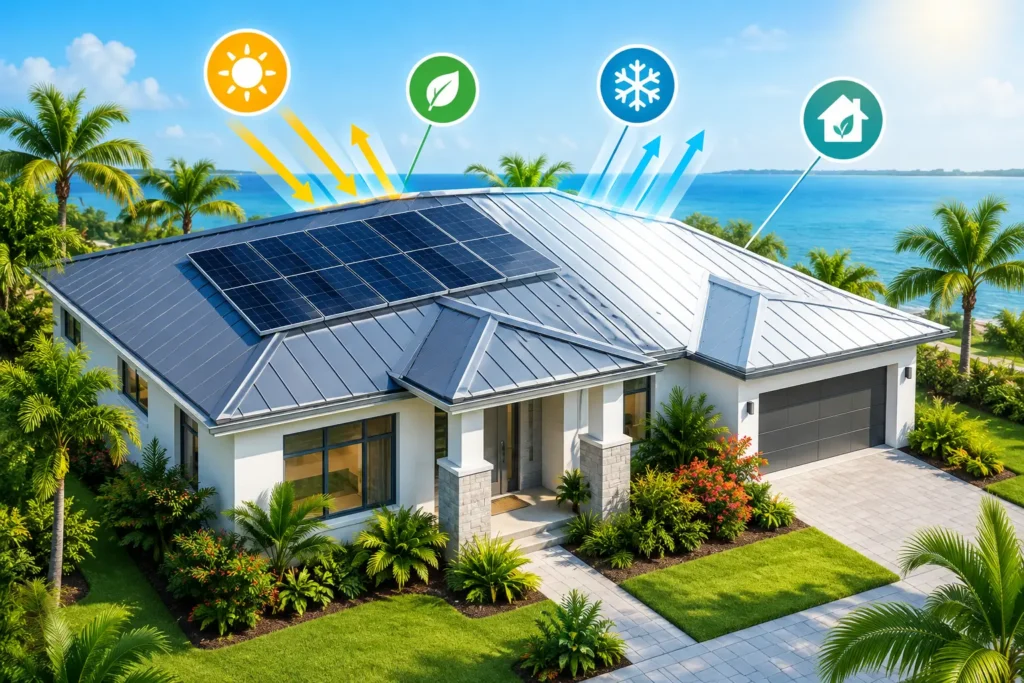
A Florida roof can absorb punishing heat long before the afternoon storm rolls in. That heat moves into the attic, makes air conditioners work harder, and can turn an ordinary roof replacement into a long-term operating-cost decision. The most useful energy efficient roofing trends are not gimmicks. They are practical system choices that reflect sunlight, manage heat and moisture, and still stand up to wind, rain, salt air, and insurance requirements.
For homeowners and commercial property owners along Florida’s East Coast, energy efficiency has to work alongside storm protection. A roof that looks efficient on paper but is poorly installed, under-ventilated, or not rated for local wind conditions is not a good investment. The right approach starts with the building, the roof slope, the existing deck, and the way the property is used.
Energy Efficient Roofing Trends That Matter in Florida
Cool roofing colors and reflective surfaces
Cool roofing remains one of the strongest trends because it addresses the problem directly: solar heat. Light-colored shingles, tile, metal, and low-slope membranes reflect more sunlight than dark materials. This can lower roof-surface temperatures and reduce the heat entering the attic or building interior.
For a low-slope commercial roof, reflective white membranes and coatings are often a practical choice. For a home, the decision is more nuanced. A bright white roof may not match every neighborhood or architectural style, but many manufacturers now offer lighter grays, tans, weathered wood tones, and specialty pigments designed to reflect more solar energy than traditional dark colors.
Color alone does not determine performance. Material, attic insulation, ventilation, and installation quality all affect how much energy a property saves. Still, when a homeowner is already replacing a roof, choosing a solar-reflective color can be one of the simplest upgrades to consider.
Metal roofing built for heat and hurricanes
Metal roofing is gaining attention across coastal Florida for good reason. Properly engineered metal systems can reflect heat, shed water quickly, resist mildew, and provide excellent wind performance when installed to the correct specifications. Standing seam panels, in particular, offer clean lines and fewer exposed fasteners than some other profiles.
Energy performance depends heavily on finish and assembly. A light or reflective finish will generally manage solar heat better than a dark finish. Insulation and ventilation beneath the panels matter as well. Metal is not automatically a cooler roof simply because it is metal.
The trade-off is upfront cost. Metal often costs more than architectural shingles, and details around penetrations, flashing, and panel layout require experienced workmanship. For owners planning to stay in the property for many years, its service life and storm-focused performance can make the higher initial investment easier to justify.
Tile roofs with smarter underlayment systems
Concrete and clay tile remain a natural fit for many Florida homes. Tile creates an air space between the roofing material and deck, which can help reduce heat transfer when the complete system is designed correctly. It also delivers the coastal and Mediterranean look many homeowners want.
The trend is not just tile itself. It is better underlayment, fastening methods, and ventilation planning beneath it. Underlayment is the water-shedding layer beneath the tile, and it deserves as much attention as the visible roof. A beautiful tile roof with failing underlayment can lead to expensive problems long before the tile reaches the end of its useful life.
Tile is heavy, so the structure must support it. It can also be more involved to repair around broken pieces or roof-mounted equipment. A thorough inspection before replacement helps determine whether tile is the right balance of appearance, energy performance, and budget.
Roof coatings for low-slope buildings
For commercial buildings and certain residential flat roofs, reflective roof coatings are a major efficiency trend. Silicone, acrylic, and other coating systems can create a bright, reflective surface over an existing roof when that roof is still a suitable candidate for restoration.
A coating is not a shortcut for a failing roof. The existing membrane or modified bitumen roof must be inspected for wet insulation, open seams, ponding water, damaged flashing, and drainage issues first. If moisture is trapped below the surface, coating over it can delay the real repair and make the eventual replacement more costly.
When conditions are right, coatings can extend service life, reduce rooftop temperatures, and limit disruption for businesses. They are especially useful for property managers who need a planned maintenance solution rather than an emergency replacement during the rainy season.
The roof is only one part of the energy equation
A reflective roof helps, but it cannot compensate for an attic that is sealed up, under-insulated, or leaking conditioned air. One of the most overlooked energy efficient roofing trends is treating the roof, attic, and ventilation as a connected system.
Proper intake ventilation at the eaves and exhaust ventilation near the ridge can help move hot, humid air out of the attic. The exact setup depends on roof design, available intake area, and whether the attic is vented or conditioned. More vents are not always better. An unbalanced system can create performance issues, and improperly located vents can increase vulnerability during wind-driven rain.
Insulation should also be evaluated during a roof project, particularly if utility bills are high or the upstairs rooms are consistently warmer. Air sealing gaps around penetrations and attic access points may be just as valuable as adding more insulation. This is where a contractor should explain the condition they see rather than sell a one-size-fits-all package.
Solar-ready roofs are replacing afterthought solar plans
More Florida property owners are planning roof replacements with future solar in mind. A solar-ready roof is not necessarily one with panels installed immediately. It is a roof designed with panel layout, structural considerations, conduit paths, and service access in mind before the roofing work begins.
This planning avoids a common problem: replacing a roof and then discovering that the best solar layout requires extra penetrations, awkward panel placement, or removal of recently installed materials. Standing seam metal can allow certain solar mounting approaches without roof penetrations, while shingle and tile systems require careful flashing and attachment details.
Solar can reduce electricity use, but it should not drive the roofing decision by itself. The roof needs enough remaining service life to support the system, and the installation must preserve water resistance and meet local requirements. If a roof is nearing replacement age, replace it first. Removing and reinstalling solar panels later adds cost and risk.
Storm resistance and efficiency must work together
Florida roofing decisions come with a reality check: the most energy-conscious choice still has to protect the property during a hurricane. Wind ratings, fastening patterns, deck attachment, edge metal, underlayment, and flashing are not optional details. They are the parts of the system that keep water from entering when conditions turn severe.
Local code compliance matters, particularly in coastal communities exposed to higher wind speeds and salt air. Insurance carriers may also require documentation, inspections, or specific mitigation features. A clear proposal should explain the roofing system, not just list a material and a square-foot price.
At Bear Roofing, that means helping owners weigh performance before they commit. No surprises. No disappearing act. A roof replacement should account for the building’s age, storm exposure, drainage, attic conditions, appearance goals, and budget from the start.
How to choose an efficient roof without guessing
Start with an inspection that looks beyond visible shingles or tiles. Ask whether the decking is sound, whether the attic shows signs of heat or moisture buildup, and whether the current ventilation is balanced. For commercial properties, ask about drainage, ponding water, insulation condition, and the remaining life of the existing membrane.
Then compare complete systems, not isolated materials. A lower-cost shingle roof with proper ventilation and a reflective color may be a better decision than a premium roof material installed without the details that support it. On the other hand, a long-term owner in a high-wind coastal area may find that metal or tile offers a stronger balance of longevity, appearance, and energy performance.
Finally, get the warranty details in writing. Manufacturer coverage and workmanship coverage protect different things. Knowing who is accountable for the installation after the crew leaves is part of making a confident decision.
The best energy-saving roof for a Florida property is the one that fits the building and is installed with discipline. When heat, heavy rain, wind, and salt air are all part of the forecast, careful material selection and skilled installation are what turn an efficiency upgrade into lasting protection.