
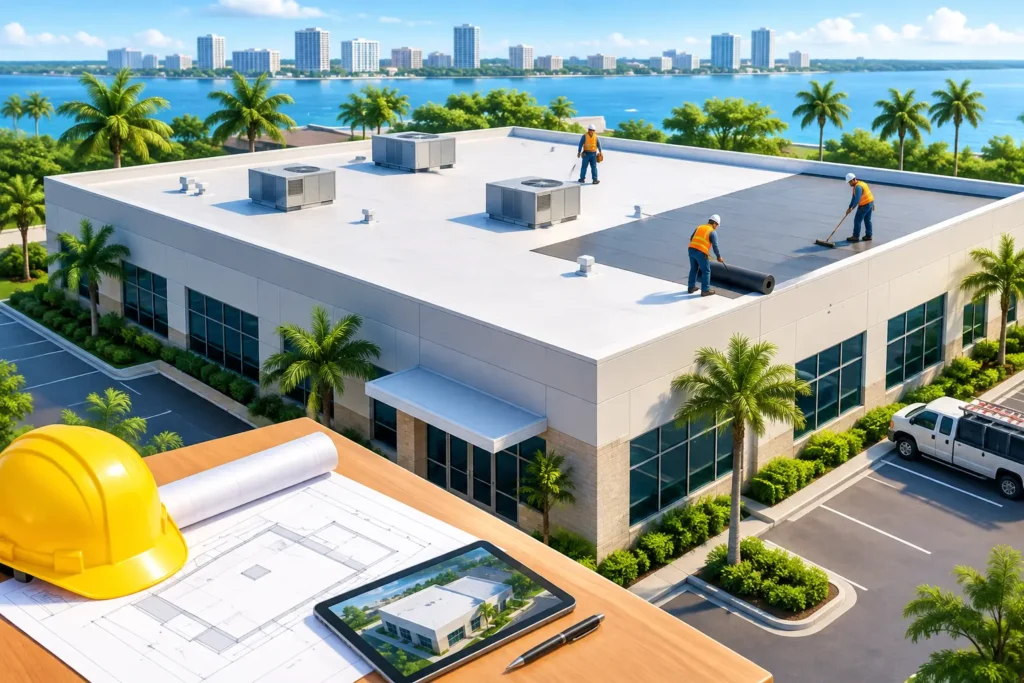
A failing commercial roof rarely waits for a convenient time. One leak can interrupt tenants, damage inventory, create safety concerns, and turn a manageable capital project into an emergency expense. This commercial reroofing planning guide is built for Florida property owners and facility managers who need a clear path from the first inspection to final cleanup – without surprises or a disappearing act.
A commercial reroof is more than replacing membrane or metal. It is a decision about protecting the building, maintaining operations, meeting code, managing insurance requirements, and choosing a system that can stand up to heat, heavy rain, hurricane-force wind, and coastal salt exposure. The right plan gives you control before the work starts.
Start With the Roof’s Actual Condition
A reroofing project should begin with a professional assessment, not an assumption based on the last leak. Commercial roofs can look serviceable from the ground while moisture is trapped beneath the surface, insulation has lost its performance, or flashing details are nearing failure.
A thorough inspection should identify the roof’s existing system, its age, drainage performance, visible damage, prior repairs, penetrations, edge details, and any areas of wet insulation or deteriorated decking. On low-slope roofs, ponding water deserves special attention. Standing water can accelerate material breakdown and expose weak seams or drains during the next major storm.
The inspection also helps determine whether a recover is possible or whether a full tear-off is the responsible choice. Recovering over an existing roof can reduce labor, disposal costs, and disruption. But it is not appropriate when moisture is present, the substrate is compromised, existing layers exceed code limits, or the current roof’s condition makes it a poor foundation for a new system.
That distinction matters. A lower initial number is not a savings if it leaves concealed problems in place.
Define the Scope Before Comparing Quotes
Commercial reroofing proposals are only useful when they describe the same work. If one quote includes a full tear-off, new insulation, upgraded flashing, permits, and daily cleanup while another only lists a new membrane, the two prices cannot be fairly compared.
Ask for a written scope that clearly addresses removal, deck repairs, insulation, drainage improvements, flashing, penetrations, edge metal, warranties, permits, debris handling, and site protection. It should also identify what happens if concealed damage is found after the existing roof is opened.
For occupied buildings, the scope should include operational protections. That may mean protecting rooftop equipment, covering inventory below active work zones, coordinating access with tenants, maintaining safe walkways, and scheduling noisy work around business hours. A contractor should be able to explain how the crew will protect the property each day, not just how the roof will look at completion.
Plan Around People, Equipment, and Revenue
A reroof can affect more than the building envelope. Restaurants may have exhaust systems and refrigeration lines on the roof. Medical offices may need strict dust and noise control. Retail centers may need customer access kept clear. Warehouses may need work staged around loading areas and inventory.
Before selecting dates, walk the property with the contractor and identify business-critical areas. Discuss delivery routes, material staging, dumpster placement, parking impacts, security procedures, and access to mechanical units. If your property has multiple tenants, establish one communication plan so occupants know what to expect and who to contact with questions.
The goal is not to make reroofing invisible. It is to make the disruption organized, predictable, and as limited as possible.
Choose a System for Florida Conditions
The best commercial roofing system depends on the building, roof slope, drainage, budget, rooftop traffic, and long-term ownership plan. Florida weather should be part of every material decision.
Single-ply systems such as TPO and PVC are common choices for low-slope commercial roofs. They can offer reflective surfaces that help reduce heat absorption, along with welded seams designed for dependable waterproofing. PVC can be especially useful in applications where chemical exposure, grease, or certain exhaust conditions are a concern. The right choice depends on the property’s use and details, not simply which material is most familiar.
Modified bitumen and other asphalt-based systems remain practical options for certain buildings, particularly where durability and proven multi-layer protection are priorities. Metal roofing can be an excellent fit for sloped commercial structures when properly engineered and installed for wind performance. Roof coatings may extend the life of an existing roof in the right condition, but coating is not a cure for saturated insulation, open seams, failed flashing, or structural concerns.
For every system, details determine performance. Drains, scuppers, parapet walls, expansion joints, curbs, skylights, and penetrations are where many roof failures begin. Material selection matters, but the crew’s workmanship at these transitions matters just as much.
Insulation and Drainage Are Part of the Roof
A reroof is often the best time to improve insulation and correct drainage issues. Better insulation can help stabilize interior temperatures and reduce strain on HVAC equipment. Tapered insulation can direct water toward drains and scuppers where a roof’s existing slope is insufficient.
These upgrades add cost, so they should be evaluated against the building’s needs and projected ownership timeline. Still, ignoring poor drainage to preserve the lowest bid can lead to recurring ponding water, premature wear, and more repair calls later. A good roofing partner will explain the trade-off plainly.
Build a Budget That Accounts for Reality
Commercial reroofing budgets should include more than the advertised cost per square foot. Roof size is only one factor. Access, height, existing layers, deck condition, insulation, drainage modifications, equipment obstacles, permit requirements, wind-zone specifications, and material type all affect the final cost.
Set aside a contingency for concealed conditions. Until the old roof is removed, no contractor can guarantee that every section of deck and insulation is sound. A transparent proposal identifies unit prices or procedures for approved change work, so you are not left guessing if repairs are uncovered.
It is also wise to consider life-cycle value, not just installation cost. A system with stronger wind resistance, better reflectivity, a longer warranty, or fewer expected repairs may cost more upfront while offering a better long-term return. Financing can help some owners move forward with the system their building actually needs rather than delaying essential work.
Confirm Code, Wind Requirements, and Documentation
Florida commercial roofing projects must comply with applicable building codes, product approvals, and wind-load requirements. Coastal conditions can raise the stakes, especially in areas exposed to high winds and windborne debris. The system, fastener pattern, perimeter details, and attachment method must be appropriate for the building and location.
Make sure the contractor handles permitting and provides clear documentation at closeout. Keep copies of permits, inspection records, product information, warranty documents, photographs, and maintenance recommendations. This paperwork can support future insurance discussions, building sales, and warranty claims.
If storm damage or an insurance claim is involved, document the condition before work begins. Clear photos, inspection findings, repair history, and a detailed scope can help establish what was damaged and what work is necessary. Do not let insurance questions delay urgent temporary protection. Preventing additional water intrusion protects both the property and the claim.
Select a Contractor Who Manages the Whole Project
Commercial reroofing is not a product purchase. It is a project-management job that happens to end with a new roof. Look for a licensed, insured contractor with commercial experience, local code knowledge, a defined safety process, and a written warranty that explains what is covered.
Ask who will supervise the work, how weather delays are handled, how the site will be secured, and how progress will be communicated. You should know who to call before the first delivery arrives. At Bear Roofing, that accountability is central to the work: inspect carefully, explain the options, manage the details, and stand behind the finished roof.
The lowest bid may be right if it provides the same scope, materials, protection, and warranty. Often, it does not. Review exclusions closely and choose a contractor that gives direct answers before the contract is signed.
Keep the New Roof Performing
A new roof needs a maintenance plan. Schedule regular inspections, especially after major storms, and keep drains, gutters, and scuppers clear. Address small punctures, loose flashing, and sealant failures early, before water reaches insulation or decking.
Limit unplanned rooftop traffic and require other trades to protect the membrane when servicing HVAC or communications equipment. Keep records of inspections and repairs. That simple discipline helps preserve warranty coverage and gives you a clear history of the roof’s condition.
A well-planned reroof does more than stop leaks. It gives your property a stronger line of defense when Florida weather turns, and it lets you focus on running the business inside the building.