
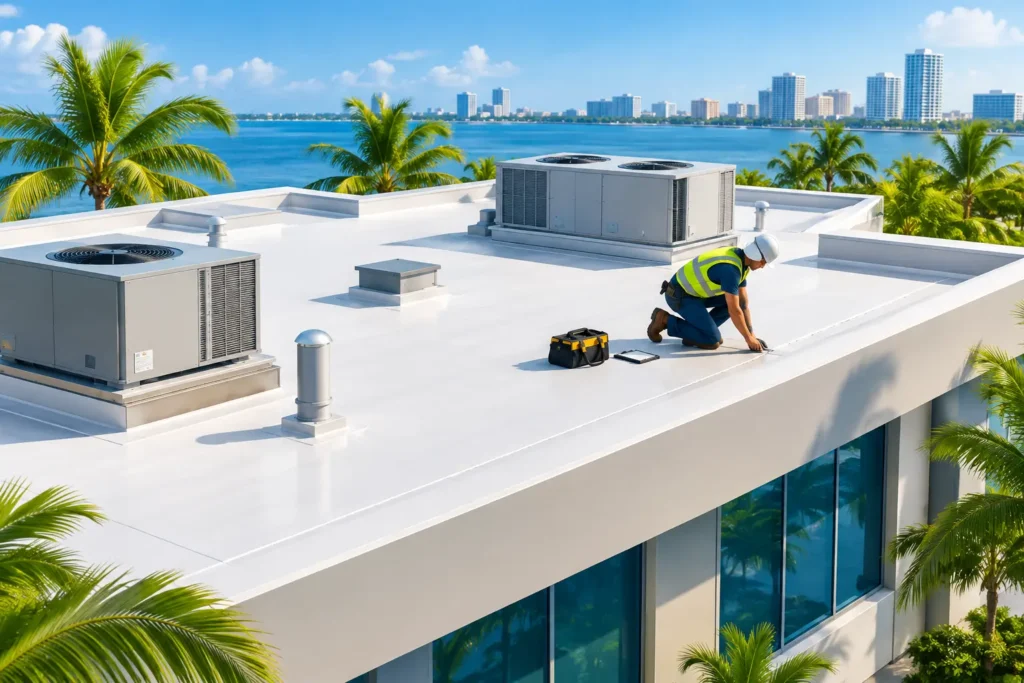
A small pond near a rooftop drain can become a ceiling stain, a tenant complaint, and an insurance question after one hard Florida rain. This commercial roof maintenance guide is built for property owners and managers who want to catch those problems while they are still manageable. On the East Coast of Florida, heat, UV exposure, wind-driven rain, salt air, and hurricane-season debris all work against a roof system. Waiting for a visible interior leak is not a maintenance plan.
Why Commercial Roof Maintenance Matters in Florida
A commercial roof does more than keep water out. It protects inventory, equipment, electrical systems, occupied spaces, and the building’s operating schedule. When a roof fails, the cost is rarely limited to the repair itself. You may also face damaged interiors, business interruption, mold concerns, tenant issues, and a harder conversation with your insurer.
Florida roofs carry a heavier workload than roofs in milder climates. Intense sunlight ages membranes and sealants. Afternoon storms test drains and flashing. Coastal salt can accelerate corrosion on metal components, fasteners, curbs, and edge details. High winds can loosen flashing or expose weak points that looked minor before the storm.
Regular maintenance helps extend roof life, but it does not make every roof repairable forever. A roof with widespread membrane deterioration, saturated insulation, repeated leaks, or storm-related uplift may need a larger repair plan or replacement. The goal is clear information early, not false reassurance.
Build a Commercial Roof Maintenance Schedule
Most commercial properties benefit from professional roof inspections at least twice a year: once before hurricane season and once after it. Roofs with frequent foot traffic, rooftop HVAC equipment, heavy tree coverage, drainage issues, or a history of leaks may need more frequent checks.
Your schedule should also include inspections after significant weather events. Do not wait for a named storm if your property has experienced high winds, prolonged standing water, hail, or debris impact. A quick inspection after the weather clears can identify lifted edges, punctures, blocked drains, and damaged penetrations before the next rainfall.
Between professional inspections, assign a staff member or property manager to watch for interior warning signs. Water spots, musty odors, peeling paint, ceiling tile damage, and unexplained moisture around walls or mechanical rooms all deserve attention. Document the date, location, weather conditions, and photographs. That record helps a roofing contractor trace the source and supports a cleaner insurance claim if storm damage is involved.
Keep a Roof File
A well-managed commercial property should have a roof file that includes the installation date, system type, warranty information, inspection reports, repair invoices, photographs, and a record of past leaks. Include any changes to rooftop equipment, such as new HVAC units, conduit, antennas, or solar components.
This file prevents guesswork when ownership, management, or maintenance staff changes. It also helps determine whether a recurring issue is a new problem or an unresolved detail from a previous repair.
Focus on Drainage Before the Next Downpour
Poor drainage is one of the most common reasons low-slope commercial roofs deteriorate early. Water that remains on the roof after a storm adds weight, accelerates material breakdown, and increases the chance that water will find its way into seams, flashing, or penetrations.
Check roof drains, scuppers, gutters, and downspouts regularly. Leaves, roofing granules, nesting material, and wind-blown debris can block drainage paths quickly. On flat roofs, even a partial blockage can leave large areas of standing water after a heavy rain.
If ponding water remains more than 48 hours after dry weather returns, have it evaluated. The solution may be as simple as clearing a drain or repairing a clogged leader. In other cases, it may involve correcting low areas, modifying drainage, or addressing sagging deck conditions. The right answer depends on the roof assembly and the cause of the ponding, not just the visible water.
Inspect the Details That Fail First
Commercial roof leaks often begin at transitions and penetrations rather than in the open field of the roof. Those details expand, contract, and take repeated exposure to water and wind.
During a professional inspection, the contractor should pay close attention to roof edges, flashing, parapet walls, coping caps, pipe boots, skylights, HVAC curbs, vents, drains, expansion joints, and areas where different materials meet. On metal roofs, fasteners, seams, panel laps, and corrosion require close review. On membrane systems such as TPO, PVC, EPDM, or modified bitumen, seams, patches, surface wear, and penetrations should be checked for separation or damage.
Roof coatings can add valuable protection and improve reflectivity when the underlying roof is a suitable candidate. They are not a shortcut around wet insulation, failing seams, or major structural problems. Before applying a coating, a qualified contractor should assess adhesion, moisture conditions, substrate preparation, and whether repairs are needed first.
Control Roof Traffic and Protect the Membrane
Every service visit to rooftop equipment creates an opportunity for accidental damage. HVAC technicians, electricians, satellite installers, and other trades may not understand the specific requirements of your roofing system. A dropped tool, dragged unit, unsecured access panel, or careless foot traffic can puncture a membrane or disturb a flashing detail.
Limit roof access to authorized personnel and require sign-in documentation when outside vendors visit. Use designated walk pads where regular service routes cross a low-slope roof. After major equipment work, inspect the area around the curbs and penetrations. The repair may be small, but it needs to happen before water gets below the surface.
Do not send untrained staff onto the roof to investigate damage after a storm. Wet membranes, loose debris, standing water, and weakened edges create a real fall hazard. A safe visual check from the ground or interior is useful, but roof-level inspections should be handled by qualified professionals with proper safety procedures.
Prepare Before Hurricane Season
Hurricane preparation is not just about boarding windows and securing outdoor furniture. Your roof should be part of the plan. Before the season begins, clear drainage components, trim overhanging branches where appropriate, secure loose rooftop materials, and confirm that edge metal, flashing, and equipment curbs are in good condition.
Keep emergency contacts and roof documentation accessible off-site or in cloud storage. If a storm damages the roof, early photographs and inspection records can show the roof’s pre-storm condition. That matters when evaluating an insurance claim.
After a major storm, look for debris, displaced edge metal, loose flashing, damaged gutters, and signs of water inside the building. Avoid making permanent repairs before documenting damage, but do not delay emergency measures that prevent additional water intrusion. Temporary dry-in work can protect the building while a full repair scope is developed.
Know When a Repair Is Enough
A good maintenance program should help you make better repair-versus-replacement decisions. Localized punctures, isolated flashing failures, and small seam issues can often be repaired effectively when the rest of the system is sound. Timely repair is usually the least disruptive option for tenants and daily operations.
Replacement deserves consideration when leaks keep returning in different locations, insulation is saturated, the roof is near the end of its expected service life, or wind damage has affected large sections of the system. Energy performance also matters. A new reflective low-slope roof or properly selected coating system may reduce heat gain and help manage cooling costs, depending on the building design and existing roof condition.
The best recommendation should explain the condition clearly, show you the evidence, and outline the trade-offs. No surprises. No disappearing act. For Florida property owners, the right contractor should also understand local code requirements, wind considerations, and the documentation insurers may request.
Choose Accountability Over Quick Patches
Emergency patches have a place when water is actively entering a building. They are not a substitute for identifying why the roof failed. Ask for inspection findings in writing, photographs of problem areas, a clear repair scope, and realistic expectations about what the repair will and will not solve.
Bear Roofing works with commercial property stakeholders across Florida’s East Coast to inspect roof conditions, address storm damage, and plan repairs or replacement with the building’s long-term protection in mind. A roof should not become another unresolved item on a property manager’s list.
Schedule your next roof inspection before the next season tests it. A documented, well-timed maintenance visit is one of the simplest ways to protect your building, your tenants, and your budget.