
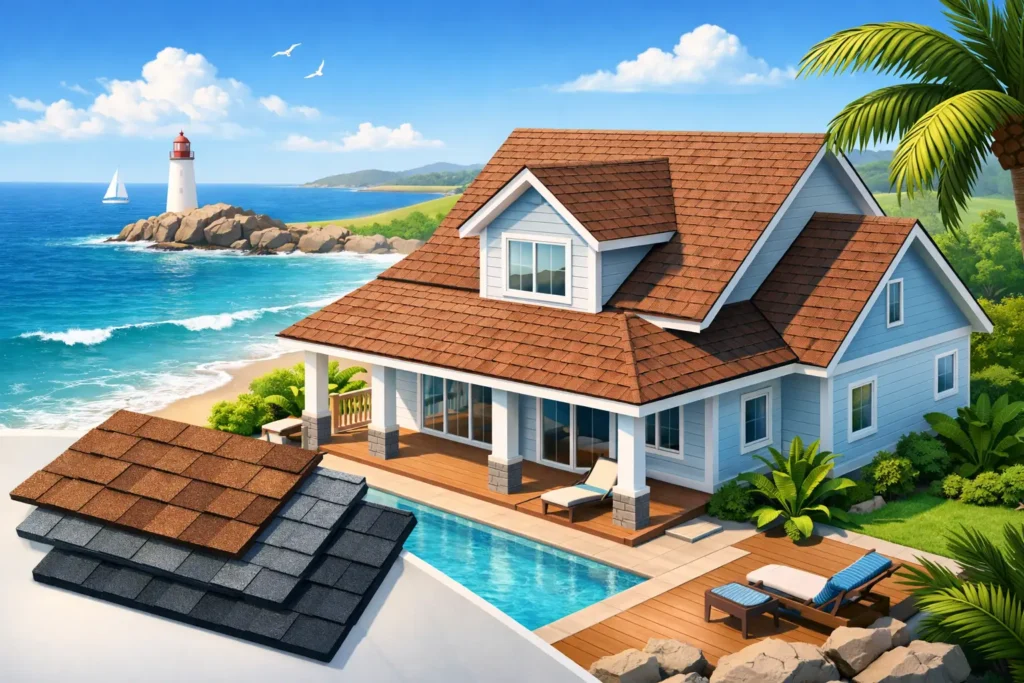
A roof can look great on day one and still be the wrong choice for a house a few miles from the Atlantic. Along Florida’s East Coast, shingles deal with salt air, harsh UV, wind-driven rain, and storm seasons that test every weak spot. If you are looking for the best shingle roof for coastal homes, the right answer is usually not the cheapest bundle on the shelf. It is the system that gives you the best mix of wind resistance, algae protection, proper sealing, and code-compliant installation.
What makes coastal roofing harder on shingles?
Coastal homes age roofs faster. Salt in the air can wear on metal components and speed up corrosion where lower-grade fasteners or accessories are used. Strong sun breaks down roofing materials over time, and daily heat can shorten the life of lower-quality shingles. Then add tropical storms, sudden downpours, and gusty weather, and small installation mistakes become expensive problems.
That is why a coastal roof should never be judged by color alone or by the base product warranty alone. In Florida, performance depends on the full assembly. The shingles matter, but so do the underlayment, starter strips, ridge components, ventilation, flashing details, and fastening pattern.
The best shingle roof for coastal homes is usually architectural asphalt
For most coastal homes, architectural asphalt shingles are the strongest overall choice when budget, appearance, and performance all matter. Also called dimensional shingles, they are thicker and heavier than basic 3-tab shingles. That added weight and construction can improve durability and wind performance when installed correctly.
Architectural shingles also tend to hold their appearance better over time. They create more depth, come in a wider range of colors, and often include better algae-resistant features, which matters in warm, humid coastal climates.
Basic 3-tab shingles still exist, but they are rarely the best long-term option near the coast. They usually carry lower wind ratings, have a flatter look, and can be more vulnerable in severe weather. They may save money up front, but the trade-off is often shorter service life and less storm confidence.
If a homeowner wants the best balance of cost and protection, architectural shingles are where the conversation should start.
What to look for in the best shingle roof for coastal homes
Not every architectural shingle is equal. Some are built to a higher standard for wind, impact, and weathering. For coastal conditions, the details matter.
High wind ratings
Florida homes need shingles rated for serious wind performance. Many premium architectural shingles are designed for higher wind resistance, especially when paired with the correct starter products and ridge caps. That pairing is not optional. Manufacturers typically require a complete system to achieve the stated wind rating.
A shingle may sound strong in a brochure, but the real question is whether the full installed system meets local code and manufacturer requirements for your home’s location.
Strong adhesive seal strips
In coastal weather, sealing power matters. Shingles need to bond well to resist uplift during high winds. Products with reliable seal strips and a proven installation method tend to perform better when storms roll through.
This is one reason installation timing matters, too. Shingles need proper conditions to seal as intended. A skilled contractor plans for that and checks the roof system carefully after installation.
Algae resistance
Black streaks are common in humid climates, and coastal Florida gives algae plenty of opportunity to grow. Many quality shingles include algae-resistant technology, often with copper-infused granules. That does not just help curb appeal. It helps the roof look cleaner longer and reduces the worn-out appearance that can make a fairly new roof look older than it is.
Better underlayment and accessories
A high-end shingle over weak underlayment is not a high-end roof. Coastal homes need a system approach. Synthetic underlayment, upgraded leak barriers in vulnerable areas, corrosion-resistant flashing components, and proper attic ventilation all support shingle performance.
If one piece is cut short, the roof is more exposed when weather gets rough.
Premium shingles vs. standard architectural shingles
For some homes, a standard architectural shingle is enough. For others, it makes sense to move into a premium or designer grade shingle with stronger thickness, improved impact resistance, or a longer expected lifespan.
The trade-off is cost. Premium shingles can raise the project price, and not every house needs that upgrade. If your home sits in a highly exposed location, gets direct coastal wind, or has a roof design with vulnerable slopes and edges, paying more for a stronger product may be worth it.
If your home is farther inland, has good surrounding protection, and you want solid value without overbuilding, a mid-to-upper architectural shingle can be the smarter choice.
This is where honest guidance matters. The best roof is not always the most expensive one. It is the one that fits the home, the exposure, and the budget without cutting corners.
Color matters more than many homeowners think
On Florida’s coast, roof color affects more than style. Lighter shingle colors can help reduce heat absorption, which may improve indoor comfort and support energy efficiency. They also tend to show less fading than very dark colors over time in intense sun.
That said, aesthetics still matter. A roof is a major part of the home’s appearance, and HOA rules may limit your options. The goal is to balance curb appeal with practical performance. A color that looks sharp but traps more heat may not be the best fit for every homeowner.
Installation is just as important as the shingle itself
A quality shingle installed poorly will fail faster than a mid-grade shingle installed correctly. That is especially true in coastal Florida.
Proper nailing matters. Starter placement matters. Ridge vent details matter. Flashing around chimneys, walls, valleys, and penetrations matters. Even cleanup matters, because loose debris and nails are signs that a crew may not have paid attention where it counts.
This is why homeowners should ask more than, “What brand do you use?” Ask how the roof will be installed, what underlayment will be used, how wind resistance is achieved, and whether the crew follows manufacturer specifications and Florida code requirements.
No surprises. No disappearing act. That is the standard a roofing contractor should meet from inspection through final walkthrough.
How long should a coastal shingle roof last?
In perfect conditions, asphalt shingles can last for decades. On the Florida coast, real-world lifespan is often shorter because the environment is harsher. Sun, salt, moisture, and storms all take a toll.
A well-installed architectural shingle roof may still provide excellent long-term value, but homeowners should be realistic. Manufacturer warranties are not the same as a guarantee that the roof will look or perform like new for the full term. Maintenance, storm events, ventilation, and installation quality all affect lifespan.
That is why a workmanship warranty matters. The product is only part of the protection. The contractor’s accountability matters just as much.
When shingles are the right choice – and when they are not
For many Florida homeowners, shingles make sense because they are cost-effective, attractive, and widely available in styles that match most neighborhoods. Repairs can also be simpler than with some other systems, depending on the damage.
But there are cases where another roofing material may be better. If a home has extreme wind exposure, a very low roof slope, or an owner wants the longest possible lifespan with a different look, metal or tile may deserve a serious look. Shingles are often the best practical answer, but not always.
That is not a weakness of shingles. It is just good planning. The right recommendation should fit the structure and the conditions, not push one product for every roof.
Choosing a coastal roofing contractor
The best shingle roof for coastal homes depends on who installs it. A contractor working along Florida’s East Coast should understand local permitting, wind zone requirements, storm-related damage patterns, and the way salt air affects roofing components over time.
Homeowners should expect clear estimates, straightforward communication, and guidance on material selection without pressure. If insurance is part of the picture after storm damage, that contractor should also know how to document issues clearly and help homeowners understand the process.
At Bear Roofing, that approach is simple: protect the property, explain the options clearly, and handle the project the right way from inspection to cleanup.
The best coastal roof is not just a product decision. It is a protection decision. Choose the shingle system that matches Florida’s weather, and choose the contractor who will still stand behind the work long after the crew leaves.