
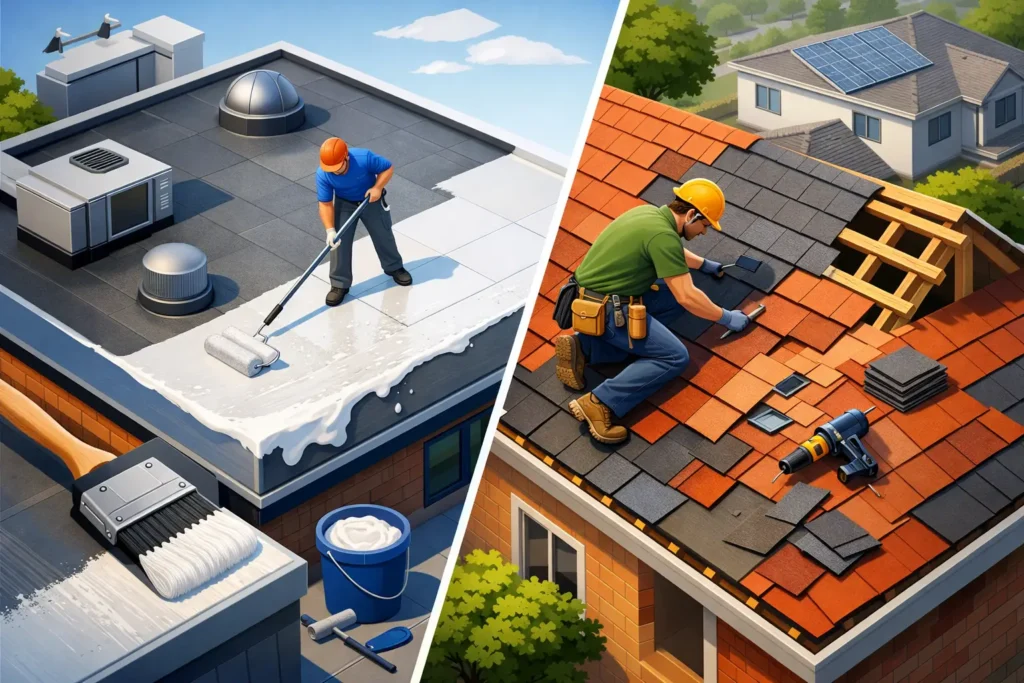
A flat roof can look tired long before it has reached the end of its service life. That is why the roof coating versus replacement decision deserves more than a quick price comparison. On Florida’s East Coast, heavy rain, intense UV exposure, salt air, and hurricane-force winds can turn a small roofing weakness into an expensive interior problem. The right answer comes down to what is happening beneath the surface, not simply how worn the roof looks from the ground.
A professional inspection should lead the decision. A coating can be an excellent protective investment for the right roof. It can also hide problems temporarily if it is applied over wet insulation, failing seams, or an aging system that has already lost its structural integrity. No surprises. No disappearing act. You need a clear assessment of the roof you have before committing to the roof you want.
Roof Coating Versus Replacement: The Core Difference
A roof coating is a liquid-applied protective membrane, most often used on low-slope and flat commercial roofs, and on certain residential roofing systems. Once installed correctly, it creates a continuous surface designed to reflect sunlight, improve waterproofing, and protect the existing roof from further weathering. Common coating types include silicone, acrylic, and polyurethane, each with different strengths around ponding water, flexibility, and durability.
A roof replacement removes the existing roofing system down to the appropriate deck or substrate, then installs a new system. Depending on the property, that may mean new underlayment and shingles, tile components, metal panels, or a complete low-slope membrane assembly. Replacement is the more comprehensive solution because it allows a contractor to address concealed damage, deteriorated decking, insulation issues, and code-required upgrades.
Neither option is automatically the better value. A coating generally costs less upfront and can add useful life to a sound roof. Replacement costs more, but it may prevent repeated repairs and protect the building when the existing system is too far gone to restore.
When a Roof Coating Makes Sense
Coatings work best when the existing roof is fundamentally dry, stable, and repairable. The roof may have surface wear, fading, minor seam issues, or aging protective layers, but the underlying membrane and insulation must still be in acceptable condition.
For a commercial building with a low-slope roof, a coating can be particularly practical when operations cannot tolerate a disruptive tear-off. A properly specified system can restore the weathering surface while allowing the building to remain in use. The reflective finish may also reduce heat absorption, which matters during Florida’s long cooling season.
A coating may be a strong choice when the roof has limited, repairable leaks; no widespread trapped moisture; sound seams and flashings after repair; and sufficient slope or drainage to manage water. It can also make sense when an owner needs to extend service life while planning a future capital project.
The key phrase is properly specified. Silicone often performs well in areas where ponding water is a concern, while acrylic coatings can be a cost-effective option on roofs with positive drainage. Material selection should reflect the roof’s condition, drainage pattern, traffic level, and exposure, not a one-size-fits-all sales pitch.
What a Coating Cannot Fix
A coating is not a shortcut around major roof failure. It will not correct rotted decking, saturated insulation, widespread blistering, structural movement, or a membrane that has failed across large areas. It also cannot solve drainage problems by itself. Water that regularly ponds on a roof needs to be evaluated at the source, including drains, scuppers, slope, and rooftop equipment details.
For residential properties, coatings are not typically a replacement for a failing shingle or tile roof. There are specialty applications, but homeowners should be cautious about any recommendation that promises a coating will make a storm-worn residential roof perform like a new code-compliant system. Florida weather is too demanding for wishful fixes.
Signs Replacement Is the Safer Investment
Replacement becomes the responsible choice when the roof system is no longer a reliable base for restoration. Sometimes that is obvious, such as missing shingles after a storm or visible deck deterioration. Other times, the warning signs are hidden beneath the roofing surface and only show up through moisture scanning, core samples, attic inspections, or recurring interior leaks.
Consider replacement when you are dealing with:
- Repeated leaks in different areas, especially after repairs
- Widespread moisture in insulation or beneath the membrane
- A roof near or beyond its expected service life
- Severe storm damage, wind uplift, damaged flashing, or compromised decking
- Repairs and maintenance costs that keep returning without lasting results
Replacement provides a clean starting point. It gives the contractor access to the full assembly, allowing damaged materials to be removed and replaced before they cause more serious trouble. It also offers the opportunity to improve ventilation, drainage, wind resistance, and material performance based on the building’s current needs.
For homeowners, a new roof can also support resale value, improve curb appeal, and make insurance conversations more straightforward. For commercial owners and property managers, it can reduce the uncertainty that comes with chronic leaks and emergency repair calls. The best replacement is not merely new material. It is a complete system built for the property, local code requirements, and Florida’s weather exposure.
Cost Is More Than the Initial Proposal
It is normal to look at the upfront difference first. Coating a serviceable low-slope roof is usually less expensive than a full replacement because it avoids much of the tear-off, disposal, and material cost. It can be a smart way to gain years of service life without taking on a full replacement project immediately.
But lower initial cost does not always mean lower ownership cost. If moisture is already trapped below the surface, applying a coating may delay a replacement while allowing hidden damage to worsen. That can turn a manageable project into a larger one later. On the other hand, replacing a roof that is still dry and structurally sound may spend capital that could have been preserved through a well-designed restoration system.
Ask for an estimate that explains the condition findings, repair scope, material being proposed, warranty coverage, and what could change the price. A reliable contractor should be able to explain why a coating is suitable or why replacement is necessary in plain language. If insurance is involved after storm damage, documentation matters just as much as the recommendation.
Florida Conditions Change the Calculation
Florida roofs face conditions that many roofing systems elsewhere never see. UV exposure accelerates material aging. Wind-driven rain tests every seam, penetration, valley, and flashing detail. Coastal air can affect metal components, while tropical storms can expose weaknesses that remained hidden during ordinary rain.
That is why a roof that appears acceptable during a dry-season walkthrough may need closer attention after a major storm. A coating system must be installed on a clean, dry substrate with the correct preparation at seams, penetrations, drains, and transitions. Replacement systems must meet applicable Florida Building Code requirements and be designed with wind performance in mind.
A roof inspection should also account for the property’s use. A warehouse with frequent rooftop HVAC traffic needs a different approach than a medical office, condominium building, or Palm Bay home with a steep-slope shingle roof. The roof is a working system, not just a surface.
How to Make the Right Call
Start with evidence, not assumptions. Request an inspection that evaluates visible wear, active leaks, drainage, flashings, structural concerns, and possible trapped moisture. For low-slope roofs, the contractor may recommend moisture testing or core samples when conditions warrant it. Those findings should guide the scope.
Then weigh your timeline. If the roof is sound and you need a cost-conscious way to restore protection, coating may be the right move. If the roof has widespread failure or has become a recurring maintenance problem, replacement often offers the clearer long-term path.
Material and workmanship matter in either case. A quality coating can fail if surface preparation is rushed. A new roof can underperform if flashing details, ventilation, fastening, or cleanup are handled carelessly. Bear Roofing approaches both options as protection decisions, with clear communication from inspection through final walkthrough and workmanship accountability that does not end when the crew leaves.
Do not wait for the next hard rain to make the decision for you. A thorough inspection now can tell you whether your roof needs a protective reset or a true fresh start, so you can act with confidence before water finds its way inside.