
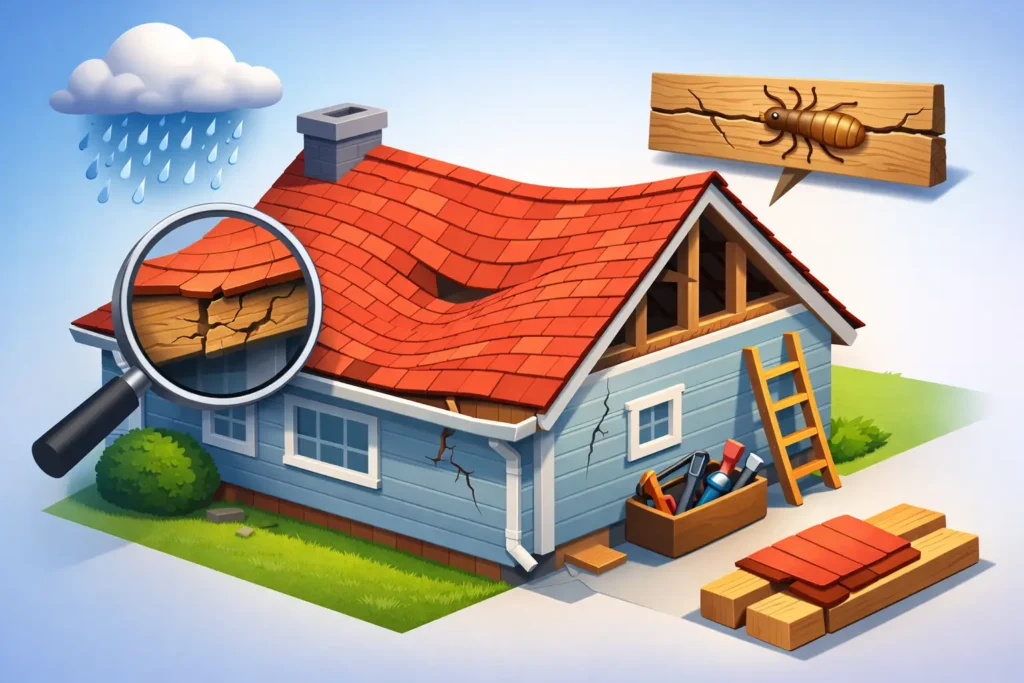
A roofline should look straight, firm, and consistent from the street. If you notice a dip along the ridge, a low spot in the middle of the roof, or a section that appears to bow, your first question is probably, “why does my roof sag?” It is a fair concern. A sagging roof can be cosmetic in limited cases, but it can also point to moisture damage, overloaded framing, failing supports, or storm-related damage that needs prompt attention.
Florida roofs carry a hard workload. They take intense sun, wind pressure, wind-driven rain, humid air, and, in coastal communities, salt exposure. A small issue that might remain hidden in a dry climate can progress quickly here. The right response is not to guess from the ground or cover the area with a quick patch. It is to identify whether the problem is in the roofing materials, the decking, or the structure beneath it.
Why Does My Roof Sag? Start With the Shape
Not every uneven-looking roof is actively failing. Some older homes have slightly irregular framing, and a roof may have settled long ago without changing. The concern rises when the dip is new, worsening, localized, or paired with water stains, cracked ceilings, loose shingles, or doors and windows that suddenly stick.
The location of the sag offers useful clues. A dip in the roof surface between rafters often suggests weakened roof decking. A bow at the ridge can indicate framing movement or undersized rafters. A roof edge that droops may involve damaged fascia, rafter tails, or rot caused by water entering near the gutters. These are clues, not a diagnosis. A qualified roofing inspection may need to include attic access and, when structural damage is suspected, an evaluation by the appropriate building professional.
The Most Common Causes of a Sagging Roof
Long-term water intrusion
Water is one of the most common reasons roof systems lose their shape. A leak does not have to create a dramatic ceiling stain to do damage. Water can enter around aging flashing, damaged shingles, cracked tiles, vents, skylights, or penetrations. It can then soak the roof deck and framing over time.
Plywood or oriented strand board decking can soften and delaminate when it stays wet. Rafters and trusses can rot, especially where attic ventilation is poor and moisture has nowhere to escape. In Florida, heavy rain can turn a small vulnerable area into a recurring wet spot fast. If the sag sits below a known leak or near a roof penetration, moisture damage should be high on the list of possibilities.
Storm damage and wind-driven rain
A storm does not need to remove half the roof to create a future sag. High winds can lift shingles, crack tile, loosen fasteners, or open flashing just enough for water to get underneath. Flying debris can bruise or puncture roofing materials. Wind-driven rain can reach vulnerable areas that ordinary rainfall never exposes.
After a hurricane, tropical storm, or strong summer thunderstorm, homeowners often look for missing shingles and overlook subtler changes in the roofline. That is why post-storm inspections matter. Catching a lifted section, compromised underlayment, or damaged deck early may prevent a localized repair from becoming a structural project.
Aging or failing roof decking
Roof decking is the structural layer beneath shingles, tile, metal panels, or flat-roof materials. When it weakens, the roof covering can follow its contours and look wavy or depressed. This is especially noticeable with asphalt shingles, although tile and metal roofs can also reveal underlying movement.
Decking failure can result from old leaks, repeated moisture exposure, poor installation, or simply age. During a roof replacement, a contractor should inspect the exposed deck and replace compromised sections rather than install new materials over a weak base. A beautiful new roof covering cannot correct deteriorated wood beneath it.
Framing that is undersized, damaged, or altered
Rafters, trusses, beams, and supporting walls carry the roof load. If they are undersized, improperly modified, cracked, or damaged by rot or termites, the roof may begin to sag. This is more serious than a surface decking issue because the problem affects the framework holding up the roof.
Home renovations can sometimes contribute. Removing a wall, cutting a truss for access, or adding equipment in the attic without understanding load paths can weaken the system. Never cut, drill, or alter trusses without professional direction. Trusses are engineered components, and a seemingly small modification can have major consequences.
Excess weight on the roof or in the attic
Florida homeowners do not usually deal with snow load, but roofs can still be overloaded. Multiple layers of old roofing, heavy tile installed on a structure not designed for it, ponding water on a low-slope roof, or poorly placed attic storage can add stress. Wet roofing materials and saturated decking weigh far more than dry materials.
The solution depends on the load. Removing old layers during replacement, correcting drainage, selecting a roofing system appropriate for the structure, or changing attic storage practices can reduce pressure. If the roof framing is already deflecting, it may need repair or reinforcement before a new roof is installed.
Poor attic ventilation and trapped humidity
Heat and humidity are not just comfort issues in an attic. Without balanced intake and exhaust ventilation, hot moist air can linger beneath the roof deck. That environment can accelerate wood deterioration, encourage mold growth, and shorten the life of underlayment and shingles.
Ventilation alone will not repair a sagging roof, but it can be a major part of preventing the next problem. The correct approach depends on the roof design, insulation, existing vents, and airflow path. More vents are not automatically better if they are installed in the wrong locations or do not work as a balanced system.
When a Sagging Roof Is an Urgent Safety Concern
Do not walk on a roof that appears soft, bowed, or unstable. A weakened deck can fail under a person’s weight, turning a repair concern into an injury risk. Stay out of the attic directly beneath a pronounced sag if you see cracked framing, wet insulation, daylight through the roof, or active dripping.
Treat the situation as urgent if the sag appeared suddenly, grows after rainfall, is accompanied by a ceiling bulge, or follows a major storm or impact. Call for professional help promptly if you hear cracking, see a roof section visibly moving, or notice water pooling on a flat or low-slope roof. If there is an immediate risk of collapse, leave the affected area and contact emergency services.
A tarp may limit further water entry after a storm, but it is a temporary protective measure, not a repair. The underlying cause still needs to be identified. No surprises. No disappearing act. You deserve a clear explanation of what failed, what can be repaired, and what replacement would involve if repair is no longer the sound option.
What a Professional Roof Inspection Should Determine
A proper inspection looks beyond the visible dip. The contractor should assess the roof covering, flashing, drainage, roof deck condition, attic moisture, ventilation, and accessible framing. For commercial and residential low-slope roofs, the inspection should also check for ponding water, membrane damage, seam failures, and drainage issues that can keep the structure wet.
The result should be a practical recommendation, not pressure. A small area of damaged decking near a leak may be repairable if the surrounding roof is in good condition. Widespread rot, an aging roof system, repeated storm repairs, or failing framing may make replacement the better long-term investment. If structural framing is involved, the roofing contractor may recommend coordination with a structural engineer or qualified framing professional.
For Florida property owners, documentation also matters. Clear photos, written findings, and storm-related observations can be useful when discussing damage with an insurance carrier. Coverage depends on the policy, cause of loss, maintenance history, and insurer requirements, so no contractor should promise a claim outcome. What a dependable contractor can do is document the conditions accurately and help you understand the scope of needed work.
What to Do Before the Problem Gets Worse
Start by taking photos from the ground in good light, including wider shots that show the roofline and close shots of any visible damage. Check the attic only if it is safe to do so, looking for damp insulation, water stains, moldy odors, or visible daylight. Avoid stepping on insulation or framing you cannot identify safely.
Then schedule an inspection rather than waiting for the next storm. If water is entering, protect belongings below the area and use containers for active drips. Do not attempt to straighten the roof from inside, add makeshift supports, or nail new shingles over a sagging area. Those shortcuts can conceal the real problem and complicate a proper repair.
Bear Roofing helps Florida homeowners and property owners understand roof conditions from the first inspection through cleanup. Whether the issue calls for a targeted repair, decking replacement, improved ventilation, or a complete roofing system, the goal is the same: protect the structure beneath the roof and give you a clear path forward. A sagging roof is not something to ignore, but addressing it early can preserve more of your home, your budget, and your peace of mind.