
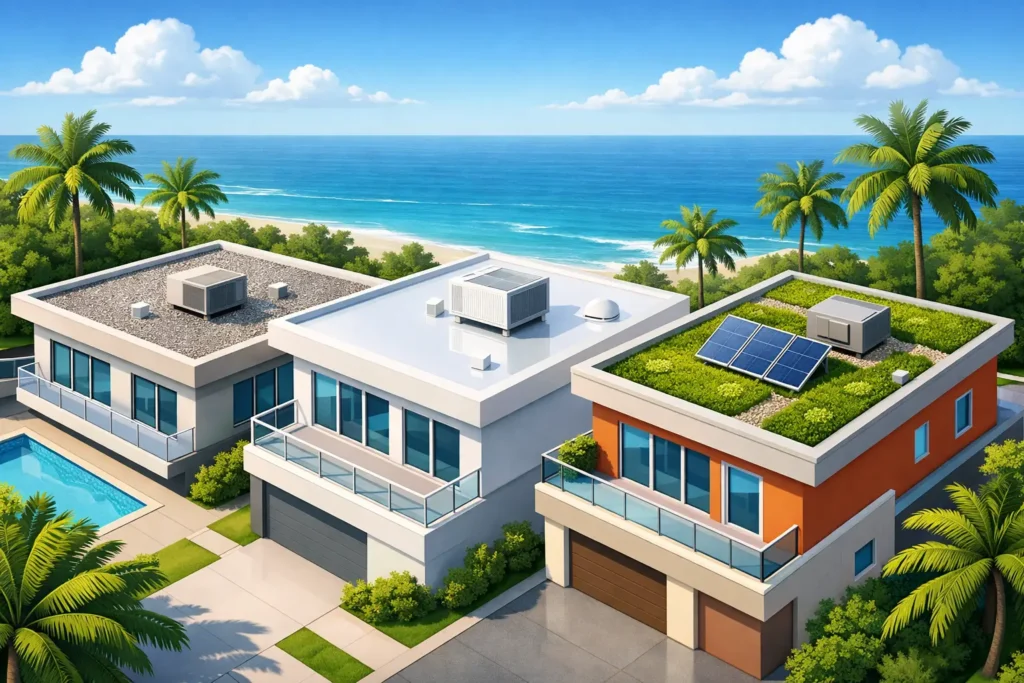
A flat roof in Palm Bay is not dealing with mild weather. It handles punishing sun, wind-driven rain, humid air, salt exposure near the coast, and the pressure changes that come with tropical storms. The best flat roofing systems for Florida properties are not simply the ones with the longest advertised lifespan. They are the systems properly designed for your building, drainage conditions, budget, and exposure to severe weather.
For a commercial building, condominium, patio roof, or low-slope residential addition, the right decision begins below the surface. Deck condition, flashing details, insulation, penetrations, drainage, and installation quality all affect whether a roof protects the property for decades or becomes a recurring leak concern. No surprises. No disappearing act. A good roofing plan accounts for the entire system before material is selected.
What Makes a Flat Roof Right for Florida?
Most flat roofs are not completely flat. They are low-slope roofs designed to direct water toward drains, scuppers, or gutters. That slope may be subtle, but it matters. Standing water accelerates material wear, puts pressure on seams, and can expose weak installation details during a heavy Florida downpour.
The best system also needs to stand up to ultraviolet exposure and heat. Florida sun can age materials quickly, especially on roofs with little shade. A reflective surface can reduce heat absorbed by the building, which may improve indoor comfort and lessen the load on air conditioning equipment.
Wind resistance is equally important. A roofing membrane is only as dependable as its attachment method, perimeter detailing, and flashing. Local building code requirements and the property’s wind zone should guide the design. A low-cost installation that cuts corners around edges, drains, vents, and parapet walls can become expensive after the first major storm.
Best Flat Roofing Systems: A Clear Comparison
There is no single material that is best for every roof. Each system has a place, and the right choice depends on the condition and use of the property.
TPO Roofing
TPO, or thermoplastic polyolefin, is one of the most common choices for Florida commercial and low-slope residential roofs. It is a single-ply white membrane with heat-welded seams, creating a continuous waterproof surface when installed correctly.
TPO is valued for reflectivity, energy performance, and a clean appearance. Its bright surface helps limit heat gain, which makes it especially appealing for warehouses, offices, retail buildings, and homes with large low-slope sections. It is also generally lighter than built-up roofing systems.
The trade-off is that not all TPO products or installations are equal. Membrane thickness, fastening pattern, seam welding, edge metal, and flashing workmanship matter greatly. On a Florida roof, a system must be specified for the building’s wind requirements rather than installed as a one-size-fits-all package.
PVC Roofing
PVC is another white single-ply membrane, and it is often a strong choice where chemical resistance or grease exposure is a concern. Restaurants, commercial kitchens, and buildings with rooftop mechanical equipment can benefit from PVC’s performance in demanding environments.
Like TPO, PVC has heat-welded seams and a reflective surface. It provides excellent waterproofing potential and can perform well in Florida heat and rain. PVC typically carries a higher upfront cost than TPO, but that added investment may make sense when the building has greater exposure to oils, chemicals, or standing water concerns.
For many property owners, the decision between TPO and PVC comes down to use case. TPO is often the efficient, value-driven commercial option. PVC can be the better long-term fit for specialized commercial conditions.
Modified Bitumen Roofing
Modified bitumen is an asphalt-based roofing system commonly installed in multiple layers or rolls. It has a long history in low-slope roofing and remains a dependable option for many residential and commercial properties.
This system is especially useful on roofs with frequent foot traffic, numerous penetrations, or complex layouts. Its layered construction provides a substantial, durable surface, and certain cap sheets are manufactured with reflective granules to improve solar performance.
Modified bitumen can be more labor-intensive than a single-ply membrane, and its dark surfaces may absorb more heat unless a reflective cap sheet or coating is used. Still, it is a proven system when properly designed, especially for owners who want a durable membrane with good puncture resistance.
EPDM Roofing
EPDM is a synthetic rubber membrane, traditionally black, although lighter options are available. It has been used successfully on low-slope buildings for decades and is known for flexibility.
Its ability to accommodate building movement can be useful, but black EPDM may not be the most energy-conscious choice under Florida sun unless a coating or light-colored option is included. Seams are typically adhered or taped rather than heat-welded, making installation detail critical. EPDM may be a good fit for specific projects, but many Florida property owners prefer reflective TPO or PVC for heat management.
Built-Up Roofing and Roof Coatings
Built-up roofing, often called BUR, uses alternating layers of bitumen and reinforcing fabric. It is a time-tested multi-layer system with strong redundancy. On the other hand, it can be heavier, more involved to install, and less practical for every structure.
Roof coatings are different. A silicone, acrylic, or polyurethane coating can restore and protect an eligible existing roof, but it is not a universal replacement solution. The existing roof must be dry, structurally sound, and suitable for coating adhesion. Coatings can extend service life, improve reflectivity, and reduce disruption, but they cannot correct soaked insulation, widespread membrane failure, failed flashing, or poor drainage.
Drainage Is Part of the Roofing System
A premium membrane will not overcome chronic ponding water. Before choosing material, inspect the slope, drains, scuppers, gutters, and areas around rooftop equipment. Crickets and tapered insulation may be needed to move water away from low spots.
Drainage also needs maintenance. Leaves, roofing debris, and storm material can block outlets quickly during Florida’s rainy season. A roof that drains well on installation day can still develop problems if the drainage paths are ignored. Regular inspections after major storms help catch loose flashing, damaged sealant, clogged drains, and punctures before water reaches the interior.
When a Roof Coating Makes Sense
A coating can be a smart financial decision when the existing roof is nearing the end of its surface life but remains dry and stable. It can create a reflective barrier over compatible substrates and may postpone a full replacement.
It is not the answer when moisture is trapped beneath the membrane, the deck has deteriorated, or the roof has repeated leaks from failed details. In those cases, coating over the problem only delays necessary work. An honest inspection should include moisture evaluation, seam condition, flashing condition, drainage performance, and the roof’s storm history.
How to Choose the Right System
Start with the property, not the product brochure. A small residential flat roof over a lanai may need a different approach than a retail center with multiple HVAC units and high foot traffic. The roof deck, existing insulation, drainage design, budget horizon, and expected use all shape the recommendation.
For many Florida commercial properties, a properly engineered TPO or PVC system offers the right balance of reflectivity and performance. For complex roofs or areas prone to traffic and impact, modified bitumen may be the better fit. Where an existing roof remains eligible, a professionally applied coating can be a cost-effective protective measure.
Ask any contractor how the roof will be attached, how seams will be handled, how perimeter edges will meet wind requirements, and how drains and penetrations will be flashed. Also ask what is covered by the manufacturer warranty versus the contractor’s workmanship warranty. Those are not small details. They are the difference between a roofing system and a sheet of material installed on a building.
A trusted local contractor should provide a clear scope of work, explain the material options without pressure, and identify whether repair, coating, or replacement is the responsible path. Bear Roofing approaches flat roofing with that full-system mindset, from inspection and material selection through cleanup and long-term workmanship accountability.
The right flat roof should give you confidence when storm clouds build over the coast. Choose the system that fits your property’s real conditions, insist on proper drainage and code-conscious installation, and address small issues before Florida weather makes them larger.