
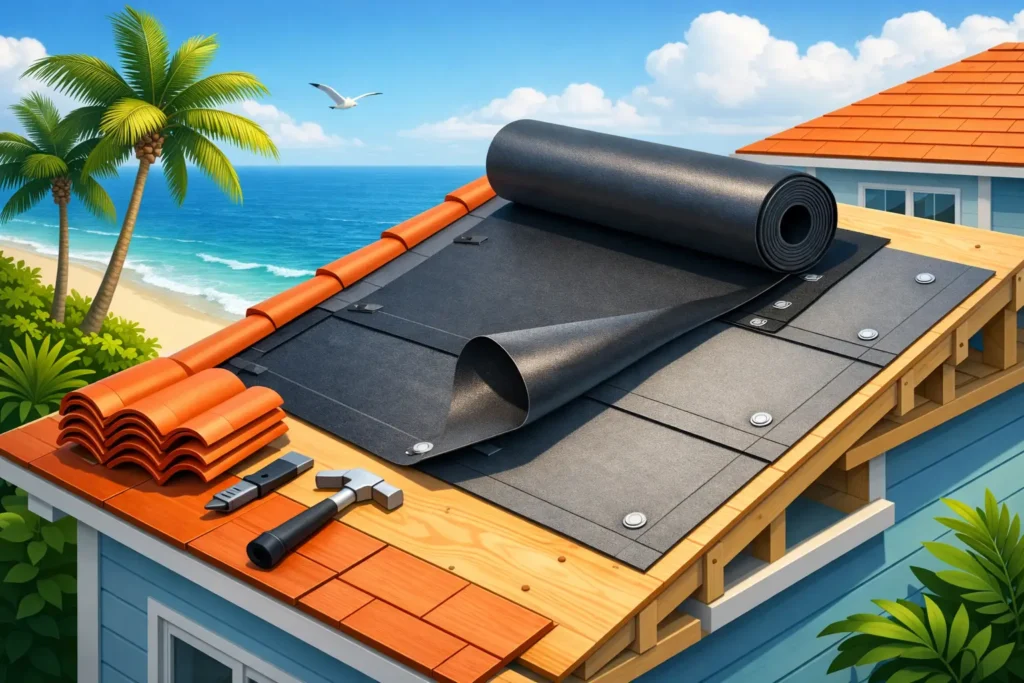
A coastal roof can look perfect from the street and still be one storm away from a leak if the layer beneath the roof covering is not built for Florida conditions. The best underlayment for coastal roofs is not simply the most expensive roll available. It is the product and installation method that can manage wind-driven rain, extreme heat, salt exposure, and the specific requirements of your roof system.
For Palm Bay and Florida’s East Coast communities, underlayment is a critical secondary water barrier. Shingles, tile, metal panels, and flat-roof membranes are the first line of defense. Underlayment is what helps protect the deck when water gets past a vulnerable seam, flashing detail, fastener, or damaged section during a storm.
What Coastal Roof Underlayment Must Handle
A roof near the coast faces a different workload than a roof in a mild inland climate. Summer heat can bake the roof deck for months. Afternoon storms can push rain sideways under roofing materials. Hurricanes and tropical systems test every overlap, penetration, edge, and fastener. Salt-laden air also accelerates corrosion in exposed metal components.
That means a suitable underlayment needs more than basic water resistance. It needs reliable adhesion or fastening, strong tear resistance during installation, compatibility with the roofing material above it, and approval for the applicable Florida Building Code requirements. It also needs to be installed correctly around valleys, eaves, chimneys, vents, skylights, and wall transitions. No product can make up for careless details.
The right choice also depends on the roof itself. A low-slope metal roof, steep shingle roof, concrete tile roof, and commercial flat roof do not use the same underlayment strategy. Treating them as interchangeable is how costly mistakes begin.
The Best Underlayment for Coastal Roofs: Self-Adhered Systems
For many coastal Florida homes, a self-adhered underlayment is the strongest choice beneath shingles, metal, or tile when the roof assembly and manufacturer specifications allow it. Often called peel-and-stick underlayment, this material bonds directly to the roof deck rather than relying solely on mechanical fasteners.
That bond matters during wind-driven rain. Traditional fastened materials have penetrations from nails or cap fasteners. Properly installed self-adhered underlayment reduces those potential water paths and creates a more dependable secondary barrier if the outer roofing layer is compromised.
Self-adhered products are particularly valuable in high-risk roof areas, including eaves, valleys, rakes, transitions, and around penetrations. On some roof systems, using a self-adhered membrane across the full deck can provide meaningful extra protection for a coastal home.
There are trade-offs. Self-adhered materials cost more than basic synthetic underlayment and demand clean, dry deck conditions for proper adhesion. Installation in extreme heat requires experienced crews because the material can become difficult to position. Deck repairs, substrate preparation, overlap dimensions, and flashing integration must be handled with discipline.
For a roof replacement intended to protect a home for decades, that added labor and material cost is often justified. It is not an upgrade to choose casually, but it is a smart discussion to have before the roof covering goes on.
Why High-Temperature Ratings Matter
Florida roofs get hot, especially beneath metal and tile. A product that performs acceptably under asphalt shingles may not be appropriate under a roofing material that transfers or retains more heat.
High-temperature self-adhered underlayments are designed for these applications. They are commonly considered for standing seam metal, exposed-fastener metal, and certain tile assemblies because they are better equipped to maintain performance under prolonged heat exposure. The exact material must match the roof manufacturer’s requirements and the approved roofing assembly.
A contractor should never select underlayment based only on a label that says “premium.” Ask whether it is rated for your roof material, roof slope, local code requirements, and anticipated deck temperatures.
Synthetic Underlayment Is a Strong Option When Specified Correctly
Synthetic underlayment is widely used because it is lighter, stronger, and more tear-resistant than traditional asphalt felt. It can be an excellent choice for many Florida shingle roofs and can perform well as part of an approved roofing system.
Quality synthetic products resist wrinkling, are easier for installers to walk on, and hold up better to temporary weather exposure than felt. They are also less likely to absorb moisture during a roofing project. Those advantages matter when Florida weather changes quickly and a crew must keep the deck protected while work is underway.
Still, synthetic underlayment is not automatically the best choice in every coastal application. It is mechanically attached, so it depends on correct fastening patterns, approved fasteners, proper overlap, and secure edge treatment. If wind-driven rain reaches it, installation quality becomes the deciding factor.
For homeowners balancing budget and performance, a high-quality synthetic underlayment paired with carefully installed ice-and-water style membrane at vulnerable areas may be an appropriate solution. The right answer depends on roof geometry, roofing material, wind exposure, and the approved system. No surprises. No shortcuts disguised as savings.
Why Traditional Felt Is Usually Not the First Choice
Asphalt-saturated felt was the standard for many years, and it still appears in some roofing applications. It can meet requirements in certain situations, but it is generally not the first recommendation for a long-term coastal roofing project.
Felt is heavier, more prone to wrinkling, and less resistant to tearing than modern synthetics. It can also absorb moisture, which creates challenges during installation and may affect how smoothly the finished roof covering lies. In the heat and humidity of coastal Florida, those limitations are worth considering.
A lower upfront material price does not always mean a lower lifetime cost. If a roof is being replaced after storm damage or age-related failure, that is the time to improve the components hidden below the surface, not simply replace them with the least expensive option available.
Match the Underlayment to the Roof Covering
Asphalt Shingle Roofs
Many shingle roofs perform well with a code-approved synthetic underlayment. A self-adhered membrane at eaves, valleys, and penetrations adds another layer of protection where leaks are most likely to start. In more exposed coastal locations, a full self-adhered system may be worth considering.
The shingle manufacturer’s installation instructions matter. Underlayment, starter shingles, nails, ventilation, and flashing all work together. A shingle warranty may depend on using approved components and installation methods.
Tile Roofs
Tile can last for decades, which means the underlayment beneath it must be selected with an equally long view. Replacing failed underlayment under a tile roof can require removing and reinstalling the tile, making a cheap material a costly decision later.
High-temperature self-adhered underlayment is frequently the preferred direction for tile roofs in Florida, particularly when long-term water resistance is the priority. The attachment system, battens if used, flashing details, and tile profile must all be designed as one assembly.
Metal Roofs
Metal roofs need underlayment that can tolerate heat and work with the panel system being installed. High-temperature self-adhered products are often appropriate, especially beneath metal systems where heat buildup is significant. Condensation control may also be part of the design depending on the roof assembly and whether the attic is vented or conditioned.
Metal roofing fasteners and accessories deserve equal attention in salt-air environments. Underlayment protects the deck, but corrosion-resistant fasteners, properly detailed trim, and compatible flashing protect the entire system.
Low-Slope and Flat Roofs
Commercial and low-slope roofs are different. Their waterproofing layer is typically the primary membrane itself, such as modified bitumen, TPO, PVC, or another specified system. Underlayment may refer to a cover board, separation layer, vapor barrier, or insulation component rather than the material used under shingles or tile.
The best approach is a complete assembly designed for drainage, ponding-water resistance, wind uplift, foot traffic, and rooftop equipment. A flat roof should never be evaluated with steep-slope roofing rules.
Installation Is the Difference Between Protection and Paperwork
A quality underlayment installed poorly is not quality protection. The deck must be inspected for rot, loose sheathing, damaged fasteners, and uneven areas before materials are applied. Wet or contaminated decking can prevent self-adhered products from bonding as intended.
Details deserve close attention. Valleys need correct lap direction. Penetrations need properly integrated flashing. Drip edge placement must follow the approved assembly. Underlayment needs to extend and overlap as required, without fishmouths, gaps, or rushed patches.
Florida building code compliance and manufacturer specifications are not paperwork items to check at the end. They are the instructions that determine how the roof performs when weather turns against it. At Bear Roofing, that means reviewing the entire roof system before recommending a material, not selling the same underlayment on every job.
Questions to Ask Before Approving an Underlayment
Before signing a roofing proposal, ask what underlayment is being used, whether it is self-adhered or mechanically attached, and why it fits your specific roof. Ask whether it is approved for the roofing material, whether it has a high-temperature rating when needed, and how valleys and penetrations will be protected.
You should also ask whether the proposed assembly meets current local code and whether the workmanship warranty covers the installation. A clear contractor will explain these answers in plain language. If the proposal only says “underlayment” with no product type, performance rating, or installation scope, request more detail.
Your roof covering gets the attention because it is visible. The underlayment earns its value when nobody sees it at all – during the hard rain, the long hot season, and the storm that tests every decision made beneath the surface.