
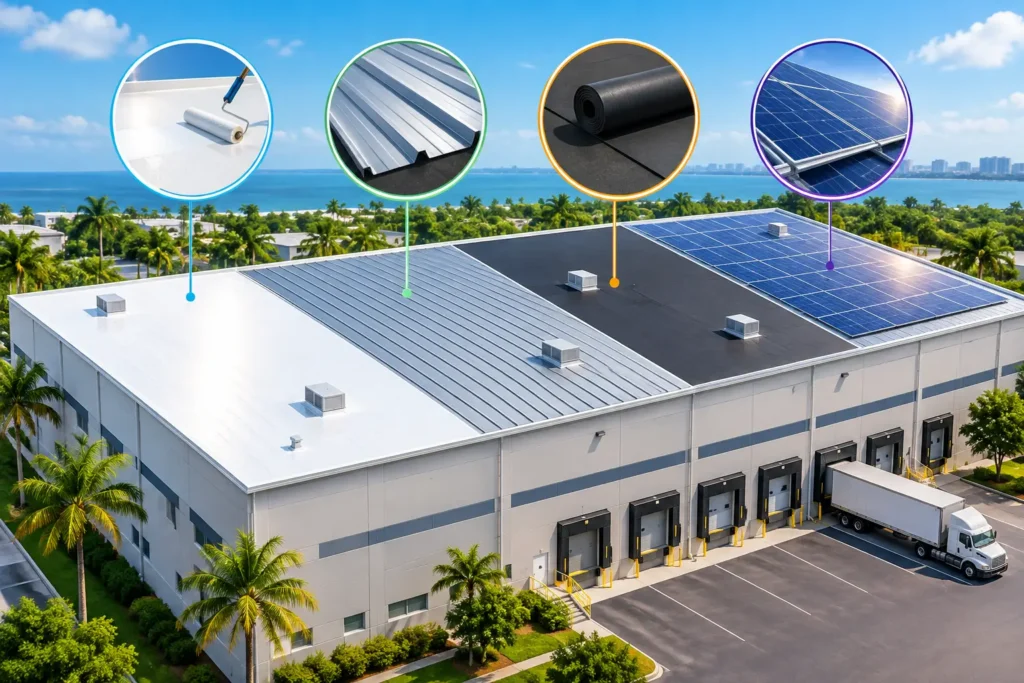
A warehouse roof retrofit is rarely just a roofing decision. For a Florida facility, it affects inventory protection, energy use, tenant obligations, insurance requirements, and the ability to keep loading docks and work areas operating through the next heavy rain. The right approach starts with the roof’s actual condition, not a one-size-fits-all recommendation.
A roof that looks weathered may still be a strong candidate for restoration. A roof with repeated leaks, saturated insulation, failing seams, or storm damage may be telling you that repairs have reached their limit. The goal is to invest where it delivers dependable protection, without paying for a full replacement before the building truly needs one.
What a Warehouse Roof Retrofit Can Accomplish
A retrofit upgrades an existing roof system to improve its performance, extend its service life, or prepare the building for a new operational need. That can mean restoring a low-slope roof with a protective coating, replacing deteriorated membrane sections, improving drainage, adding insulation, or installing a new roof system over an approved existing assembly.
For warehouse owners and property managers on Florida’s East Coast, the priorities are usually straightforward: stop leaks, manage heat, withstand wind, and avoid disrupting operations. Coastal humidity, wind-driven rain, intense UV exposure, and salt air can wear down materials faster than owners expect. Small flashing failures and open seams can become costly interior problems when water reaches electrical equipment, racking, stored products, or tenant space.
A well-planned retrofit can also reduce the heat absorbed by the building. Reflective roof coatings and certain light-colored membrane systems may lower roof surface temperatures and ease the load on HVAC equipment. The actual savings depend on the roof assembly, insulation levels, ceiling height, operating hours, and the condition of the mechanical systems, so energy performance should be evaluated realistically rather than promised as a fixed number.
Start With a Roof Assessment, Not a Product Choice
The first question is not whether your warehouse needs coating, metal, modified bitumen, TPO, or another system. The first question is what is happening beneath the surface.
A professional assessment should identify active leaks, ponding water, membrane splits, failed penetrations, loose edge metal, deteriorated flashings, and storm-related damage. It should also evaluate the deck, insulation, and moisture trapped within the roof assembly. A roof can appear dry from above while insulation below holds water and loses its insulating value.
Drainage deserves close attention. Flat and low-slope commercial roofs are designed to move water, but clogged drains, undersized scuppers, settled areas, or poor slope can leave standing water after storms. A coating can protect a sound roof surface, but it will not correct a drainage design problem by itself. If water repeatedly ponds in the same area, the retrofit plan may need tapered insulation, drain improvements, or localized deck and substrate work.
Florida building code requirements and wind uplift considerations should be part of the evaluation from the beginning. The appropriate assembly depends on the building’s location, height, exposure, deck type, and local requirements. A low initial price is not a value if the system is not specified and installed for the conditions it will face.
When a Roof Coating Makes Sense
A roof coating retrofit can be a practical option when the existing roof is fundamentally sound and dry. Coatings are commonly considered for aging low-slope systems with surface wear, minor cracking, fading, or reduced reflectivity, provided the substrate can be properly cleaned, repaired, and prepared.
The appeal is clear. Coatings can restore the weathering surface, improve reflectivity, and often require less tear-off than a full replacement. For an occupied warehouse, that can mean less noise, less debris, and a shorter construction window. Properly selected coatings can be especially useful on roofs with many penetrations, provided the detail work around curbs, pipes, drains, and flashing is done carefully.
There are limits. A coating is not a shortcut around wet insulation, widespread membrane failure, unstable substrate conditions, or major ponding issues. Applying a new coating over unresolved moisture or poor adhesion can create a more expensive problem later. Preparation matters as much as the coating material itself: cleaning, repairs, seam treatment, primer where required, and correct coverage rates all affect performance.
When Repairs Are Still the Right Call
Not every aging warehouse roof needs a major retrofit. Targeted repairs can be the responsible choice when damage is isolated and the overall system still has useful life remaining.
Common repair needs include punctures from rooftop traffic, separated seams, cracked flashing, loose termination bars, damaged pipe boots, and leaks around HVAC curbs. After a storm, an inspection may also reveal lifted edge details or debris damage that is not obvious from the ground.
The key is pattern recognition. One isolated leak is different from recurring leaks across several areas. If maintenance records show repeated calls for the same types of failures, or if repairs are moving from one section of the roof to another every few months, the property may be spending money to postpone a larger decision. A clear condition report helps owners compare the cost of ongoing repairs against the expected benefit of restoration or replacement.
When Replacement Is the Better Investment
A full replacement is often warranted when the existing roof system has widespread moisture intrusion, extensive deterioration, structural concerns, or a history of persistent leaks. It may also be the right path when the warehouse is changing use, adding rooftop equipment, or preparing for a solar installation that requires a longer-lasting roof beneath it.
Replacement allows the roofing team to address concealed issues that a surface-level retrofit cannot fix. Wet insulation can be removed. Damaged deck areas can be repaired. Drainage can be improved. The new roof assembly can be designed around current wind requirements and the building’s future needs.
Tear-off work is more involved than a coating application, and it can cost more upfront. Still, there are situations where it is the lower-risk financial decision. Covering a failing roof may delay the visible signs of trouble, but it does not eliminate moisture already inside the assembly. For facilities storing sensitive products or operating expensive equipment, dependable waterproofing is usually worth more than the cheapest short-term option.
Plan the Work Around Warehouse Operations
A commercial roofing project should protect the business below it as carefully as it protects the roof. Before work starts, establish access routes, delivery schedules, staging areas, safety boundaries, and communication procedures. Warehouses with active shipping, forklift traffic, customer pickups, or multiple tenants need a plan that keeps operations moving safely.
Roof access points, rooftop units, skylights, and areas over critical inventory should be identified in advance. If portions of the work could create vibration, odors, or temporary overhead risk, facility leaders need notice early enough to move inventory or adjust workflows. A professional crew does not arrive with materials and figure it out as they go.
Weather planning is equally important in Florida. Afternoon storms can develop quickly, particularly during the wet season. The contractor should monitor conditions, secure exposed areas each day, and maintain temporary dry-in procedures when the scope calls for opened sections of roof. No surprises. No disappearing act when the forecast changes.
Questions to Ask Before Approving a Retrofit
Ask for more than a price. A useful proposal should explain the existing roof condition, the recommended scope, what is being repaired or removed, and why that approach fits the building. It should also identify how penetrations, drains, perimeter edges, and transitions will be handled.
You should understand the warranty terms, including what the contractor workmanship warranty covers and what manufacturer coverage may require. Ask whether the proposal includes moisture testing, whether permit requirements have been considered, and how the crew will protect the property during construction. If insurance-related storm damage is involved, documentation from the inspection can help support a clear conversation with your carrier.
For Florida warehouse owners, a roof is part of the operating infrastructure. Treat the decision with the same care you would give a loading system, HVAC upgrade, or fire protection project. The best retrofit is the one that matches the roof’s real condition, your facility’s risk level, and the years you need it to perform.
A dependable roofing partner will explain those choices plainly, manage the details from inspection through cleanup, and stand behind the work after the trucks leave.