
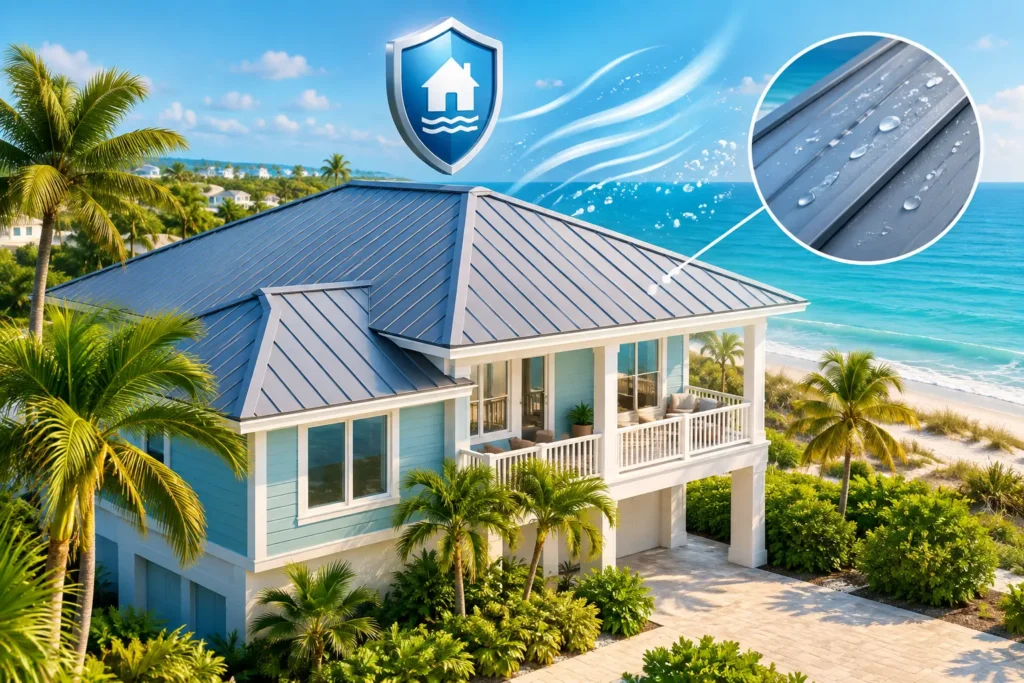
A roof can look fine from the driveway while salt is quietly working on the parts that hold it together. Along Florida’s East Coast, airborne salt reaches farther inland than many property owners expect, especially after windy storms. This salt air roofing guide explains what coastal exposure does to a roof, which materials hold up best, and how to avoid small corrosion issues that turn into leaks.
Why Salt Air Is Hard on Florida Roofs
Salt does not usually damage roofing by itself in one dramatic event. The problem is repeated exposure. Salt particles settle on metal, mix with moisture from rain, dew, and humidity, and create conditions that speed up corrosion. Add Florida heat, UV exposure, heavy rain, and hurricane-force winds, and every weak point gets tested.
The most vulnerable areas are often not the roofing material you see. Fasteners, flashing, drip edges, vent pipes, ridge vents, gutters, exposed screws, and connections around skylights or solar equipment can corrode before the main roof covering reaches the end of its service life.
Homes closest to the ocean face the highest exposure, but properties several miles inland can still be affected. A house on the Indian River Lagoon, a barrier island property, or a wind-exposed Palm Bay neighborhood may all need a more corrosion-conscious roofing plan than a similar home farther west.
Start With the Entire Roofing System
A coastal roof is a system, not just shingles, tiles, or metal panels. Selecting a premium roof covering while cutting corners on fasteners or flashing creates a weak link. Water only needs one failed penetration or rusted flashing joint to enter the structure.
When planning a repair or replacement, look at the roof deck condition, underlayment, ventilation, flashing details, edge metal, fasteners, sealants, and drainage. The right combination depends on the roof’s slope, design, proximity to saltwater, tree cover, and exposure to prevailing winds.
A good contractor should explain what materials will be used beneath and around the visible roof surface. No surprises. No disappearing act after the shingles or panels go on.
Fasteners and Flashing Matter More Than Most Owners Realize
Fasteners are small, but they do serious work. They secure shingles, tiles, metal panels, accessories, and flashing. In a salt-air environment, standard materials may corrode prematurely, lose holding strength, stain surrounding components, or leave openings where water can enter.
For coastal installations, corrosion-resistant fasteners and properly matched flashing materials should be part of the discussion. Stainless steel and other corrosion-resistant options can cost more upfront, but that cost may be modest compared with repairing wind-damaged sections, rotted decking, or interior water damage later.
Metal compatibility also matters. Different metals can react when they are placed together in wet, salty conditions. A contractor should use components designed to work together, rather than mixing materials that can accelerate corrosion at connection points.
Choosing Roofing Materials Near the Coast
There is no single best roof for every Florida coastal property. Budget, architecture, roof slope, insurance requirements, wind exposure, maintenance expectations, and long-term ownership plans all matter.
Asphalt Shingles
Architectural asphalt shingles remain a practical choice for many homeowners because they offer a broad range of colors, manageable upfront cost, and reliable performance when installed correctly. They can work well near the coast when paired with quality underlayment, corrosion-resistant components, and wind-rated installation methods.
Their trade-off is lifespan and vulnerability at the edges. Salt may not visibly attack the shingle itself the way it attacks bare metal, but coastal wind, UV exposure, and moisture can shorten its useful life. Regular inspections are especially important after storm season.
Tile Roofing
Concrete and clay tile offer excellent curb appeal and can perform well in coastal Florida conditions. Tile is not immune to problems, however. Individual tiles can crack, shift, or break under impact, and the underlayment beneath the tile is still the primary water-shedding layer.
Tile roofs also depend heavily on the fastening and attachment system. If fasteners or flashing corrode, a beautiful tile roof can develop costly leaks. Tile is a strong long-term option for the right structure, but it needs experienced installation and periodic maintenance.
Metal Roofing
Metal roofing is a popular coastal choice because it is durable, lightweight, and well suited for wind-resistant designs. Standing seam metal roofs have fewer exposed fasteners than some screw-down panel systems, which can reduce maintenance points. The finish, panel type, fasteners, trim, and flashing details all affect how well the roof handles salt exposure.
The trade-off is that not every metal roof is built to the same standard. Coastal-grade finishes and corrosion-resistant details are worth discussing before signing a contract. A lower initial quote may leave out the very components that help a metal roof perform near the water.
Flat and Low-Slope Roofing
Commercial buildings, condos, additions, and some modern homes often have low-slope roof sections. These systems need careful attention to drainage because standing water and salt exposure are a poor combination. Single-ply membranes, modified bitumen systems, and roof coatings can all be effective when selected for the building’s use and installed over a properly prepared substrate.
For commercial property owners, the priority is usually preventing disruptions. A roof system that is easy to inspect, repair, and maintain may be a better business decision than one with the lowest installation price.
A Practical Salt Air Roofing Maintenance Plan
Coastal roofing maintenance does not need to be complicated, but it cannot be ignored. Inspections should happen at least annually and after major storms. Older roofs, heavily exposed homes, and commercial buildings may benefit from more frequent reviews.
From the ground, watch for rust stains near vents or roof edges, loose gutters, lifted shingles, missing tile, discoloration around flashing, peeling coatings, or granules collecting near downspouts. Inside, check attic spaces and ceilings for damp insulation, water staining, musty odors, or daylight around penetrations.
Do not pressure wash a roof unless the roofing manufacturer and a qualified professional approve the method. Aggressive washing can dislodge granules, crack tile, damage coatings, force water under roofing components, or remove protective finishes. Gentle, appropriate cleaning is usually the safer path.
Keep gutters and drainage paths clear, trim limbs that scrape the roof, and address loose flashing promptly. Delaying a small repair in a coastal environment gives wind-driven rain and corrosion more time to expand the damage.
When Repair Is Enough and When Replacement Makes Sense
A repair can be the right call when the issue is isolated: a damaged vent boot, a small flashing failure, several missing shingles, localized metal corrosion, or a leak around a roof penetration. The goal is to correct the cause, not simply cover the symptom with sealant.
Replacement becomes more practical when corrosion appears in several locations, leaks keep returning, the roof is near the end of its expected service life, or storm damage affects a broad area. A roof with aging components can become difficult to insure and expensive to maintain, even if it has not failed completely.
Ask for clear photos, a written scope of work, and an explanation of whether the problem is confined to the surface or extends to the underlayment and roof deck. For insurance-related damage, documentation before repairs begin can be critical.
Questions to Ask Before Hiring a Coastal Roofing Contractor
A contractor should be able to explain how the proposed roof system addresses salt, wind, water, and local building code requirements. Ask what type of fasteners, flashing, underlayment, edge metal, and sealants will be used. Ask whether the materials are appropriate for your distance from the coast and how the roof will be protected during installation if weather moves in.
You should also understand the workmanship warranty, manufacturer warranty requirements, payment schedule, cleanup process, and who will manage permits and inspections. A detailed quote is not paperwork for paperwork’s sake. It is how you know what protection you are actually buying.
Bear Roofing helps Florida property owners assess the full roof system, not just the most visible damage. That approach matters on the coast, where one overlooked connection can become the next leak.
Salt air is part of living near Florida’s coast. Your roof does not have to surrender to it. Choose materials that fit the property, inspect the details that corrode first, and deal with minor issues while they are still minor. A careful decision now can protect your home, business, and peace of mind through many storm seasons.