
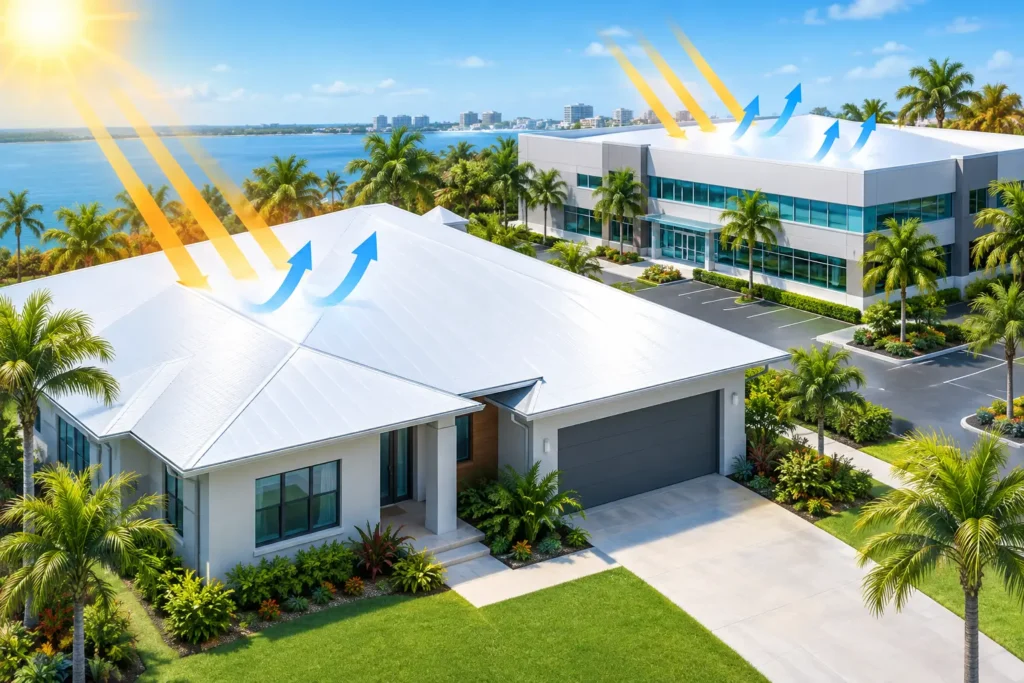
A Florida roof does more than keep out rain. It absorbs direct sun for hours, faces humid air and salt exposure near the coast, and must still be ready for wind-driven storms. Cool roofs are designed to reflect more sunlight and release more absorbed heat than conventional dark roofing, helping reduce how hard a building works to stay comfortable.
That does not mean every white roof is automatically the right answer. The best choice depends on your roof slope, existing system, insulation, drainage, building use, hurricane requirements, and the condition of the structure underneath. A cool roof should be part of a complete roofing decision, not a quick coating applied to hide a bigger problem.
What makes a roof “cool”?
Cool roofing is about two performance characteristics: solar reflectance and thermal emittance. Solar reflectance describes how much sunlight a roof surface sends away instead of absorbing. Thermal emittance describes how effectively it releases the heat it does absorb.
A traditional dark roof can become extremely hot under Florida sun. A light-colored or specially formulated reflective roof surface stays cooler at the surface, reducing heat transfer into the attic or occupied space below. For a home, that can mean less strain on the air conditioning system during long summer afternoons. For a commercial building with a large, low-slope roof, the effect can be even more meaningful because there is so much exposed surface area.
The result is not a promise that utility bills will suddenly drop by a fixed percentage. Energy savings vary with insulation levels, attic ventilation, HVAC efficiency, roof orientation, shade, thermostat habits, and the building’s overall condition. Still, controlling heat at the roof is a practical move in Florida, where cooling demand is a major operating cost for many properties.
Where cool roofs make the most sense in Florida
Cool roofs can work on both residential and commercial properties, but the system should match the roof design. Low-slope and flat commercial roofs are often strong candidates for reflective membranes or properly specified roof coatings. These systems can create a bright, reflective surface across a large area while supporting proper drainage and waterproofing.
For homes, metal roofing, certain lighter-colored shingles, tile, and reflective coatings may all be options. A standing seam metal roof in a lighter finish can reflect heat, shed water efficiently, and offer strong long-term value when installed with the right details for wind resistance. Tile can also perform well in Florida heat, especially when the assembly allows airflow beneath the tile. Light-colored shingles may offer a more familiar appearance and a lower upfront cost than tile or metal, although they generally do not reflect heat as effectively as a high-performing white membrane or coating system.
The roof itself is only one part of the equation. A hot attic, thin insulation, blocked soffit vents, or leaking ductwork can erase much of the comfort benefit a reflective roof might otherwise provide. A qualified inspection should look at the entire assembly, not just the color of the roof.
A cool roof is not always white
White is often the strongest visual shorthand for a reflective roof, especially on commercial low-slope buildings. But homeowners do not have to choose between energy performance and curb appeal. Many manufacturers offer lighter grays, tans, coastal colors, and ENERGY STAR-rated options that can provide better solar reflectance than standard dark materials.
The key is to review the actual product rating, not rely on appearance alone. Two shingles that look similar from the driveway can perform very differently under direct sun. The same applies to metal finishes, tile colors, and roof coatings.
The right system matters more than the paint color
A reflective coating can be a valuable protective solution, but it is not a cure for a failing roof. Before a coating is considered, the roof needs to be dry, structurally sound, properly drained, and free of unresolved leaks. Seams, penetrations, flashing, ponding areas, and substrate condition all need attention first.
For commercial property owners, a coating may help extend the service life of an eligible existing roof and reduce surface temperature. That can be a smart asset-management decision when the underlying roof remains in good condition. But if insulation is saturated, the membrane is deteriorated, or the roof has repeated active leaks, replacement may be the more responsible investment.
For homes, coating compatibility is equally important. Not every roofing material should be coated, and applying an unapproved product can affect manufacturer warranty coverage. A roofing contractor should identify the existing system, confirm whether a coating is appropriate, and explain the expected maintenance requirements in writing. No surprises. No disappearing act.
Florida-specific details cannot be skipped
Florida roofing has to do more than manage heat. It must withstand heavy rain, high winds, airborne debris, intense UV exposure, and, in coastal areas, salt-laden air. A roof that reflects sunlight but has weak flashing, poor attachment, or improper drainage is not protecting the building.
That is why material selection must be paired with code-aware installation. Wind uplift requirements, fastening patterns, underlayment, edge metal, flashing, and water management are not minor details. They are the details that determine whether a roof performs when the weather turns.
On low-slope roofs, drainage deserves special attention. Reflective coatings and membranes need a clean, properly prepared surface, but standing water can accelerate wear and expose underlying design problems. On residential roofs, the transition points around chimneys, skylights, valleys, walls, vents, and solar equipment demand careful workmanship. Heat performance matters, but water always finds the weak point first.
Consider the maintenance commitment
Cool roofing systems are not maintenance-free. Florida pollen, dust, algae, leaves, and storm debris can reduce a reflective surface’s performance over time. Commercial roofs should be inspected regularly, with drains and scuppers cleared and seams checked after major weather events. Residential roofs also benefit from periodic inspections, especially after hurricanes, tropical storms, or wind events.
Cleaning should follow the manufacturer’s recommendations. Aggressive pressure washing, harsh chemicals, or unapproved treatments can damage coatings and roofing surfaces. A professional can help determine whether discoloration is cosmetic, a maintenance issue, or a sign of material deterioration.
How to decide whether a cool roof is worth it
Start with the roof’s current condition. If your roof is nearing the end of its life, a replacement is the right time to compare reflective options because the roofing system can be designed as a whole. If the roof is newer and in good shape, an approved coating may be worth evaluating for certain low-slope applications.
Then consider your property goals. A homeowner may prioritize indoor comfort, lower attic heat, storm resistance, and neighborhood appearance. A business owner or property manager may be focused on reducing heat load, protecting inventory, avoiding disruption, and planning predictable maintenance costs. Both should consider warranty coverage, expected service life, financing, insurance requirements, and the long-term cost of ownership instead of focusing only on the initial price.
Ask for a clear explanation of the proposed system: what material will be used, how it will be attached or applied, what preparation is required, how drainage will be handled, and what warranty applies to both materials and workmanship. A good proposal should also identify any repairs needed before installation. If the answer is simply “we will paint it white,” keep asking questions.
At Bear Roofing, that conversation begins with the roof in front of us, not a one-size-fits-all sales pitch. Florida property owners deserve a recommendation built around the condition of their building and the weather it has to endure.
A cooler roof surface can be a smart part of protecting your home or business from Florida heat. The best next step is a professional assessment that measures more than temperature: it should account for moisture, wind, drainage, insulation, and the workmanship needed to keep the roof dependable for years to come.