
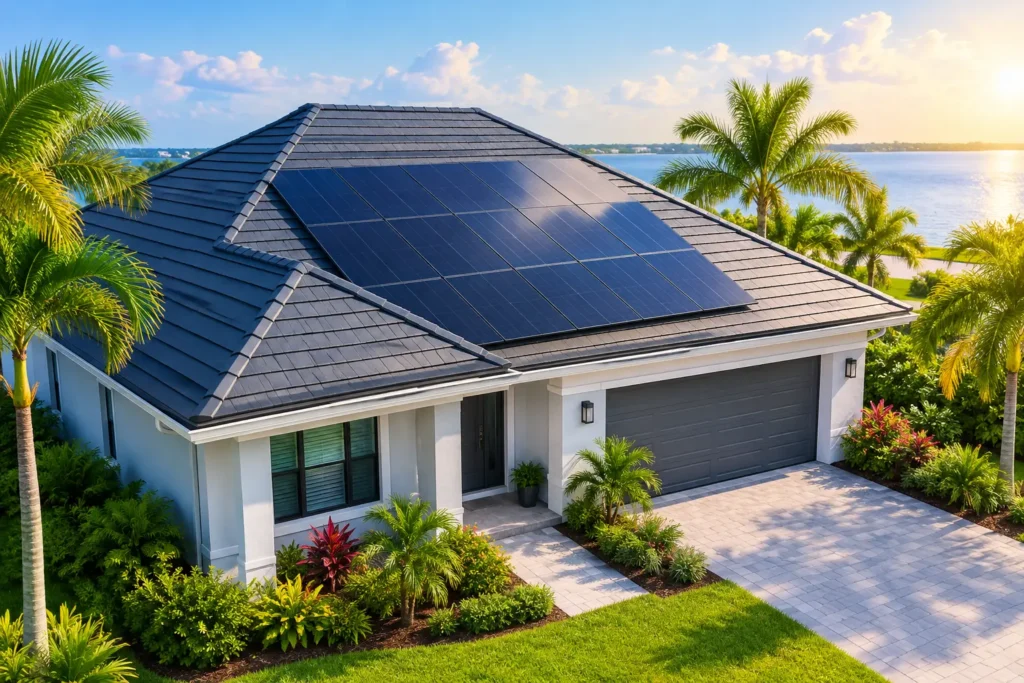
A solar system is only as dependable as the roof beneath it. In Palm Bay and across Florida’s East Coast, solar roofing has to stand up to intense heat, wind-driven rain, hurricane exposure, salt air, and the daily expansion and contraction that comes with a long summer. Lower utility bills are a real benefit, but they should never come at the cost of a roof that leaks, ages early, or creates an insurance headache.
The right approach starts with the roof itself. Before panels, wiring, or incentives enter the conversation, a qualified roofing professional should determine whether the existing roof has enough life left to support the investment.
Solar Roofing Starts With a Roof Assessment
Many homeowners consider solar when their electric bills climb. That makes sense. But if a roof is already near the end of its service life, installing panels first can create a costly problem later. When the roof needs replacement, the panels must be removed and reinstalled before the new roofing system goes on.
A roof inspection should look beyond what is visible from the driveway. The roof deck, underlayment, flashing, drainage, ventilation, existing repairs, and material condition all matter. A few missing shingles may be repairable. Widespread granule loss, brittle shingles, recurring leaks, or aging underlayment may point to replacement before solar installation.
As a practical rule, homeowners should be cautious about adding a long-term solar system to a roof with less than 10 to 15 years of dependable service life remaining. The exact answer depends on the roofing material, installation quality, storm history, and current condition. Tile and metal roofs may last longer than asphalt shingles, but every system still needs a close evaluation around penetrations, flashings, and waterproofing details.
For a new roof, planning solar at the same time gives the homeowner more control. The roof layout, material selection, mounting locations, conduit routing, and future maintenance needs can be considered before work begins. That reduces rework and helps protect both warranties.
What Solar Roofing Can Mean for Your Property
The phrase solar roofing is used for more than one type of system. Most Florida properties use conventional solar panels mounted above the roofing surface. These systems are generally more established, easier to service, and often offer stronger energy production per square foot than solar shingles.
Solar shingles and solar tiles integrate more closely with the roof surface. They can offer a cleaner appearance, particularly on homes where curb appeal is the top priority. The trade-off is that they may cost more, produce less energy in limited roof space, and require a contractor with specific product training. Repairs and future changes can also be more specialized.
For commercial buildings, solar may be installed over low-slope roofing systems using attached or ballasted mounting methods. Here, roof drainage and membrane condition are especially important. Water that ponds around equipment can shorten roof life and complicate maintenance. A commercial property owner needs a plan that protects the roof assembly while allowing technicians to access drains, HVAC equipment, and solar components safely.
There is no one-size-fits-all answer. The best solution depends on your energy goals, roof geometry, shade exposure, budget, utility usage, and how long you plan to own the property.
Florida Weather Changes the Installation Standard
A solar system that performs well in a mild climate may not be ready for coastal Florida. High winds place significant uplift forces on panels and their attachments. Heavy rain tests every roof penetration. Salt air can accelerate corrosion in the wrong materials. Heat stresses sealants, roofing materials, electrical components, and attic spaces.
That is why the installation details matter as much as the panels themselves. Mounting points must be engineered and secured to the structure, not simply fastened into roofing material. Each penetration needs the correct flashing and waterproofing method for the roof type. Fasteners, rails, and hardware should be selected for Florida’s environment, particularly near the coast.
Permitting and building code compliance are not paperwork to rush through. They are part of protecting your property. A properly planned installation accounts for wind-load requirements, fire access pathways, electrical safety, roof setbacks, and local permitting rules. If a contractor cannot clearly explain how the roof will be protected around every attachment point, that is a reason to pause.
Choose Roofing Materials With Future Solar Work in Mind
Solar can work with shingle, metal, tile, and many low-slope roof systems, but the installation strategy changes with each one.
Asphalt shingles are common and straightforward for many residential solar installations, provided the roof is in good condition and penetrations are properly flashed. Architectural shingles can be a practical choice for homeowners balancing appearance, wind resistance, and budget.
Metal roofing can be an excellent match for solar. Standing-seam metal roofs may allow certain mounting systems to clamp to seams, reducing the need for penetrations. Not every metal roof has that option, though, and the roof profile and manufacturer requirements must be reviewed carefully.
Tile roofs require more planning. Tiles can crack if workers walk or mount equipment improperly, and the waterproofing layer beneath the tile is what truly keeps water out. Solar work on tile should never be treated as a basic add-on job.
Flat and low-slope commercial roofs need even more coordination. The membrane type, insulation, slope, drainage, attachment method, and remaining roof life all affect the design. A solar array can be a smart asset improvement, but not if it blocks maintenance access or sits on a roof that is already due for replacement.
Warranty Questions That Deserve Straight Answers
Homeowners should understand that solar panels, solar installation, roofing materials, and roofing workmanship may each carry separate warranties. Those warranties do not automatically protect one another.
Ask who is responsible if a leak develops near a mounting point. Ask whether the roof manufacturer has requirements for solar attachments. Ask whether removing and reinstalling panels for a future roof replacement is covered by any agreement. Ask who handles service calls when the roof contractor and solar installer point in different directions.
Clear answers now prevent frustration later. At Bear Roofing, the goal is to coordinate the roofing side of the project with the same attention given to any major roof replacement: documented scope, appropriate materials, skilled installation, cleanup, and accountability after the job is complete. No surprises. No disappearing act.
A lifetime workmanship warranty can provide meaningful confidence, but homeowners should still read the terms and understand what is covered. Good contractors welcome those questions because protection should be clear, not vague.
A Better Order of Operations
If your roof is aging, address the roof first and plan for solar during the replacement. This is usually the cleanest path for long-term performance. A new roof gives installers a sound foundation and gives you an opportunity to place vents, conduits, and mounting zones thoughtfully.
If your roof is newer and has been well maintained, begin with a roof inspection before approving a solar design. The inspection may confirm that the roof is ready, identify minor repairs worth completing first, or reveal issues that should change the timeline.
Do not make the decision based on a satellite image or an energy-sales estimate alone. Those tools can be useful for preliminary planning, but they cannot assess hidden moisture, weak decking, aging flashing, or storm-related wear. A roof is a weather barrier, not just a platform.
Know When Solar Is Worth the Investment
Solar roofing is often a strong fit for Florida properties with high power usage, broad sun exposure, limited shade, and a roof in excellent condition. It can reduce dependence on utility power, improve long-term operating costs, and add appeal for buyers who value energy efficiency.
Still, it is not automatically the right move for every building. A heavily shaded roof, complex rooflines, a short ownership timeline, or a roof nearing replacement can change the financial picture. Battery storage may add resilience during outages, but it also adds cost and should be evaluated separately from the panel system.
The best solar decision protects two things at once: your energy budget and the roof over your head. Start with an honest roof assessment, insist on storm-ready details, and choose a plan that will still make sense after the next Florida summer has tested it.