
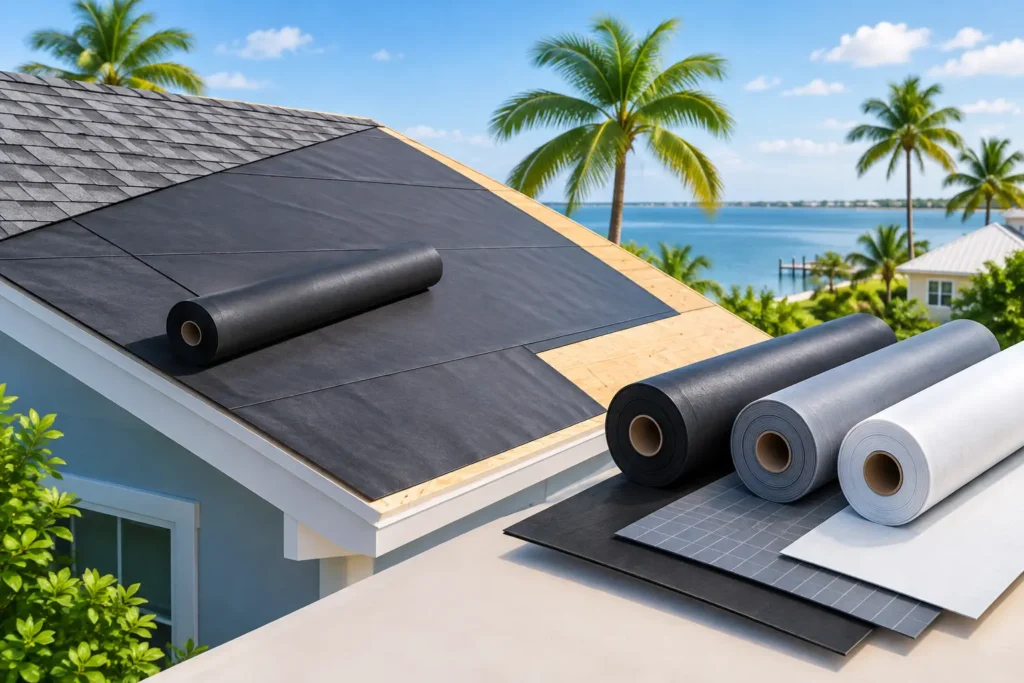
A roof can look finished from the street and still have a weak point underneath. Underlayment sits between the roof deck and the visible roofing material, making it a critical secondary barrier when wind-driven rain gets past shingles, tile, or metal panels. This roof underlayment selection guide focuses on what Florida property owners need to consider before a replacement, not just what is cheapest on installation day.
In Palm Bay and across Florida’s East Coast, roofs face punishing sun, sudden downpours, hurricane-season winds, humidity, and salt air near the coast. The right underlayment is not a one-size-fits-all choice. It has to work with the roof covering, the slope, the deck condition, local code requirements, and the manufacturer’s installation instructions.
Why Underlayment Matters More in Florida
Your primary roof covering is designed to shed water. Underlayment provides backup protection when water is pushed where it does not belong, such as beneath lifted shingles, around flashing, or through gaps created during a severe storm. It also protects the roof deck during installation if weather moves in before the final roof covering is complete.
That backup layer matters because Florida rain rarely arrives gently. A passing storm can bring heavy rain and gusting wind in minutes. If the roof covering is damaged, aging, or temporarily exposed during a replacement, the underlayment can help limit moisture intrusion into the deck and attic.
Underlayment also affects the roof system’s warranty and approval requirements. Installing a product that is incompatible with your shingles, tile, metal panels, or low-slope system can create problems later, even if the material looked acceptable at first. A qualified contractor should match the complete system, not simply roll out whatever material is available.
Roof Underlayment Selection Guide: Start With the Roof Type
The roof covering is the first decision point. Each material handles water differently and places different demands on the layer beneath it.
Asphalt shingle roofs
Synthetic underlayment is commonly used under asphalt shingles because it is lightweight, tear-resistant, and generally handles jobsite exposure better than traditional felt. High-quality synthetic products can provide dependable coverage when installed with the correct fasteners, overlap, and flashing details.
Self-adhered membrane may be used in vulnerable locations, including eaves, valleys, penetrations, and transitions. Whether it is required depends on the roof design, local conditions, code, and the selected shingle system. The right approach is often a combination of materials rather than one product everywhere.
Tile roofs
Tile roofs demand careful underlayment selection because the tile itself can last for decades while the underlayment underneath may need replacement sooner. Removing and resetting tile is a major project, so choosing a durable, compatible underlayment at the start is especially important.
For many tile systems, contractors use premium synthetic or self-adhered underlayment designed for higher heat exposure and long-term performance. The fastening method and battens, if used, must be planned as part of the complete assembly. Small installation shortcuts below tile can become costly leaks years later.
Metal roofs
Metal roofing needs an underlayment that works with the panel profile, attachment method, roof slope, and ventilation strategy. Condensation management can also be part of the conversation, particularly with certain metal systems. Synthetic and self-adhered products are both used, but compatibility with the specific metal roofing manufacturer matters.
Do not assume a metal roof is automatically watertight under every condition. Wind-driven rain can reach fasteners, laps, penetrations, and wall transitions. The underlayment serves as a key line of defense when those details are tested.
Low-slope and flat roofs
Low-slope roofs are different from steep-slope shingle, tile, and metal roofs. Their waterproofing performance depends on a membrane system, such as modified bitumen, TPO, PVC, or another specified assembly. In these systems, a cover board, vapor retarder, insulation, and membrane may each serve distinct roles.
Calling every layer under a flat roof “underlayment” can oversimplify the work. Commercial property owners should ask how the full assembly handles ponding water, drainage, movement, penetrations, and wind uplift. The answer should be specific to the building, not a generic product pitch.
Compare the Main Underlayment Options
Traditional asphalt-saturated felt remains familiar and may still be suitable for certain applications. It is often less expensive up front, but it can wrinkle when wet, tear more easily during installation, and offer less dependable performance when exposed to Florida’s weather. Its lower material cost does not always make it the best value.
Synthetic underlayment has become a common choice for many residential reroofing projects. It is lighter to handle, more resistant to tearing, and typically provides better coverage per roll than felt. Quality varies by manufacturer, though. A thin, low-cost synthetic is not equal to a premium product rated for the conditions and roof system at hand.
Self-adhered underlayment bonds directly to the roof deck and creates a more secure water barrier around high-risk details. It is particularly valuable in valleys, around roof penetrations, at eaves, and where roof-to-wall transitions need extra protection. It costs more and requires a clean, properly prepared deck, but it can be a smart investment where wind and water pressure are most likely to challenge the roof.
The best material is not always the most expensive one. A properly specified synthetic system may be the right fit for one shingle roof, while a tile roof or complex roofline may justify broader use of self-adhered protection. The contractor should explain why each material is being proposed and where it will be installed.
Check the Details That Determine Performance
Underlayment is only as reliable as the deck and installation beneath the finished roof. Before material goes down, damaged or soft decking should be identified and replaced. Covering deteriorated wood with new underlayment does not solve the underlying problem.
Pay close attention to valleys, plumbing vents, skylights, chimneys, roof-to-wall intersections, and changes in slope. These areas direct water, interrupt the roof surface, or receive concentrated runoff. They require deliberate flashing and underlayment detailing, not quick patches.
Fasteners matter as well. The type, spacing, and placement must meet the underlayment manufacturer’s requirements and applicable Florida building codes. Too few fasteners, improper overlaps, or exposed seams can undermine a premium product. No surprises. No disappearing act. A trustworthy roofing contractor should be able to show you what is being installed and explain how it is secured.
Consider Wind, Heat, and Moisture Together
Florida roof decisions cannot be made based on rain alone. Strong wind can lift edges and drive water sideways. Intense heat can stress materials over time. Humidity can expose attic ventilation and condensation problems that were already developing beneath the old roof.
A good underlayment plan works alongside proper ventilation, flashing, drip edge, and the final roof covering. If a contractor promises that one membrane will solve every moisture issue, ask more questions. For example, an attic ventilation problem may need separate correction, while a low-slope drainage issue may require changes beyond the waterproofing membrane itself.
Coastal homes may also need extra attention to corrosion-resistant components and wind-rated installation details. The product label alone is not enough. The system must be installed correctly for the building’s location and exposure.
Questions to Ask Before Approving a Proposal
Before signing a roofing contract, ask what underlayment will be used, where it will be installed, and why it is appropriate for your roof type. Ask whether the proposed assembly meets manufacturer requirements and applicable local code. You should also know how damaged decking will be handled if it is discovered after tear-off.
Request clarity on whether self-adhered membrane is included at valleys, penetrations, and transitions, or whether it is an upgrade. Confirm what warranty applies to the workmanship and the roofing materials, and ask whether underlayment coverage affects that warranty. Transparent answers now can prevent unpleasant surprises once the old roof is removed.
Bear Roofing approaches underlayment as part of the protection plan for the entire roof, from deck inspection through final cleanup. That means matching materials to Florida conditions and explaining the choices in plain language before work begins.
The right underlayment will never be the most visible part of your new roof. But when the next hard rain arrives sideways and the wind starts pushing at every edge, it may be one of the most valuable decisions you made.