
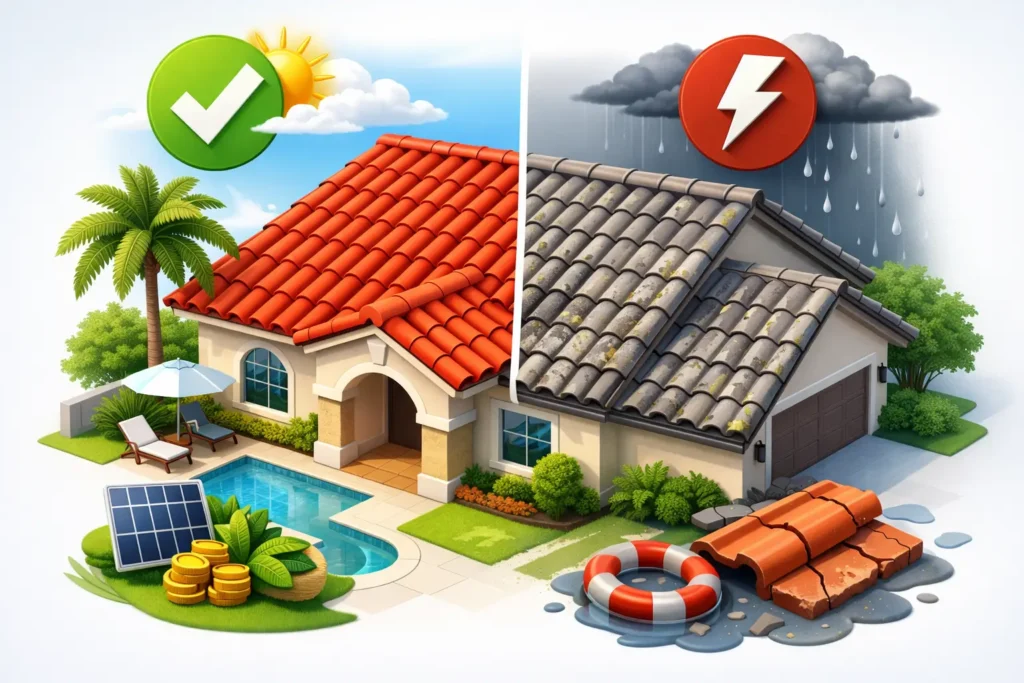
A tile roof looks right at home in Florida. It fits the architecture, handles heat well, and gives a house a finished, high-end look that asphalt shingles often cannot match. But when homeowners ask about tile roof pros and cons Florida properties face, the real answer is not just about appearance. It comes down to wind, salt air, underlayment life, structural load, insurance considerations, and how long you plan to stay in the home.
If you are replacing a roof in Palm Bay or anywhere along Florida’s East Coast, tile can be a strong option. It can also be the wrong one for the house, the budget, or the timeline. That is why material selection needs to be based on local conditions, not just curb appeal.
Tile roof pros and cons in Florida at a glance
Tile roofing has a lot going for it in Florida’s climate. It stands up well to sun exposure, does not rot, and can last for decades when installed correctly. Concrete and clay tile both bring a premium look and can help a home hold value. For many owners, that combination is enough to put tile at the top of the list.
The trade-off is that tile is not a simple roof system. It is heavier than shingles, more expensive upfront, and more demanding when it comes to installation detail. A tile roof can outlast many other materials, but the system underneath it still matters. In Florida, underlayment failure is one of the biggest reasons tile roofs need major work before the tiles themselves are worn out.
Why tile performs well in Florida weather
Florida is hard on roofs. Heat bakes materials year-round. Summer storms dump heavy rain in a short window. Coastal neighborhoods deal with salt exposure, and every hurricane season raises the stakes on wind resistance. Tile holds up well in many of these conditions.
One of the biggest advantages is heat performance. Tile naturally creates space for airflow and does not absorb heat the same way darker, lower-profile materials can. That can help reduce attic heat buildup, especially when paired with proper ventilation and insulation.
Tile also resists insects, fire, and moisture damage better than many organic materials. In a humid climate, that matters. You are not dealing with the same rot concerns you might see with wood-based products.
When properly installed with the right fastening method and code-compliant underlayment, tile can also offer strong wind performance. That does not mean every tile roof is hurricane-proof. It means the quality of the system and the installer matters just as much as the material itself.
The biggest advantages of tile roofing
Longevity is one of the strongest reasons people choose tile. A well-built tile roof can last far longer than a typical shingle roof, and that matters if you plan to stay in the home for years. Even when repairs are needed, the tiles themselves may still have a lot of life left.
Curb appeal is another major benefit. Tile gives a home a more substantial, architectural look. In many Florida neighborhoods, especially coastal and Mediterranean-style communities, that appearance can support resale value and neighborhood fit.
There is also the maintenance side of durability. Tile does not wear out from UV exposure as quickly as asphalt-based products. It is less vulnerable to the constant sun that shortens the life of other roofs in Florida.
For some homeowners, insurance and long-term ownership costs are part of the appeal too. While the initial investment is higher, the service life can make the numbers work over time. That depends on the house, the policy, and whether the roof structure can support tile without major upgrades.
The real drawbacks homeowners should know
Cost is the first hurdle. Tile roofs are premium systems, and the price reflects that. You are paying for heavier materials, more labor, and a more specialized installation process. If budget is tight, tile may stretch the project beyond what makes sense.
Weight is another serious factor. Tile is much heavier than shingles, and not every home is ready for that load. Some houses may need structural reinforcement before a tile roof can be installed safely. That adds cost and complexity.
Repairs can also be more specialized. Individual tiles can crack from impact or foot traffic. Walking on a tile roof the wrong way can cause damage, which means not every contractor should be up there. If a roof system needs service after a storm, experience matters.
Then there is the underlayment issue. This is one of the most misunderstood parts of tile roof pros and cons Florida homeowners compare. The tile itself may last a very long time, but the waterproofing layer beneath it can age out first. When that happens, repairs or replacement become more involved because the tile has to be removed and reset correctly.
Clay vs. concrete tile in Florida
Most Florida homeowners considering tile are looking at clay or concrete. Both can perform well, but they are not identical.
Clay tile is often prized for its classic look and color retention. It tends to carry a more premium price, and many homeowners like the lighter, more refined appearance. In the right style of home, clay can be a standout choice.
Concrete tile is usually more common because it offers durability and visual appeal at a more approachable price point. It is versatile, widely available, and can mimic several architectural styles. It is also heavy, just like clay, so structural review still matters.
The better option often comes down to budget, design goals, and the specific product rating for your wind zone. What matters most is not choosing a material by name alone. It is choosing a tested system that fits your house and meets Florida code requirements.
What tile roofing means during storm season
Florida homeowners do not just buy a roof. They buy storm protection. That is where tile gets more nuanced.
A properly installed tile roof can perform very well in high winds, but poor installation can turn an expensive material into a weak point. Fastening patterns, edge details, flashing, ridge treatment, and underlayment all affect performance. No shortcuts. No guesswork.
Tile can also be vulnerable to impact from flying debris. A fallen branch may crack individual pieces without causing a full roof failure, but those broken areas still need attention quickly. Water intrusion often starts with what looks like minor damage from the ground.
After a major storm, inspection matters. Not because tile is a bad roofing system, but because damage is not always obvious unless someone trained knows where to look.
When tile is worth the investment
Tile makes the most sense when you are planning for the long haul, want a premium appearance, and have a home that can support the system structurally. It is also a strong fit for owners who want a material built for heat, rain, and long-term performance in Florida conditions.
It may be less practical if you are trying to minimize upfront cost, if the home needs structural upgrades to carry the load, or if you want a simpler repair path down the road. In those cases, metal or architectural shingles may offer a better balance.
This is where a contractor’s guidance matters. The right answer is not always the most expensive roof. It is the roof that fits the property, the budget, and the level of protection you need.
Should you choose tile for your Florida home?
The best way to think about tile is this: it is a premium system with real strengths and real demands. It offers longevity, style, and solid climate performance, but it asks for a bigger upfront investment and a contractor who knows exactly how Florida roofs need to be built.
For many East Coast Florida homeowners, that trade-off is worth it. For others, a different system will deliver better value with fewer complications. A good roofing decision should leave you with confidence, not questions. If you are comparing options, get the structure checked, review the full system instead of just the tile profile, and make sure the quote covers the details that matter after the next storm, not just before the sale.