
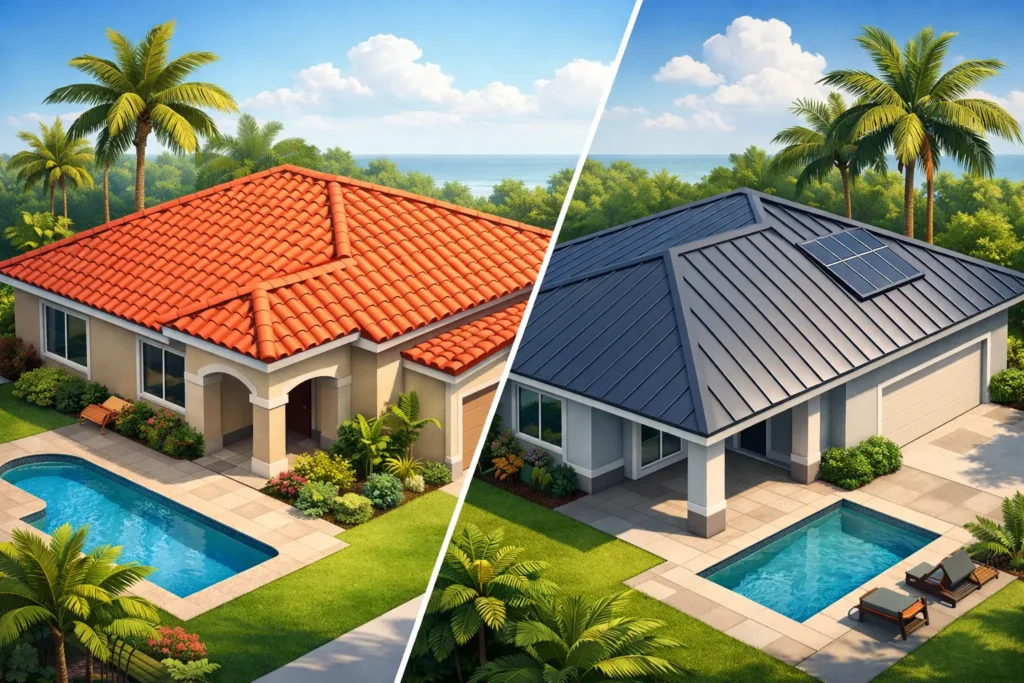
A roof replacement on Florida’s East Coast is not a cosmetic decision. It has to stand up to hurricane-season winds, wind-driven rain, intense sun, humidity, and salt air near the coast. When homeowners weigh a tile roof vs metal roof, both can be excellent long-term systems, but they solve Florida’s roofing challenges in different ways.
The right choice depends on your home’s structure, architectural style, budget, neighborhood requirements, insurance considerations, and how long you plan to own the property. A good roofing contractor should explain those trade-offs clearly before you commit. No surprises. No disappearing act.
Tile Roof vs Metal Roof: The Big Difference
Tile roofing is built around weight, dimensional style, and proven longevity. Concrete and clay tile create a distinctive profile that suits Mediterranean, Spanish, coastal, and upscale Florida home designs. Individual tiles sit over an underlayment system, which is a critical part of the roof’s water protection.
Metal roofing is lighter, more streamlined, and engineered for strong performance in severe weather. Standing-seam metal panels are especially popular for Florida homes because concealed fasteners reduce the number of exposed penetration points. Metal can also be formed into shingle, shake, or tile-style profiles for homeowners who want a more traditional look.
Neither material is automatically better. A tile roof may be the right fit for a home designed to carry its weight and benefit from its architectural character. A properly specified metal roof may be the stronger fit for a homeowner focused on storm performance, low weight, and long-term maintenance planning.
Storm and Wind Performance in Florida
Florida roofing decisions should start with wind resistance, not just appearance. Materials matter, but the full roofing assembly matters more. That includes deck condition, underlayment, flashing, fastening methods, ventilation, and installation practices that meet local building code requirements.
Metal roofs can perform exceptionally well in high-wind conditions when the panel system, clips, fasteners, and edge details are designed for the home’s wind zone. Standing-seam systems are often favored because their panels interlock and their fasteners are concealed. A correctly installed metal roof also sheds heavy rain quickly, which is valuable during fast-moving summer storms.
Tile roofs can also achieve strong wind ratings when installed with the right approved attachment method. Modern tile systems may use screws, foam adhesives, or mechanical fastening patterns based on the product and local code requirements. The concern is not that tile cannot handle wind. It can. The difference is that individual tiles can crack, shift, or become dislodged if the system is poorly installed or neglected after a storm.
For coastal properties, salt exposure deserves special attention. Metal roofing needs an appropriate finish and compatible components to resist corrosion. Tile itself is not prone to rust, but its metal flashings, fasteners, and underlayment details still need to be selected for Florida’s coastal environment.
Weight and Structural Requirements
This is one of the clearest dividing lines between tile and metal. Tile is significantly heavier than metal. Concrete tile, in particular, may require a structural review before installation, especially when replacing a lightweight shingle roof. A home that was not originally designed for tile may need engineering and framing upgrades, which can add substantial cost and time.
Metal is one of the lightest premium roofing options available. That makes it practical for many reroof projects and can reduce the need for structural modifications. It is also a strong option for homeowners replacing an aging tile roof but looking to lower the load on the home.
Do not assume a roof can support tile because another house on the block has it. Roof framing, truss design, age, and existing conditions vary from home to home. A proper inspection should settle that question before material is ordered.
Cost: Upfront Price vs Long-Term Value
Metal and tile both cost more upfront than standard asphalt shingles. Exact pricing varies with roof size, pitch, complexity, tear-off needs, decking repairs, local permit requirements, and the product selected. A roof with valleys, skylights, chimneys, steep slopes, or multiple transitions requires more labor and detail work regardless of material.
Tile often carries a higher installed cost when structural upgrades are required. The material is heavy, labor-intensive to handle, and may involve more complex installation details. It also has a premium appearance that can support property value in neighborhoods where tile is common or expected.
Metal may have a lower total project cost than tile in some cases, particularly when it avoids structural reinforcement. Premium standing-seam metal is still a significant investment, but its long service life and relatively low maintenance needs can make the cost easier to justify over time.
Insurance should be part of the conversation, but not a promise. Insurers evaluate age, condition, roof shape, mitigation features, location, and policy terms differently. Ask your insurance agent what documentation and roofing features may affect your specific policy before making a final decision.
Energy Efficiency and Heat Management
Florida sun puts every roof to work. Metal roofing can reflect a meaningful amount of solar heat, particularly in lighter colors or finishes designed for solar reflectance. That may help reduce attic heat gain and support lower cooling demand, especially when paired with proper insulation and ventilation.
Tile naturally creates an air space between the roof covering and deck. That gap can help manage heat transfer, and lighter tile colors can further improve solar performance. However, a cool roof is never just about the surface material. Attic insulation, intake and exhaust ventilation, duct condition, and air sealing all affect how hard your air conditioner has to work.
If energy savings are your main reason for replacing a roof, ask for a complete look at the attic system. Installing a premium roof over poor ventilation can leave performance on the table.
Maintenance and Repairs
Metal generally requires less routine maintenance than tile, but it is not maintenance-free. Periodic inspections should check panel seams, flashings, sealants, fasteners where applicable, and debris accumulation in valleys or gutters. Tree limbs should be kept off the roof to prevent scratches or impact damage.
Tile roofs need regular attention because tiles can crack from foot traffic, falling branches, or storm impacts. Walking on tile incorrectly can cause damage, so inspections and repairs should be handled by professionals familiar with the system. The underlayment beneath the tile is also a long-term planning factor. Tiles may outlast the underlayment, meaning a future reroof can involve lifting and resetting or replacing tiles.
Repair matching is another practical consideration. Tile colors and profiles can become difficult to match as products age or manufacturers change lines. Metal panels can also fade over time, though a well-planned repair can often be placed less visibly. Keeping a small supply of leftover material from the original installation is wise for either roof type.
Appearance, Neighborhood Standards, and Solar Plans
Tile makes a visual statement. For many Florida homes, its texture and depth are hard to duplicate. Clay tile has a classic appearance, while concrete tile offers broad color and profile options. If your home’s architecture was built around tile, switching away from it can change curb appeal considerably.
Metal offers a cleaner, more contemporary profile. Standing seam works well on coastal, modern, farmhouse, and transitional homes, while metal tile profiles can preserve a traditional look with less weight. Color selection matters near the coast, where bright sun can make a roof appear lighter than it does on a sample board.
Before choosing either system, review HOA rules and local community standards. Also discuss future solar plans. Solar can be installed on both tile and metal roofs, but attachment methods, waterproofing details, access, and project sequencing must be handled correctly. It is often easier and more cost-effective to plan roofing and solar together than to treat them as unrelated projects.
Which Roof Is Right for Your Property?
Choose tile when your home can support it, the architectural style calls for it, and you value its established Florida appearance. It is a durable premium system, but it needs skilled installation and careful long-term maintenance of both the tiles and the underlayment beneath them.
Choose metal when you want a lightweight, high-performing roof with strong wind potential, efficient heat management, and a lower-maintenance profile. It is especially compelling for homeowners who want long service life without the structural demands of tile.
The best answer is often found during an on-site inspection, not in a material brochure. At Bear Roofing, that means looking at your roof deck, slope, structural needs, storm exposure, drainage, style goals, and budget before making a recommendation. A roof should protect your property for decades, not simply look good on installation day.
Before you sign a contract, ask to see the exact roofing system being proposed, including underlayment, flashing, ventilation, attachment method, warranty coverage, and permit scope. The material on top matters. The workmanship underneath it is what keeps Florida weather outside where it belongs.