
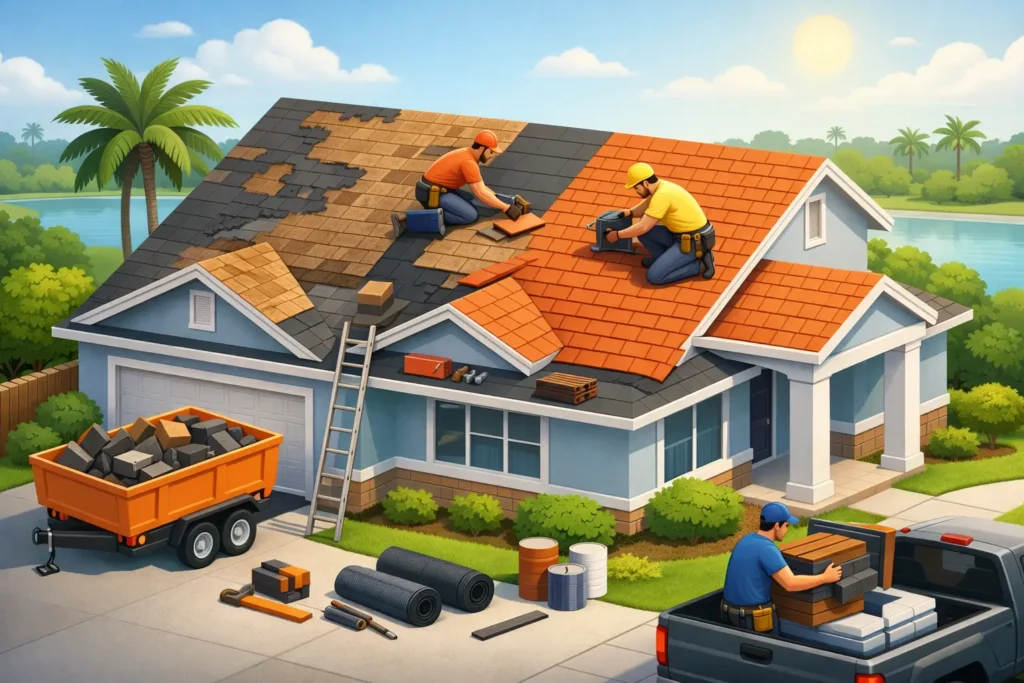
A roof replacement is not a project most homeowners plan for years in advance. A storm exposes a leak, an insurance inspection raises concerns, or shingles begin showing their age. This residential reroofing process guide explains what should happen from the first inspection through final cleanup, so you can make decisions with confidence and know what to expect at your Florida home.
Florida roofs face demands that roofs in many other states do not: high heat, wind-driven rain, hurricane conditions, salt air near the coast, and intense UV exposure. The right reroofing process protects more than the roofline. It protects the structure, interior, insurance eligibility, and value of your home.
1. Start With a Thorough Roof Inspection
A reroofing project should begin with facts, not guesses. A qualified contractor examines the roof covering, flashing, penetrations, valleys, ridge areas, gutters, and visible signs of water intrusion. They should also assess the age and condition of the current system and identify whether damage is isolated or widespread.
From the ground, a roof may look like it only needs a few repairs. Up close, cracked shingles, loose fasteners, deteriorated underlayment, failed pipe boots, or soft areas can tell a different story. In Florida, wind damage is not always obvious. Lifted shingle edges and compromised seals can leave the roof vulnerable long before a ceiling stain appears.
The inspection is also the time to discuss your priorities. Some homeowners need the most practical replacement option. Others are improving curb appeal, preparing to sell, or choosing a longer-lasting material to reduce future maintenance. There is no one right roof for every property.
2. Decide Whether Reroofing Is the Right Scope
People often use the terms reroof and roof replacement interchangeably, but the scope matters. A complete replacement generally involves removing the existing roof covering down to the deck, inspecting the wood substrate, and building a new roofing system from the deck up. This is the most common approach when a roof is near the end of its life or has widespread damage.
In limited circumstances, a new roof covering may be installed over an existing layer. Whether that is allowed or advisable depends on the existing roof assembly, local requirements, structural conditions, and the material being installed. Layering can reduce upfront tear-off labor, but it may conceal deck issues, add weight, and make future repairs more difficult. A contractor should explain the trade-off plainly rather than treating the least expensive option as the automatic answer.
If storm damage is involved, document the condition before work begins. Photos, inspection findings, and a clear estimate can be useful when speaking with your insurance carrier. Your contractor can help explain the roofing scope, but the policyholder remains responsible for understanding coverage, deductibles, and the insurer’s final decision.
3. Select a Roofing System Built for Florida
Material selection is more than picking a color. Your roof system needs to fit the home’s design, slope, budget, wind-exposure conditions, and long-term goals.
Architectural shingles remain a popular choice because they offer a familiar appearance, broad color selection, and dependable performance at a practical price point. Tile can provide a distinctive Florida look and long service life, though it requires the proper structural support and can cost more upfront. Metal roofing offers excellent longevity, strong wind performance, and energy benefits, but material type, coating quality, panel design, and installation details all matter. Low-slope areas may require a different system altogether, such as modified bitumen, TPO, or another approved membrane solution.
Do not choose based on appearance alone. Ask how the system handles wind uplift, water shedding, ventilation, flashing transitions, and manufacturer requirements. A premium shingle or tile will not perform as intended if the underlayment, fastening pattern, or metal details are wrong.
4. Review the Proposal Before Signing
A clear roofing proposal protects both the homeowner and the contractor. It should identify the roofing material, underlayment, flashing approach, ventilation work, permit responsibilities, cleanup expectations, warranty terms, and payment schedule. It should also state what happens if hidden deck damage is found after tear-off.
Wood replacement is a common example. No contractor can see every condition beneath an existing roof without removing materials. The right approach is to establish a transparent per-sheet or per-linear-foot price before the project starts, along with a process for documenting the issue. No surprises. No disappearing act.
This is also the time to verify licensing, insurance, local experience, and workmanship coverage. A manufacturer warranty typically covers eligible material defects under its terms. A workmanship warranty addresses installation. Both matter, but they are not the same promise.
5. Permits, Scheduling, and Property Preparation
Most Florida roof replacements require permits and inspections. Permit requirements can vary by city and county, so the contractor should handle the application process and build inspections into the schedule. This helps confirm the work meets applicable building codes, including requirements related to wind resistance and secondary water protection where required.
Once the project is scheduled, prepare the property. Move vehicles out of the driveway and away from the work zone. Remove patio furniture, fragile decorations, and items stored in the attic beneath the roof deck. Roofing is loud, and vibration can shift loose items on walls or shelves.
Let nearby neighbors know when work is expected to begin. A professional crew works efficiently, but tear-off and installation are active construction work. Communication makes the disruption easier for everyone.
6. Tear-Off Reveals What Is Underneath
On installation day, the crew protects landscaping, windows, siding, pool areas, and other vulnerable surfaces as practical for the site. They remove the old roof covering and inspect the roof deck for rot, water damage, cracked sections, or inadequate fastening.
This stage is where the quality of the process becomes visible. A roof is only as dependable as the surface beneath it. Damaged decking should be replaced, not covered. Protruding nails should be addressed, and the deck should be prepared to receive the new water barrier and roofing materials.
Weather is always a factor in Florida. Reputable contractors watch forecasts closely and use temporary dry-in measures when needed. Still, heavy rain, lightning, or unsafe wind conditions can affect the schedule. A short delay is preferable to rushing critical waterproofing work.
7. Build the Roof as a Complete System
The new roof goes on in layers. Depending on the system, this may include deck protection, self-adhered membrane in vulnerable areas, synthetic underlayment, starter materials, flashing, ventilation components, field roofing, ridge materials, and sealants.
Flashing deserves special attention. Chimneys, walls, skylights, valleys, vents, and pipe penetrations are common leak points because they interrupt the main roof plane. Correct flashing directs water away from those transitions. Caulk alone is not a roofing strategy.
Installation details must match the product and local code requirements. That includes fastener type, nail placement, overlap patterns, and wind-zone specifications. On coastal Florida homes, these details are not optional finishing touches. They are central to how the roof performs during the next severe weather event.
8. Complete Inspections and a Final Walkthrough
After installation, the contractor schedules required inspections and performs a final quality check. The crew should remove debris, run magnets for loose nails, and clear the work area. Some small particles can settle after a large roofing project, especially around landscaping, but the site should be left orderly and safe.
Before the job is closed, review the completed work with your contractor. Confirm the roof color and material match the agreement, ask about ventilation and flashing details, and receive warranty and permit documentation. Keep this paperwork with your home records. It can be valuable for insurance, future maintenance, or a future sale.
Protect the New Roof With Simple Habits
A new roof does not need constant attention, but it should not be ignored. After major storms, look for fallen branches, displaced materials, or debris buildup in valleys and gutters. Keep tree limbs trimmed back from the roof where practical, and address small concerns before water finds a path inside.
For Palm Bay and Florida’s East Coast homeowners, a replacement roof is a major investment in protection and peace of mind. Bear Roofing approaches that responsibility with clear communication, Florida-specific expertise, and accountability from inspection through cleanup. The best next step is not to wait for a leak to become an emergency. Start with a professional evaluation and get a clear picture of what your home needs.