
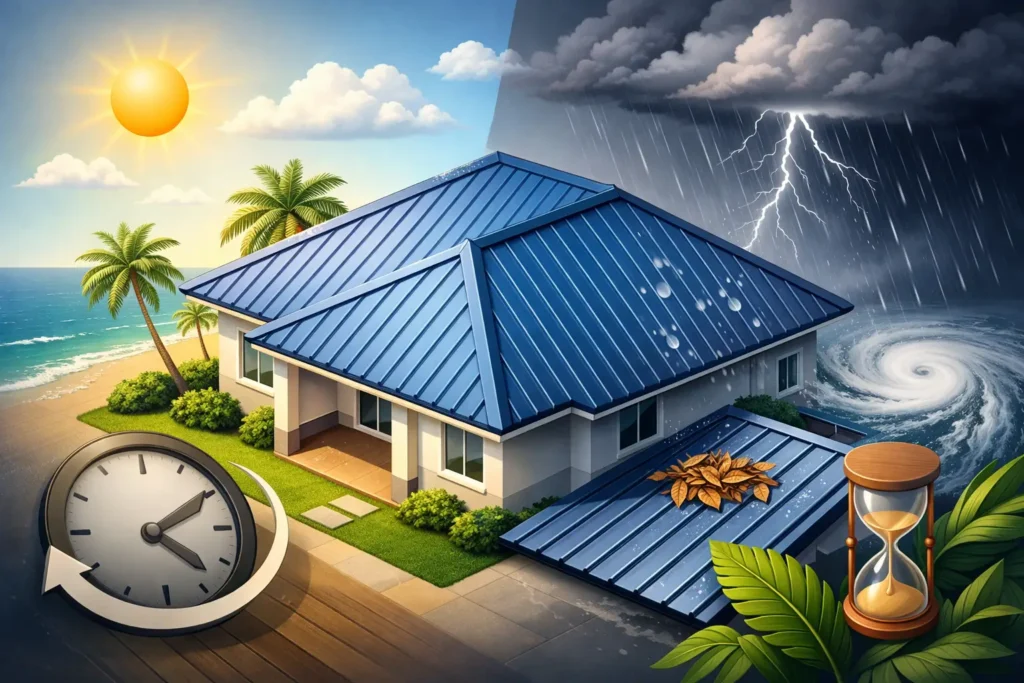
A metal roof installed on a Palm Bay home can look nearly new long after neighboring shingle roofs have needed replacement. But how long do metal roofs last in Florida? For most homeowners, the realistic answer is 40 to 70 years, depending on the metal, coating, installation quality, and exposure to coastal conditions.
That range is one reason metal has become a serious option for Florida property owners planning for the long term. It is not a maintenance-free roof, and it is not automatically the right choice for every building. Still, when the system is designed for local wind, rain, heat, and salt exposure, metal offers exceptional service life and dependable protection.
How Long Do Metal Roofs Last in Florida?
A properly installed metal roof commonly lasts 40 to 70 years in Florida. Premium materials in favorable conditions can last longer, while a roof near the coast or one installed with the wrong fasteners, underlayment, or flashing may have a shorter useful life.
The material makes a meaningful difference. Galvalume steel panels are a durable, cost-conscious choice and often provide 40 to 60 years of service when maintained properly. Aluminum is especially well suited to coastal areas because it does not rust in the same way steel can. An aluminum roof may last 50 years or more, even where salt air is a daily factor.
Copper and zinc can last well beyond 70 years, but their higher upfront cost puts them outside the budget for many residential projects. For most Florida homes, painted aluminum or quality Galvalume steel provides the best balance of longevity, appearance, and cost.
A roof’s service life is not just about the panels. The full assembly matters: decking condition, underlayment, ventilation, fasteners, trim, penetrations, and flashing around chimneys, walls, skylights, and vents. A long-lasting panel cannot compensate for poor workmanship below or around it.
Florida Conditions Change the Equation
Florida roofs endure more than ordinary sun and rain. East Coast properties contend with ultraviolet exposure, tropical downpours, hurricane-force winds, humidity, airborne salt, and sudden temperature shifts. These conditions do not rule out metal roofing. They make correct material selection and installation non-negotiable.
Salt Air and Coastal Corrosion
Homes near the ocean, Indian River Lagoon, or other saltwater environments need extra consideration. Salt deposits can sit on roof surfaces and accelerate corrosion at scratched areas, cut edges, exposed fasteners, and dissimilar-metal connections.
Aluminum is often the preferred choice in close coastal environments because of its natural corrosion resistance. If steel is selected, it should have an appropriate protective coating and a high-quality factory finish rated for the location. Fasteners must also be compatible with the roofing material. Mixing metals carelessly can create galvanic corrosion, which damages the roof from the connection points outward.
Regular rinsing can help remove salt residue on homes with heavy coastal exposure. This is a simple preventive step, but it should be done safely and according to the panel manufacturer’s recommendations.
Wind, Storms, and Flying Debris
Metal roofing can perform very well in high winds when installed as a tested system. Panel profile, clip spacing, fastening pattern, edge details, and deck attachment all influence wind resistance. A metal roof is not hurricane-proof simply because it is metal.
During severe weather, branches and wind-borne debris can dent panels or damage trim. Dents are often cosmetic, but they should still be evaluated after a storm. The more urgent concern is lifted flashing, compromised fasteners, punctures, or damage around roof penetrations where water can enter.
Florida building code requirements matter here. A contractor should account for the property’s wind zone, roof geometry, deck condition, and applicable permit requirements before installation. No shortcuts. No guesswork.
Heat, Humidity, and Heavy Rain
Reflective metal finishes can reduce heat absorption compared with darker, heat-retaining roofing materials. That may help improve attic comfort and reduce cooling demand, particularly when paired with proper insulation and ventilation. Energy savings vary by roof color, attic assembly, HVAC performance, shade, and household use, so they should not be treated as guaranteed.
Humidity and heavy rain put more pressure on the waterproofing details beneath the panels. Underlayment is a critical secondary layer of protection, especially during wind-driven rain. In Florida, an experienced installer will recommend an underlayment and flashing system appropriate for the roof design rather than treating those components as an afterthought.
What Determines a Metal Roof’s Lifespan?
The difference between a 25-year metal roof experience and a 60-year one often comes down to decisions made before the first panel is installed.
First is material quality. Thicker panels generally resist denting and handling damage better than thinner options, although thickness alone does not determine performance. The coating system, paint finish, panel design, and manufacturer specifications all matter.
Second is installation quality. Panels must be aligned correctly, fastened according to the system requirements, and allowed to move as temperatures change. Metal expands and contracts. If it is installed too tightly or with improper details, that movement can stress fasteners, create oil canning, and affect watertightness over time.
Third is roof design. Simple gable roofs are generally easier to detail than complex roofs with multiple valleys, dormers, transitions, and penetrations. More transitions mean more flashing, and flashing is where careful craftsmanship protects against leaks.
Finally, maintenance and storm response matter. A small issue caught early – such as a backed-out fastener or damaged pipe boot – is usually straightforward to repair. Leaving it untouched through repeated rainy seasons can turn a minor service call into deck damage, interior repairs, and a larger insurance conversation.
Standing Seam vs. Exposed-Fastener Metal Roofing
Not all metal roofing systems age the same way. Standing seam roofing uses concealed clips or fasteners beneath raised seams. Since most fasteners are protected from direct weather exposure, standing seam systems are widely considered the longer-lasting residential metal option. They also offer a clean, architectural appearance and strong wind-performance potential.
Exposed-fastener panels are often more affordable and commonly used on agricultural, commercial, and some residential structures. Their screws include sealing washers that can wear over time due to sun, movement, and weather. These roofs can still provide many years of reliable protection, but periodic screw and washer inspections are part of owning the system.
For a homeowner focused on maximum service life and a refined appearance, standing seam is often worth serious consideration. For a budget-sensitive project or a large outbuilding, exposed-fastener metal may make practical sense. The right choice should match the building, the location, and the long-term plan for the property.
Maintenance That Helps Metal Roofs Last
Metal roofing needs less routine attention than many other systems, but less maintenance does not mean none. An annual professional inspection and an inspection after a major storm can identify concerns before they become leaks.
Keep gutters and valleys clear so water moves freely off the roof. Trim branches that scrape panels or can fall during high winds. Watch for loose trim, damaged sealant, discolored areas, fasteners that have backed out, or paint scratches that expose bare metal.
Avoid walking on a metal roof unless it is necessary and you know where to step. Foot traffic can damage panels, loosen components, and create unnecessary safety risks. Never allow someone to use incompatible sealants, screws, or patch materials as a quick fix. Those shortcuts can create corrosion or trap water where it does not belong.
If your roof is near the coast, ask your contractor about a maintenance schedule tailored to salt exposure. A little attention at the right intervals can protect a significant investment.
When Is Metal Roof Replacement Necessary?
A metal roof does not need replacement because it has a few cosmetic dents or minor surface wear. Replacement becomes the more sensible path when corrosion has spread through panels, repeated leaks point to widespread system failure, storm damage has compromised large sections, or the roof no longer meets the property’s protection needs.
Sometimes the panels are still serviceable, but aging underlayment, deteriorated flashing, or extensive fastener failure requires a closer evaluation. Repairs may be the right answer when damage is localized. A full replacement may be more economical when problems are widespread or the roof is approaching the end of its expected life.
The best decision starts with a thorough inspection, not a sales pitch. Bear Roofing helps Florida property owners understand what is repairable, what should be monitored, and when replacement is the responsible choice.
A metal roof can be one of the longest-lasting upgrades you make to a Florida property, but its lifespan is earned through the right system and the right installation. Choose materials built for your location, insist on code-aware workmanship, and address small concerns before Florida weather gets the chance to make them bigger.