
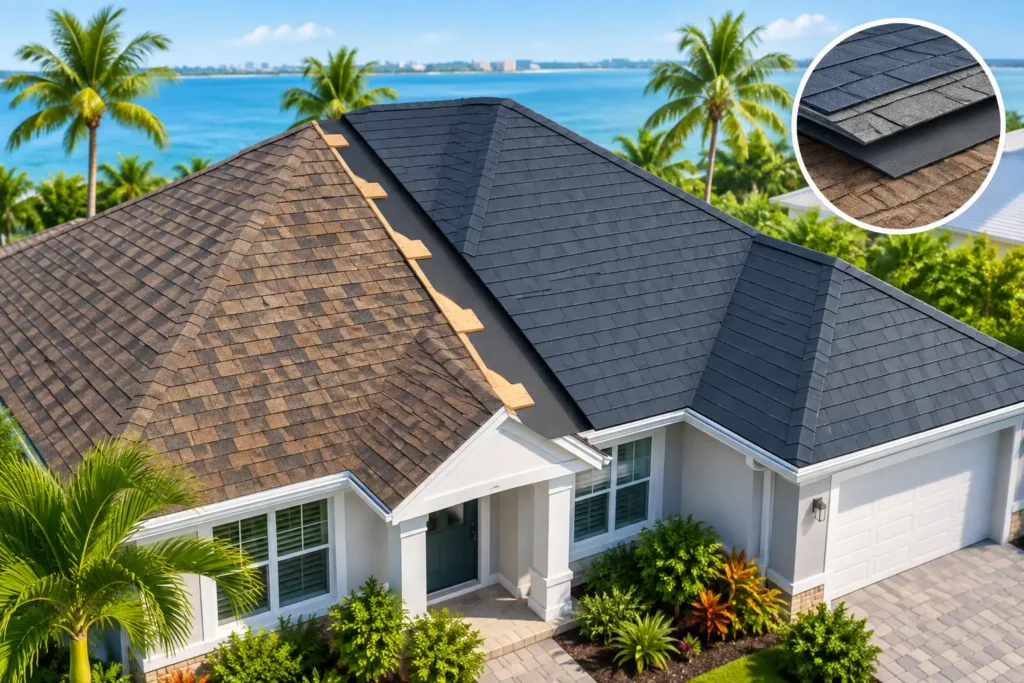
A roof that looks worn but is not actively leaking can make a lower-cost overlay sound appealing. But can you roof over shingles in Florida and still have a roof ready for heat, wind-driven rain, and hurricane season? Sometimes, yes. For many homes along the East Coast of Florida, however, a full tear-off is the smarter long-term decision.
Installing new asphalt shingles over an existing shingle roof is called a roof recover or overlay. It can reduce labor, disposal, and project time because the old shingles stay in place. That does not mean it is a shortcut every roof can safely take. The condition of the existing roof, the roof deck below it, local permitting requirements, wind exposure, and your insurance situation all deserve a close look before a contractor recommends a second layer.
Can You Roof Over Shingles Under Florida Rules?
Florida roofing rules can allow a new layer of shingles over one existing layer, provided the roof meets applicable code requirements and the local building department approves the work. A roof generally cannot receive a third layer. If two or more layers are already installed, the existing roofing must be removed before new shingles go on.
More importantly, an overlay is not appropriate when the existing roof is water-soaked, badly curled, damaged, deteriorated, or attached to a compromised deck. Roofing materials need a sound, secure surface beneath them. New shingles cannot repair rotten plywood, loose fasteners, hidden leaks, or failed flashing.
Permit requirements and enforcement can vary by jurisdiction. Florida also has demanding wind-resistance requirements, and coastal homes may face greater wind and salt exposure than homes farther inland. A qualified roofing contractor should verify the existing assembly, fastening method, product approval, and local code requirements before promising that a recover is possible.
Why a Second Layer Is Often Riskier in Florida
An overlay may save money upfront, but Florida roofs carry more responsibility than roofs in mild climates. They must manage intense ultraviolet exposure, high humidity, heavy rainfall, tropical storms, and wind-driven water that can find its way under the smallest weak point.
The largest concern is what an overlay leaves hidden. Once new shingles cover the old roof, the deck cannot be fully inspected across the entire roof plane. Soft plywood, moisture staining, rusted fasteners, and minor leak paths may remain out of sight until they become a larger problem. A tear-off exposes the structure so repairs can be completed before the new system is installed.
A second layer also adds weight. A properly built roof structure may be able to support it, but that is not a decision to make by assumption. Older homes, roofs with prior repairs, and properties with signs of sagging deserve careful evaluation.
Heat is another factor. Two layers of shingles can hold more heat, which may affect the appearance and service life of the new shingles. Darker roofs and attic spaces with limited ventilation can be especially vulnerable. Good ventilation helps, but it does not turn a poor candidate into a good one.
When Roofing Over Existing Shingles May Make Sense
A recover can be reasonable when the current roof has only one layer, the shingles are lying relatively flat, the deck is sound, and there is no evidence of active or recurring water intrusion. It may be considered for a property owner who needs a cost-conscious solution and understands that the roof’s underlying condition cannot be examined as completely as it can during a tear-off.
For example, a newer roof that suffered cosmetic shingle damage but has a verified dry deck may be a better overlay candidate than a 20-year-old roof with uneven surfaces, past leaks, and multiple patched areas. The quality of the existing roof matters as much as its age.
Even then, the installation details must be right. Flashing around chimneys, walls, valleys, plumbing vents, skylights, and roof transitions deserves special attention. Those details are common leak locations, and simply covering old shingles does not correct poor flashing work beneath them.
A reputable contractor should explain what can and cannot be verified without removing the existing material. No surprises. No disappearing act. You deserve a clear explanation of the trade-off before work begins.
Signs You Need a Full Tear-Off Instead
A replacement is usually the better path when there are visible warning signs or uncertainty about the roof’s foundation. Consider a tear-off when you have:
- Two existing layers of shingles
- Soft spots, sagging areas, or uneven roof lines
- Repeated leaks, ceiling stains, or signs of attic moisture
- Curled, buckled, missing, or severely deteriorated shingles
- Storm damage that may have affected the deck or underlayment
- Old or improperly installed flashing
- A roof near the end of its expected service life
A tear-off costs more initially because it includes removing old materials, hauling debris, inspecting the deck, and rebuilding the roof system from the structure up. That work provides real value. It allows damaged decking to be replaced, modern underlayment and water barriers to be installed correctly, and new shingles to sit flat on a clean surface.
For Florida homeowners, that clean start can be especially valuable before hurricane season. Wind resistance is not just about the shingles you see. It depends on the entire system: deck condition, fastening, underlayment, edge details, flashing, and ventilation.
Insurance and Warranty Questions to Ask First
Before choosing an overlay, contact your insurance carrier or review your policy with an agent. Some insurers have age limits, roof-condition requirements, or underwriting standards that can affect coverage. A second layer may not automatically disqualify a roof, but it can complicate inspections or future claims if damage or deterioration existed beneath the new shingles.
Warranty coverage also matters. Shingle manufacturers and contractors may have specific installation requirements for recover applications. If an overlay is permitted, ask whether the material warranty changes and what workmanship coverage applies to the installation.
A contractor should be direct about these questions. Ask whether the roof will receive a permit, whether the deck will be inspected where accessible, how flashing will be handled, and what happens if concealed damage is discovered. The answers should be written into a detailed scope of work, not left to a verbal promise.
The Cost Difference Is Not the Whole Decision
Roofing over shingles generally costs less than a complete replacement because there is less tear-off labor and less disposal. That savings can be meaningful, especially for a large roof or a property facing several maintenance needs at once.
Still, lower upfront cost is not always lower lifetime cost. If hidden deck damage causes a leak later, repairs may require removing portions of both roofing layers. If the second layer ages poorly under Florida sun and heat, replacement could arrive sooner than expected. And if a future buyer, inspector, or insurer raises concerns about the layered roof, the short-term savings may become less attractive.
A full replacement gives homeowners a documented starting point. You know the deck was evaluated, the old roof was removed, and the new system was installed as one complete assembly. That clarity can support resale confidence, insurance conversations, and peace of mind during severe weather.
Start With a Real Roof Inspection
The right answer is never based on a quick glance from the driveway. A proper inspection should look at the shingle condition, roof geometry, flashing, attic ventilation, visible decking, previous repairs, storm exposure, and the number of existing layers. For commercial or low-slope roofs, the evaluation is different and should focus on membrane condition, drainage, seams, penetrations, and trapped moisture.
Bear Roofing approaches roofing decisions with the full Florida system in mind, not just the surface material. If a recover is a safe, code-compliant option, you should hear why. If a tear-off better protects your property, you should understand exactly what the added investment repairs and prevents.
Your roof is the barrier between Florida weather and everything you have built inside. Choose the option that gives the structure beneath the shingles the attention it deserves, especially when the next hard rain or named storm is never far away.