
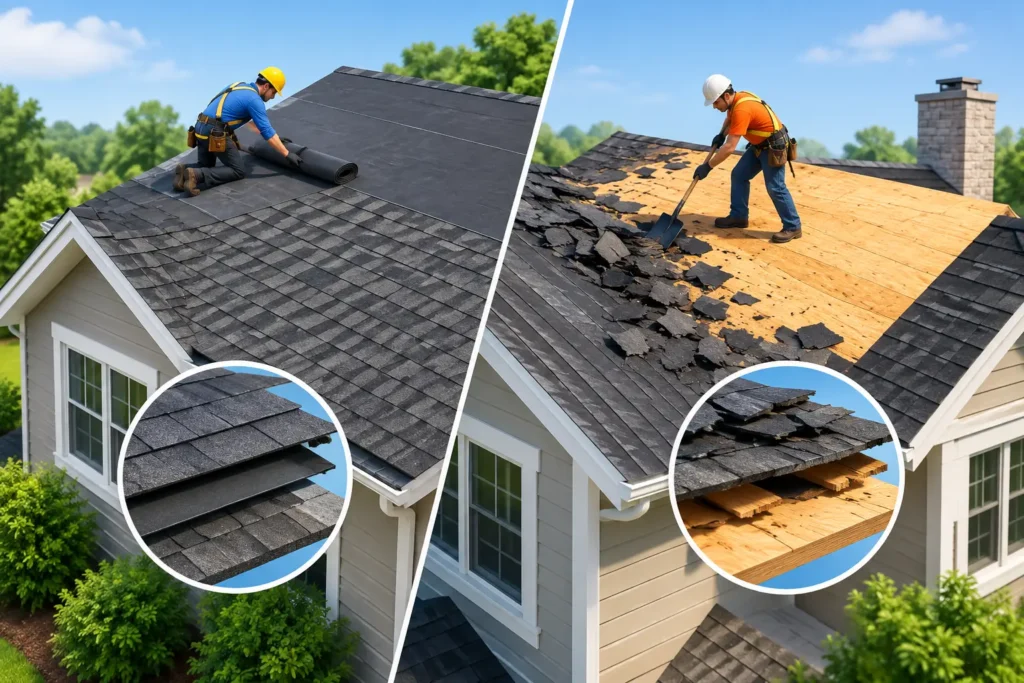
A second roof layer can look like the faster, cheaper answer when shingles are worn and storm season is approaching. But the roof overlay versus tearoff decision is not just about today’s invoice. On Florida’s East Coast, the choice affects wind performance, insurance documentation, resale value, and whether hidden damage stays hidden until it becomes an expensive interior repair.
A qualified roofing inspection should lead the decision. The existing roof’s condition, the number of layers already installed, the roof deck, local permitting requirements, and the roofing system you choose all matter. No shortcuts. No guessing from the driveway.
What Is a Roof Overlay?
A roof overlay, sometimes called a recover, means installing a new layer of shingles over the existing shingle roof. The old shingles remain in place, and the new roofing material is installed over them.
The appeal is obvious. An overlay may reduce labor, disposal costs, and project time because the existing material does not have to be removed. For a property owner facing a tight budget, that lower upfront cost can be tempting.
However, an overlay does not reset the roof assembly. It covers the old roof, including any problems beneath it. It also adds weight and can make future inspections, repairs, and eventual replacement more complicated.
Overlays are generally a shingle-roof conversation. They are not a catch-all replacement method for tile, metal, low-slope, or flat roofing systems. Each material has its own installation requirements, attachment methods, and manufacturer specifications.
What Does a Roof Tearoff Include?
A tearoff removes the existing roofing materials down to the roof deck. Once the deck is exposed, the roofing team can inspect it for soft spots, rot, water staining, failed fasteners, and other damage that cannot be confirmed through a surface-level look.
After repairs are made as needed, the new roof is built from the deck up. That typically includes the appropriate underlayment, flashing, ventilation components where applicable, and the chosen roofing material. The exact assembly depends on the roof type, slope, and current Florida code requirements.
A tearoff costs more upfront because it involves removal, disposal, labor, and potentially deck repairs. It also takes more time than placing new shingles over old ones. Still, it provides the cleanest starting point and the clearest view of the structure protecting your home or building.
Roof Overlay Versus Tearoff in Florida
Florida roofs work hard. They handle intense UV exposure, driving rain, high humidity, wind events, airborne debris, and salt-laden coastal air in many East Coast communities. Those conditions make the condition beneath the shingles especially important.
An overlay can conceal cracked decking, deteriorated underlayment, moisture intrusion around penetrations, and weak areas created by past storms. The new shingles may improve appearance, but they cannot correct a compromised substrate below.
A tearoff gives the installer access to the deck and critical roof transitions. That matters around valleys, chimneys, skylights, vents, wall flashing, and roof-to-wall connections. These details are where water often finds its way in, even when the field shingles appear serviceable.
Florida building codes and local permitting rules may limit when an overlay is allowed. In many cases, a roof cannot simply receive layer after layer of shingles. The number of existing roof coverings, structural condition, wind-resistance requirements, and local enforcement all factor into the decision. A reputable contractor verifies the current requirements for your property rather than promising an overlay before inspecting the roof.
When an Overlay May Be a Reasonable Option
An overlay is not automatically wrong. It can be a reasonable option when the existing roof has only one layer, the deck is known to be sound, there is no evidence of active leaks or trapped moisture, and the local jurisdiction permits the installation.
It may also fit an owner’s situation when the roof is nearing replacement but a full tearoff is not financially practical at that moment. Even then, the property owner should understand that the savings are usually front-loaded. When the roof needs replacement again, both layers will need to come off, which can increase the next project’s labor and disposal costs.
The roof must also be a good candidate from a performance standpoint. Shingles that are badly curled, uneven, loose, saturated, or heavily damaged by wind do not create a dependable base for a new layer. A roof with recurring leaks is not a candidate for being covered up.
When a Tearoff Is the Better Call
A full tearoff is usually the better choice when a roof has leaks, visible deck sagging, storm damage, multiple existing layers, or an uncertain repair history. It is also the stronger long-term choice for owners who want to know exactly what is beneath their new roof.
Tearoffs are particularly valuable after a significant wind or water event. A roof can lose sealing strength or sustain underlayment damage without displaying dramatic missing-shingle damage from the ground. Removing the old materials allows those concerns to be identified and addressed before the new system goes on.
For homeowners preparing to sell, a documented tearoff and replacement can also provide clearer records for buyers, inspectors, and insurers. For commercial property owners, the ability to inspect the roof deck and underlying system may help avoid disruptions caused by leaks that were merely covered rather than corrected.
A tearoff also allows for a more precise installation of modern protective components. Depending on the roof and local requirements, that may include improved underlayment, properly integrated flashing, and attachment methods designed for Florida wind conditions. The goal is not just a new-looking roof. It is a roof system built to perform as a system.
Cost: Look Beyond the First Number
The upfront cost difference between an overlay and tearoff is real. Overlays often cost less because they avoid removal and disposal. But the lower price should be weighed against what is not being inspected or replaced.
Ask what the proposal includes, not just what it costs. A clear quote should identify the roof covering, underlayment, flashing work, permit handling, deck repair allowances or rates, cleanup, and warranty terms. If one estimate is much lower, find out whether it is omitting work that another contractor has included.
There can also be insurance considerations. Insurers may have specific expectations regarding roof age, condition, documentation, and replacement methods. An overlay may not deliver the same underwriting outcome as a full replacement, particularly if the underlying roof remains old. Before deciding, review your policy and ask your agent what documentation will be needed after the work is complete.
Financing can make a full replacement more manageable for qualified owners, but financing should not be used to push a roof into a scope it does not need. The right plan is the one that protects the property without creating avoidable costs later.
Questions to Ask Before You Approve Either Option
Before selecting a roof overlay or tearoff, ask the contractor whether there is evidence of leaks, deck damage, or prior layers. Ask how local code and permitting apply to your address, what wind-rated installation details will be used, and what happens if concealed damage is discovered.
You should also ask whether the proposed roofing material can be installed over the existing roof without affecting manufacturer requirements or available warranty coverage. Warranty language matters. Know who stands behind the workmanship, what the warranty covers, and how service requests are handled after installation.
Finally, make sure the contractor has inspected more than the shingles. A dependable evaluation includes roof edges, valleys, penetrations, flashing, gutters where relevant, attic indicators when accessible, and signs of interior moisture. A roof is not one material. It is a layered weather barrier protecting everything below it.
Choose the Scope That Protects the Property
For a sound, single-layer shingle roof with no moisture issues, an overlay may offer a permitted, budget-conscious path forward. For roofs with storm exposure, leaks, questionable decking, multiple layers, or a long-term ownership plan, a tearoff is commonly the wiser investment.
The best decision starts with an honest inspection and a proposal that explains the trade-offs in plain language. Bear Roofing helps Florida property owners understand what their roof needs before work begins, so you can move forward with confidence instead of hoping a lower price solves a deeper problem.