
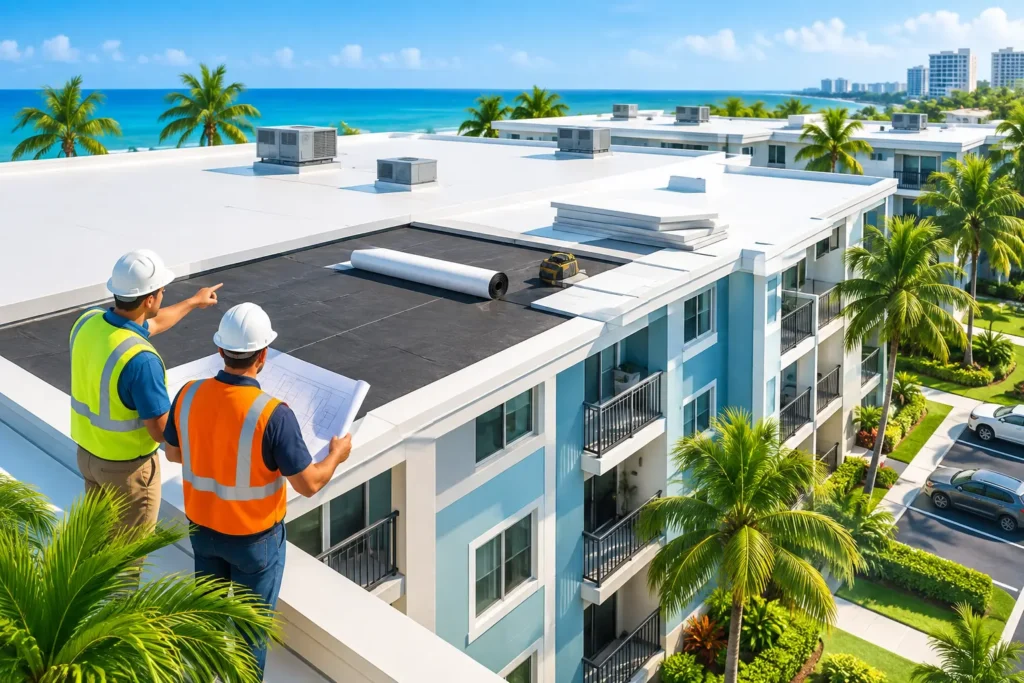
A multifamily roof upgrade is not a simple maintenance item. For an apartment community, condominium building, townhome association, or mixed-use property, it affects resident comfort, insurance exposure, operating budgets, and the value of the asset itself. In Florida, the stakes rise further. Heat, wind-driven rain, hurricane threats, salt air, and heavy seasonal downpours can expose weaknesses quickly.
The right project is not always the most expensive roof or the lowest bid. It is the system that fits the building’s structure, roof design, occupancy needs, drainage conditions, and long-term ownership plan. Property managers and board members need a contractor who can explain those trade-offs clearly, coordinate the work responsibly, and stand behind the result. No surprises. No disappearing act.
Start With the Building, Not the Material
Many roofing decisions begin with a request for a particular material: metal, tile, shingles, TPO, modified bitumen, or a roof coating. That conversation matters, but material selection should follow a complete assessment of the property.
A qualified inspection should look beyond visible roof wear. The contractor should evaluate the existing deck, insulation, flashing, penetrations, drainage, parapet walls, rooftop equipment, previous repairs, and signs of moisture below the roofing surface. On a low-slope building, ponding water may point to a drainage or slope issue that a new membrane alone will not solve. On a pitched roof, repeated leaks around vents or valleys may indicate failed flashing details rather than a field-shingle problem.
Age matters, but condition matters more. A 15-year-old roof with isolated repairable issues may not need replacement yet. A younger roof with widespread storm damage, poor installation details, recurring leaks, or saturated insulation may be a stronger candidate for a full upgrade. The goal is to spend capital where it solves the real risk.
Separate Repair Needs From Replacement Needs
A repair-first approach can make sense when damage is localized, the system still has useful service life, and the roof can be restored without creating a patchwork of future failure points. This can be especially practical for properties working through a near-term budget cycle or waiting on a pending insurance determination.
Replacement is usually the stronger choice when repairs are becoming routine, leaks appear in multiple areas, the system is past its expected service life, or the property needs better wind performance and insurance confidence. Continually repairing a roof that has reached the end of its dependable life can cost more than a planned replacement, particularly when resident damage, mold concerns, and emergency response are included.
Choosing a Multifamily Roof Upgrade for Florida Conditions
Florida multifamily properties commonly have a mix of roof types. A community may include low-slope clubhouse roofs, pitched apartment buildings, covered walkways, detached garages, and maintenance structures. Each area should be evaluated for its own needs rather than forced into one solution.
For low-slope and flat roofing, TPO, PVC, modified bitumen, and built-up systems can each be appropriate depending on the building and budget. Single-ply systems can offer reflective surfaces that help manage solar heat gain. Modified bitumen is a proven option for many applications and can provide durable multi-layer protection. Roof coatings may extend the life of a suitable existing roof, but they are not a cure for wet insulation, failing seams, or widespread substrate problems.
For sloped multifamily buildings, architectural shingles remain a cost-conscious choice with broad design flexibility. Metal roofing can offer long service life, strong wind performance, and a clean appearance, although its upfront cost is often higher. Tile delivers a distinctive Florida look and can perform well when the structure, attachment method, and maintenance plan are properly considered. Weight, replacement availability, and attachment requirements all deserve careful attention.
Wind resistance should be part of every material conversation. The roofing assembly matters as much as the visible surface. Proper fastening patterns, perimeter details, underlayment, edge metal, flashing, and ventilation all contribute to how the roof performs during a severe weather event. A system is only as dependable as its installation details.
Energy Savings Are Real, But They Are Not Automatic
Reflective membranes and lighter-colored roofing surfaces can reduce heat absorption, which may help lower cooling demand in some buildings. Added insulation during a commercial reroof can also improve energy performance. Still, projected savings depend on the building’s insulation levels, HVAC condition, occupancy patterns, shade, roof geometry, and utility rates.
Property owners should treat energy efficiency as one part of the decision, not the only selling point. A cooler roof is valuable, but reliable waterproofing, code compliance, wind performance, and maintainability come first.
Plan Around Residents and Daily Operations
A well-run multifamily project protects more than the building. It protects the people living and working beneath it. Roofing work brings noise, vibration, temporary access restrictions, delivery traffic, and debris-control needs. The planning stage should address those realities before materials arrive.
Clear resident communication is essential. Occupants should know the expected schedule, which buildings or sections are affected, parking or access changes, noise expectations, and whom to contact with concerns. Special consideration may be needed for residents who work from home, have mobility limitations, keep pets, or rely on quiet hours for medical reasons.
The contractor should also coordinate around property operations. Dumpster placement, material staging, lift access, pool areas, landscaping, gates, fire lanes, and emergency access all need a plan. On occupied properties, daily cleanup and site safety are not optional extras. They are part of the job.
Phasing can reduce disruption and spread costs across a large community, but it has trade-offs. Completing all similar roofs at once may produce better purchasing efficiency and eliminate inconsistent conditions between buildings. A phased plan can be sensible when budgets require it, provided the sequencing is based on roof condition and risk, not simply convenience.
Build the Budget Around Total Ownership Cost
The lowest proposal can become the most expensive option if it leaves out necessary deck repairs, flashing work, drainage corrections, permit requirements, or cleanup. A useful proposal should define the scope in plain language: tear-off or recover method, materials, insulation, attachment approach, flashing details, anticipated wood replacement process, warranty coverage, and exclusions.
For associations and commercial owners, reserve planning is just as important as the installation price. Consider the expected life of the system, annual maintenance needs, inspection frequency, storm-response plan, and likely future repair costs. A roof that costs more upfront but provides stronger details, longer coverage, and fewer disruptions may offer better value over its service life.
Financing can help communities move from emergency repairs to a planned project. The right financing structure depends on ownership type, reserve funding, assessments, and cash flow. What matters is having the conversation early, before active leaks force a rushed decision.
Do Not Ignore Insurance and Code Requirements
Florida roofing projects often involve insurance questions, especially after wind or hail events. Documentation matters. Photos, inspection findings, repair history, weather-related damage records, and a clearly defined scope can help owners understand their position before making major decisions.
Building code requirements may affect the system, attachment methods, underlayment, edge details, and permits. Condo boards and property managers should avoid assumptions based on a neighboring property or an old roof installation. Current code requirements and the building’s specific conditions should guide the work.
A contractor with Florida storm experience can help organize the roofing side of the process, but owners should still review insurance obligations, association governing documents, and any required approvals with the appropriate professionals. Clear roles prevent confusion when deadlines and repairs are pressing.
Choose Accountability, Not Just a Crew
Multifamily roofing requires more coordination than a typical single-family replacement. The contractor must manage crews, materials, safety, inspections, communication, and cleanup while maintaining a consistent standard across a large site. Ask who will oversee the project daily, how change conditions are documented, and how resident concerns will be handled.
Warranty terms also deserve a close read. Manufacturer coverage and workmanship coverage address different risks. Understand what is covered, what maintenance is required, how service requests are handled, and whether the contractor has a track record of being available after the final payment. A warranty has value only when the company behind it remains accountable.
Bear Roofing approaches Florida roofing with that responsibility in mind: clear scopes, local code knowledge, storm-focused expertise, and a lifetime workmanship warranty designed to support long-term confidence.
A roof replacement can feel disruptive while it is underway, but a properly planned project gives a multifamily property something far more valuable than new materials overhead: a dependable line of defense when the next hard rain, summer heat wave, or coastal storm arrives.