
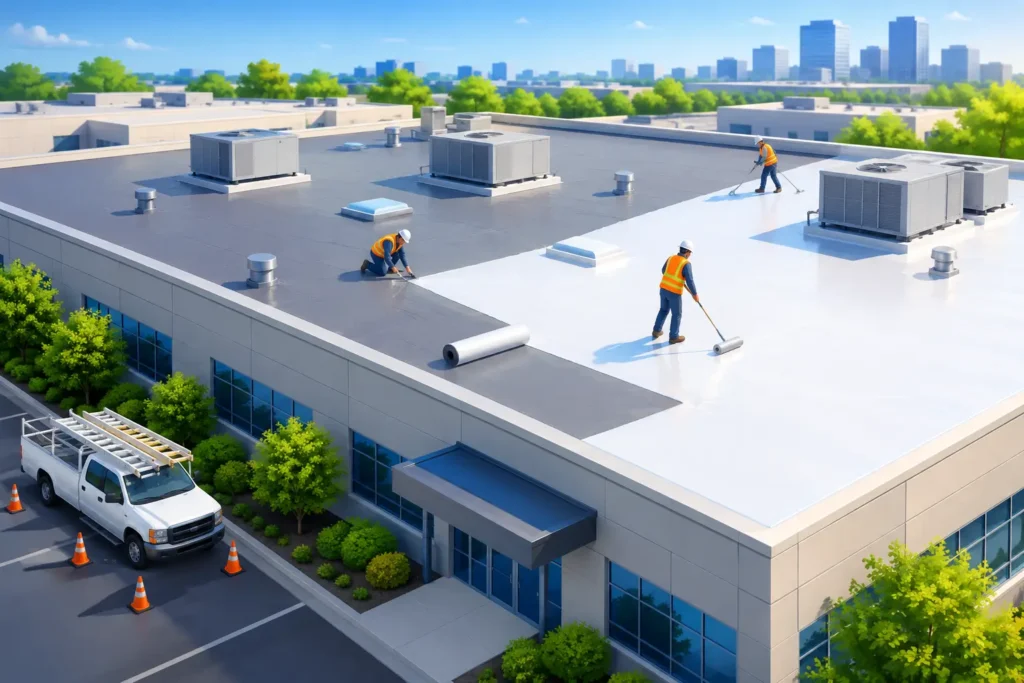
A leaking roof rarely waits for a convenient time. For a Florida business, water over inventory, workstations, electrical equipment, or customer areas can disrupt far more than the building itself. The goal is not simply to finish a roof job quickly. It is to reduce commercial roofing downtime without cutting corners on safety, drainage, code compliance, or long-term performance.
That takes planning before crews arrive, clear communication while work is underway, and a roofing system built for the realities of Florida heat, wind, heavy rain, and coastal exposure. A fast job that creates repeat leaks is not efficient. It is an expensive delay waiting to happen.
Start With a Clear Scope Before Work Begins
Commercial roofing projects lose time when surprises appear after tear-off starts. A proper inspection should identify active leaks, wet insulation, deteriorated decking, drainage issues, rooftop equipment conflicts, flashing failures, and areas that may require code upgrades.
For low-slope and flat roofs, moisture scanning and targeted test cuts can help determine whether the existing system can be restored with repairs or coating, or whether a full replacement is the responsible choice. The right answer depends on the roof’s condition. A coating can be an efficient option when the substrate is dry, stable, and structurally sound. It cannot correct widespread trapped moisture, failing insulation, or a roof system at the end of its service life.
The preconstruction phase should also establish access points, material staging areas, dumpster locations, safety routes, daily work hours, and protection for landscaping, vehicles, and customer entrances. These details may seem routine, but they prevent avoidable work stoppages once the project starts.
Build the Schedule Around Business Operations
A commercial roof replacement does not have to mean closing a business. The best schedule is built around how the property actually operates.
A medical office may need quieter work outside patient hours. A retail center may need crews kept away from the main entrance during peak traffic. A warehouse may need certain loading zones available every day. Restaurants, schools, churches, manufacturing facilities, and multi-tenant properties all have different pressure points.
Before construction, property managers should identify which parts of the building are mission-critical and which activities cannot be interrupted. That gives the roofing contractor a practical roadmap for sequencing the job.
Use Phased Roofing Work When It Makes Sense
Phasing divides the roof into manageable sections so the crew can complete, dry in, and protect one area before moving to the next. This approach is especially useful for large buildings, occupied facilities, and properties where operations must continue throughout construction.
Phased work may take more coordination than opening the entire roof at once, but it lowers exposure to weather and limits disruption to a smaller area at a time. On Florida’s East Coast, that added control matters. Afternoon storms and hurricane-season weather patterns can change quickly.
A phased plan should include clear daily stopping points. Every opened section needs to be temporarily secured before the crew leaves, even when the forecast looks favorable. No surprises. No disappearing act.
Plan Around Florida Weather, Not Just the Calendar
Weather is one of the biggest factors in commercial roofing downtime. High winds, lightning, heavy rain, and extreme heat can affect both crew safety and installation quality. A responsible contractor does not rush membrane installation, adhesive application, or coating work in unsuitable conditions just to stay on an arbitrary schedule.
The better approach is to monitor conditions closely and build reasonable weather contingencies into the project plan. Materials should be staged and protected properly. Temporary dry-in materials should be available. Crews should know how to secure an active work area quickly if a storm develops.
For coating projects, temperature, humidity, surface moisture, and cure time are also critical. A coating installed on a damp surface or before a rain event may fail prematurely. A short delay for proper conditions can prevent a much longer disruption later.
Choose a System That Supports Faster, Lasting Results
Material selection affects the construction timeline, but it also determines how often a property may face repairs in the future. The fastest installation is not always the best value if the roof cannot handle ponding water, UV exposure, wind uplift, or foot traffic around HVAC equipment.
For commercial properties, system selection should account for roof slope, drainage, insulation needs, building use, maintenance access, budget, and expected service life. Options may include single-ply membranes, modified bitumen, built-up systems, metal roofing, and fluid-applied coatings. Each has a place when matched to the building correctly.
A roof coating can often reduce disruption because it may avoid a full tear-off. It can also improve reflectivity and help manage heat gain. However, it should be treated as a restoration system, not a shortcut. The existing roof must qualify for it, and preparation work remains essential.
A full replacement requires more activity, but it may be the more dependable choice when the existing system has widespread failure. Replacing compromised materials now can protect the building from repeated emergency repairs, interior damage, and unpredictable closures.
Keep Communication Moving Every Day
Poor communication creates downtime even when the roofing work itself is on schedule. Tenants need to know where crews will be working. Facility staff need notice before loud tear-off, temporary access changes, or work near sensitive equipment. Managers need updates when weather affects the sequence.
An experienced commercial contractor should provide a clear point of contact and regular progress reports. Daily communication does not need to be complicated. It should answer practical questions: What was completed today? What area is next? Are there any changes to access or operations? Is the roof secure for the night?
This level of coordination is particularly important for multi-tenant buildings. When tenants receive clear expectations, property managers spend less time putting out avoidable fires.
Protect the Building Interior During Construction
Roofing work happens overhead, but downtime is often caused by what happens below. Dust, vibration, odors, falling debris, and unexpected water intrusion can affect employees, customers, inventory, and equipment.
A strong protection plan may include interior leak monitoring, temporary coverings below active work areas, protection for rooftop HVAC units, debris control, and coordination with facility teams before work near server rooms, production lines, or high-value inventory. If the building has ceiling-mounted equipment or sensitive operations, that needs to be addressed before the first section of roof is opened.
It is also wise to move or cover vulnerable inventory near exterior walls and known leak locations. This is not an admission that problems are expected. It is basic risk management during a major building project.
Do Not Delay Small Repairs Until They Become Emergencies
The most effective way to reduce commercial roofing downtime is often to avoid a major emergency altogether. Small issues such as open seams, cracked pipe boots, loose flashing, clogged drains, and ponding water can become serious during the next hard rain.
A scheduled maintenance program helps identify these conditions before they interrupt operations. After severe weather, a prompt inspection can document storm-related damage, support an insurance claim when appropriate, and give property owners a clear picture of next steps.
Florida commercial roofs should also be inspected after major wind events, not only when a leak appears. Wind damage may begin at edges, flashings, penetrations, and rooftop equipment details where water has not yet reached the interior.
Work With a Contractor Who Owns the Details
Commercial roofing is not a place for vague scopes, rotating subcontractors, or unanswered calls. The contractor should understand local Florida building requirements, coordinate permits when needed, manage materials, maintain safe work areas, and stand behind the finished system.
At Bear Roofing, that means approaching each project with a complete plan from inspection through cleanup. The focus is not just getting crews on the roof quickly. It is protecting the building, keeping stakeholders informed, and installing a system that gives the property a stronger path forward.
Downtime cannot always be eliminated, especially on a full replacement or after storm damage. But with accurate assessment, smart phasing, weather-ready planning, and accountable workmanship, it can be controlled. A commercial roof should protect your operations, not repeatedly put them on hold.